From $35K Salary to Multifamily Investor
Flo Jacques transformed her career from a $35,000 salary to a multi-property real estate portfolio in just two years. Her journey highlights strategic saving, creative financing, and a proactive approach to overcoming renovation challenges.

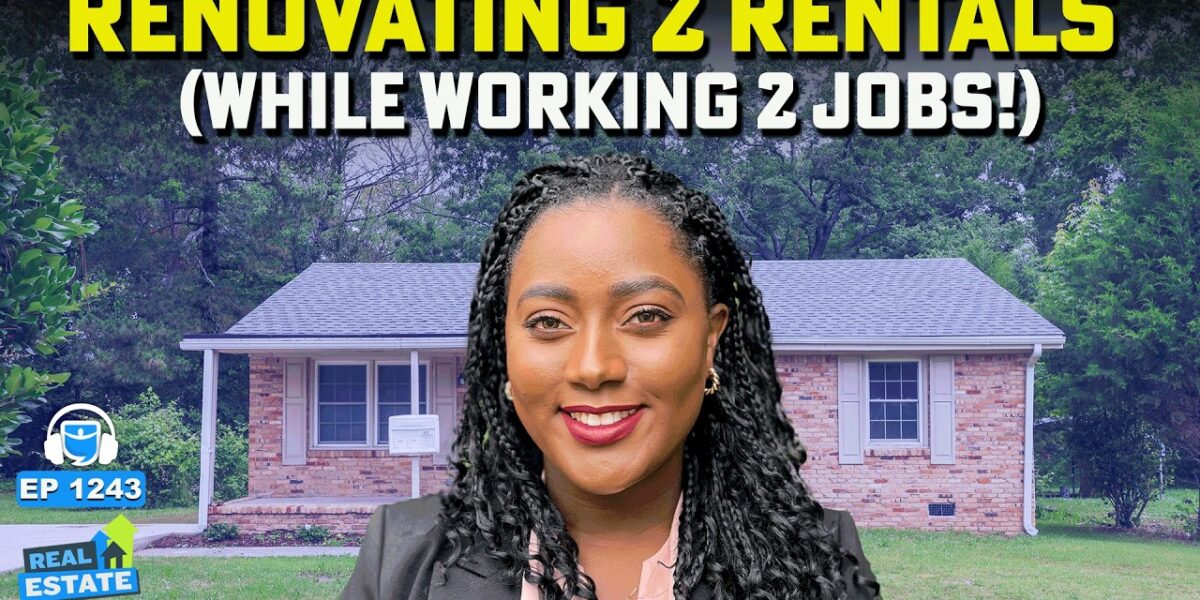
From $35K Salary to Multifamily Investor: A Young Professional’s Rapid Real Estate Ascent
In a housing market often characterized by high entry barriers and the perception of needing substantial capital or a six-figure income, the story of Flo Jacques offers a compelling counter-narrative. At just 22 years old, while earning an annual salary of $35,000 as a college admissions counselor, Jacques made a pivotal decision: to buy a home instead of renting. This single act, driven by foresight and a desire to build wealth, marked the beginning of a rapid real estate investment journey that saw her transition from a modest salary to owning multiple rental properties and setting her sights on development within a few short years.
The Power of Early Action and Strategic Savings
Jacques’s journey began in 2021. Fresh out of college and armed with $15,000 saved from working multiple jobs, she bypassed the conventional path of waiting for the ‘perfect time’ or a higher income. Instead, she leveraged her savings to purchase her first home in North Carolina.
This initial purchase was not an end goal, but a strategic stepping stone. Over the subsequent three years, Jacques dedicated herself to learning the intricacies of real estate investing, obtaining her real estate license to gain industry insights, and building a network of professionals.
Her commitment to financial discipline, evidenced by her ability to save $15,000 at a young age on a limited income, proved crucial. This habit of saving allowed her to be prepared when opportunities arose. While her college admissions salary was modest, her frugal lifestyle and focus on saving enabled her to accumulate the necessary funds for down payments and closing costs, particularly when combined with creative financing strategies.
Navigating the First Rehab: Challenges and Lessons Learned
Jacques’s first investment property was a significant undertaking: a gut renovation of a roach-infested property located in a flood zone. Acquired for $70,000 after initial contract negotiations at $90,000, the property presented a steep learning curve.
The initial rehab budget of $75,000 was exceeded, a common challenge in fixer-upper projects. The undisclosed flood zone status added a layer of complexity and increased insurance costs, impacting the property’s profitability.
The renovation process itself was fraught with difficulties, including issues with contractors. Jacques experienced firsthand the challenges of managing a project remotely and relying on third-party execution.
She cycled through three different contractors before the project was completed. This experience underscored the importance of diligent contractor vetting, clear contract terms, and active project oversight, even when working with licensed professionals.
Despite these hurdles, Jacques’s buy-and-hold strategy, specifically employing the BRRRR (Buy, Rehab, Rent, Refinance, Repeat) method, remained her focus. The goal was to acquire properties, add value through renovation, rent them out, and then refinance to pull out equity for future investments. This approach is designed to build a portfolio with minimal initial capital tied up long-term.
Securing Financing: The Key to Accelerated Growth
A critical enabler of Jacques’s rapid portfolio growth was her ability to secure favorable financing, particularly hard money loans. She discovered a lender offering 100% financing for both the purchase and the rehab, up to 75% of the After Repair Value (ARV).
This structure meant that beyond origination fees and closing costs, she could fund substantial projects with minimal upfront cash. This type of financing is typically short-term and carries higher interest rates, necessitating a clear exit strategy, such as refinancing into a conventional mortgage or selling the property.
Jacques’s success in securing this financing, despite her limited experience at the time, highlights the importance of thorough research and networking. She actively sought recommendations and found a lender willing to work with newer investors, offering a loyalty program that reduced rates and fees after completing a set number of deals. This access to capital allowed her to acquire a duplex in downtown Durham for $287,000 just a month after closing on her first property, demonstrating a remarkable pace of acquisition.
Portfolio Expansion and Strategic Shifts
The duplex, which was converted into a short-term rental (Airbnb/VROB), proved to be a strong performer, appraising for $462,500 and generating a cash flow of $800 to $1,000 per month. The first single-family home, rented to a group home tenant, provided minimal cash flow due to flood zone insurance costs but successfully covered its mortgage. Both properties allowed Jacques to pull cash out during the refinance phase, providing capital for her next venture.
Her third acquisition, closed on December 1st, 2025, was a single-family home on a half-acre lot in Raleigh, North Carolina. This time, Jacques shifted strategy towards a flip, seeking to generate immediate capital. The property was found off-market through a platform connecting investors with wholesalers.
A key challenge was the property’s low ceiling height (under 7 feet), which did not meet local code requirements. However, Jacques saw this as an opportunity to negotiate a lower purchase price ($120,000) for a property with a projected ARV of $337,000.
For this flip, Jacques adopted a more conservative approach to budgeting, incorporating significant contingency funds and paying herself for her time. She structured the financing at 65% of the ARV, a more conservative Loan-to-Value (LTV) ratio than her previous deals.
The renovation plan included raising the roof to meet code, a significant undertaking that required careful planning and execution. This deal exemplified her evolving approach, balancing risk with reward and leveraging her growing expertise.
Broader Economic Context and Regional Variations
Jacques’s rapid ascent occurs against a backdrop of fluctuating economic conditions. While not explicitly detailed in the transcript, factors such as interest rate movements, inflation, and local job market growth significantly influence real estate markets.
For instance, areas like Rocky Mount, North Carolina, where her first property was located, are often characterized by lower property prices and higher renter populations, making them attractive for value-add investors but potentially challenging for refinancing due to limited comparable sales (comps) for renovated properties. Conversely, markets like Raleigh offer more robust comps, supporting higher appraisals and cash-out refinances, but come with a higher cost of entry.
Looking Ahead: Development and Community Impact
With a portfolio now including her primary residence (initially intended as an investment property), the single-family home in Rocky Mount, the duplex in Durham, and the flip project in Raleigh, Jacques is not slowing down. Her long-term goal is real estate development, driven by a desire to build communities and provide solutions. This ambition reflects a broader trend of real estate professionals seeking to create tangible value beyond individual property ownership.
Remarkably, Jacques has also leveraged her experience to give back. She now teaches free real estate investing classes, sharing the knowledge she once desperately sought. This initiative aligns with the idea that real estate, beyond its financial returns, can empower individuals to pursue passions, start businesses, and contribute to their communities, effectively bridging her educational background with her entrepreneurial endeavors.
Flo Jacques’s story is proof of the power of proactive decision-making, continuous learning, and strategic execution in real estate. Her journey from a $35,000 salary to a burgeoning real estate portfolio in just two years demonstrates that with the right mindset and approach, significant wealth can be built, even in challenging market conditions.
Source: I Renovated 2 Rentals WHILE Working 2 Jobs to Replace My $35K Salary (YouTube)

Related Articles

Real Estate Prices Mirror 2008 as Opportunities Emerge
Experienced investors Ken and Denil McElroy see current market conditions as a prime buying opportunity, with property prices mirroring 2008 levels. While the single-family market shows little distress due to low mortgage rates, the multifamily sector presents deeply discounted assets for those willing to negotiate and reposition properties. Their advice centers on fixed-rate debt, low loan-to-value ratios, and a focus on cash flow to navigate market cycles.


Buy Below Median for Safer Investment Returns
Buying investment properties above the median home price carries significant risk of financial loss, even at a discount. Smart investors focus on lower-priced homes to ensure positive cash flow and insulate themselves from market downturns.


Cash Flow Beats Debt Freedom for Security
While paying off all debt offers peace of mind, generating consistent cash flow may provide greater financial security. This income stream can cover living expenses and offer flexibility in uncertain economic times, challenging the traditional focus on debt freedom.