Putin’s KGB Past: Informant Role Revealed
Newly uncovered details suggest Vladimir Putin began his career as a KGB informant in the 1970s, reporting on fellow university students. The information surfaces decades later, detailing his alleged role in suppressing dissent and his experiences in Dresden during the fall of the Berlin Wall.

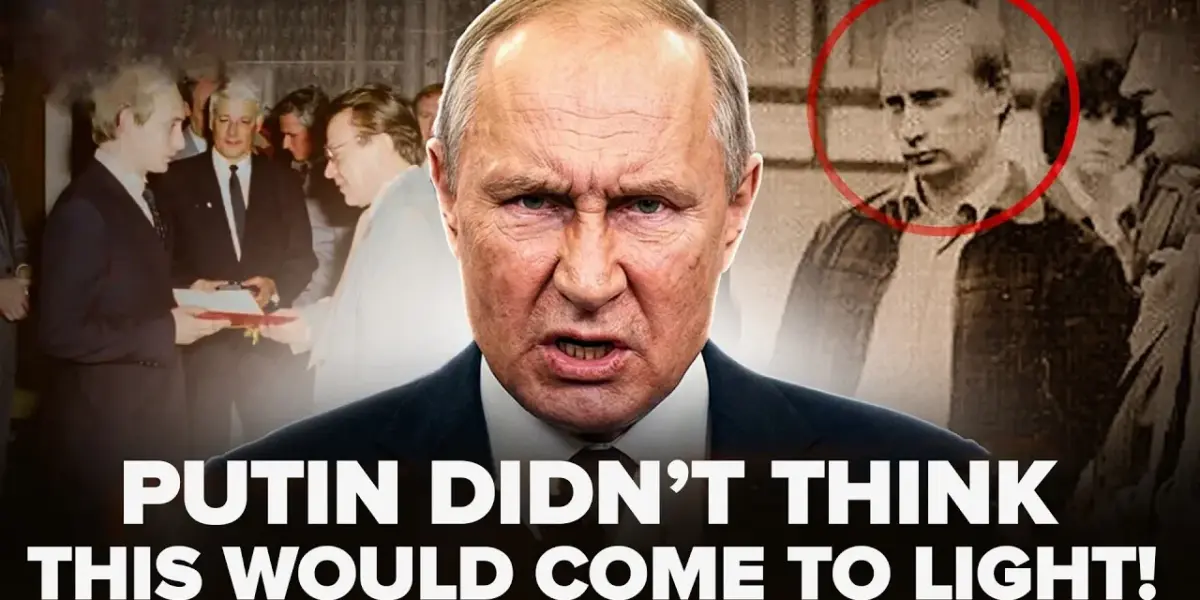
Putin’s Early KGB Role as Informant Surfaces
Newly uncovered details suggest Vladimir Putin began his career not as a law student, but as an informant for the KGB, the Soviet Union’s security agency. This information, surfacing decades later, paints a picture of his early life in Leningrad during the 1970s. While studying law at Leningrad State University, Putin reportedly offered his services to the KGB. This move, according to analysts, likely involved reporting on his peers.
University Years and KGB Assignments
The transcript suggests that prior to entering university, Putin engaged with the KGB. His alleged role as an informant would have required him to write reports on fellow students. This practice is described as his “first anatomy,” a way to dissect others’ lives for personal advancement within the system. If Putin was involved with the KGB for at least a year while at university, he would have been carrying out assignments for the Fifth Directorate. This branch focused on combating “hostile ideology,” which often meant suppressing dissent.
Putin’s tasks would have included identifying students who criticized the Communist Party or Soviet leaders, or those who told political jokes. He was then expected to report these activities. Putin himself has stated that the KGB taught him to love his country. However, his portrayal of the KGB in his later years as a “debating club” where he could challenge veteran officers on the constitution is contrasted with this earlier alleged role.
“I told him that in my opinion, this was illegal. Then comes an interesting thing. He looked at me in surprise and said, ‘How can that be? We have such and such an instruction.'”
This anecdote, shared by Putin, is presented as an example of his youthful idealism challenging the system. He claimed to have argued against KGB instructions that he believed contradicted Soviet law and the constitution. He noted that in 1976, such challenges were met with laughter rather than severe punishment, suggesting a less repressive atmosphere compared to earlier periods.
The Peter and Paul Fortress Incident
The article highlights a specific event in September 1976, near the Peter and Paul Fortress. Artist Dimitri Prigov died in a suspicious fire, an event that angered his friends. In response, artists Yuli Rybakov and Alexander Zholkovsky painted a defiant message on a KGB building wall: “You crucify liberty, but the human soul knows no shackles.” The inscription was visible throughout the city, causing a panic among authorities.
To cover the message, officials reportedly used coffin lids from a nearby funeral workshop. This act of covering words of freedom with coffin lids is presented as a symbolic moment. It is at this time that 23-year-old Lieutenant Vladimir Putin allegedly took his first steps within the regime’s apparatus. Historians recently discovered evidence, specifically a search protocol from Oleg Volkov’s apartment, listing KGB officers involved. Lieutenant Vladimir Putin’s name appeared on this document.
Putin’s Alleged Role in Investigations
The search protocol suggests that Putin was undergoing training for operational staff duties at the time. This period likely involved practical experience, such as searching apartments for “seditious material.” The transcript implies that while Putin was involved in these searches, his associates were facing intense pressure. They were allegedly given an ultimatum: either remain silent and face charges for hooliganism, or continue political protests and endanger 18 other individuals.
Rybakov and Zholkovsky were reportedly sent to labor camps. This experience, the article suggests, provided Putin with crucial insights into how to break individuals by targeting their inner circles. This method, it is argued, did not disappear with the Soviet Union but continued to influence the system, eventually leading those who operated within it to positions of power in modern Russia.
From Informant to President: A Coded Career
The narrative suggests that the system Putin grew up in valued loyalty and ruthlessness, sometimes attaching nicknames that reflected perceived weaknesses. Within the KGB, Putin was reportedly nicknamed “The Cigarette Bot.” However, he allegedly aspired to a more glamorous spy persona, inspired by fiction. As president, he has been seen as attempting to distance himself from his early nickname and embrace a more formidable image.
His use of pseudonyms, common in intelligence work for secrecy, is mentioned. The article draws a parallel between his early experiences and his later exercise of power, suggesting he learned to use “secret protocols as an instrument of absolute power.”
Dresden Years and the Fall of the Wall
In 1985, Putin was stationed in Dresden, East Germany, a location under the surveillance of the Stasi, the East German secret police. As a KGB officer, he reportedly had access to Stasi facilities. During this period, he is said to have studied methods used in special isolation units where prisoners were controlled through manipulation of light, sound, and even sleeping positions.
The fall of the Berlin Wall in 1989 marked a significant turning point. As East Germans stormed government buildings, demanding access to archives, Putin was reportedly involved in destroying documents at the Soviet residency building. The Stasi themselves had begun destroying documents days earlier, anticipating the consequences.
The Dresden Stand-off Myth
A widely circulated story claims that Putin single-handedly confronted an angry crowd outside the KGB building in Dresden, threatening them with his pistol. This narrative portrays him as a heroic figure defending Soviet territory. However, witnesses reportedly recall the event differently. They describe a crowd more interested in the Stasi building across the street and Putin emerging not as a hero, but as a confused officer.
According to these accounts, Putin called Moscow for orders but received no clear instructions. This moment is presented as a realization that the empire he served was faltering. The experience in Dresden is said to have instilled in him a deep-seated fear of public unrest and a belief in the necessity of absolute control, leading him to build a system in Russia focused on “document furnaces” that never cool down.
Legacy of Control
The article concludes by framing Putin’s career as a progression from a “patty informant” to a figure who “boarded up freedom with coffin lids.” It poses a question to the reader about which detail of his past is most striking and whether former officers can truly leave their past behind.
Source: 😱Putin HID THIS FOR 50 YEARS! Here’s where his NAME surfaced. Kremlin ORDERED SILENCE about THIS (YouTube)

Related Articles
Putin’s War Aims: Annihilation, Not Peace
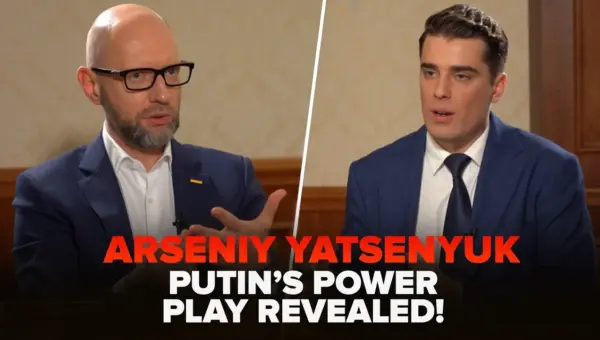
Russia's war aims in Ukraine are centered on annihilation, not peace, according to a former Ukrainian Prime Minister. He describes negotiations as a KGB tactic and highlights Russia's strategic alliance with Iran. Putin's goal is to destroy Ukraine as a state, not to reach a genuine settlement.
White House Ballroom Faces Backlash, Echoing Past Controversies
A controversial new ballroom at the White House has received final approval, sparking debate. This mirrors historical opposition to other now-iconic White House features, suggesting future acceptance.

Russia Blocks Telegram, Alienating Putin’s Vloggers
Russia's ban on Telegram has silenced Kremlin-aligned bloggers and experts, cutting off a vital communication channel for millions. The move alienates key supporters and highlights the government's fear of uncontrolled information flow amidst economic and military challenges.