Iran Tensions Rise: Trump’s Deadline Looms
Global markets are on edge as a critical deadline looms in the Iran standoff. Escalating rhetoric and targeted strikes have heightened concerns, with analysts presenting various scenarios for the outcome. Investors are bracing for potential market volatility as diplomatic efforts face significant challenges.

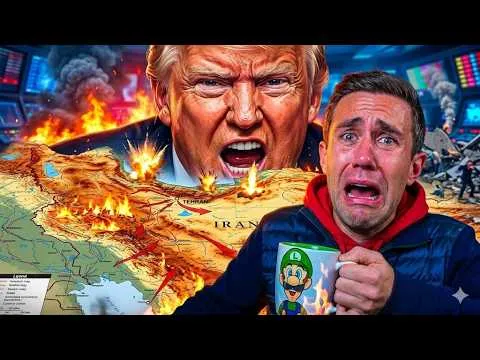
Global Markets Brace as Iran Deadline Approaches
The world is watching closely as a critical deadline nears in the tense standoff with Iran. Recent actions and rhetoric from Washington have intensified concerns, with some describing President Donald Trump’s approach as that of a “bloodthirsty mad dog.” This strong language comes from a White House official, suggesting deep divisions even within the administration regarding the strategy. Meanwhile, Secretary of War Pete Hegsth and Senator Marco Rubio are reportedly urging a more aggressive stance, sounding like “doves” compared to the President’s current position.
Escalating Strikes and Infrastructure Targets
The situation has escalated with a series of strikes targeting Iran’s infrastructure. Israel has already initiated some of these actions. Reports indicate that between eight and ten bridges, crucial for the Islamic Revolutionary Guard Corps (IRGC), have been hit. This includes a railway bridge, prompting warnings for Iranians to avoid the country’s rail system. Additionally, 50 sites on Car Island have been struck, fueling speculation about potential efforts to seize oil resources there, though it remains unclear if oil infrastructure was directly targeted.
Calls for Restraint Amidst Rhetoric
The escalating actions have drawn sharp criticism from some prominent figures. Fox News host Tucker Carlson has publicly urged U.S. officials and commanders to directly refuse any potentially illegal orders from the President. He stated, “Now is the time to say no. Absolutely not.” While the concept of rejecting unlawful commands exists, it is generally believed that such a scenario is unlikely to unfold given the current political climate. President Trump’s recent actions, including a successful “behind enemy lines” rescue mission, have also been cited as a way to boost military morale.
Political Divisions and International Concern
The intense rhetoric is also creating significant political division domestically. Representative Marjorie Taylor Greene has called for the invocation of the 25th Amendment, arguing that President Trump is unfit for office. She expressed concern over the potential for widespread destruction, stating, “not a single bomb has dropped on America and we cannot kill an entire civilization because of Donald Trump’s whims.” This statement came in response to President Trump’s own warning on Truth Social: “A whole civilization will die tonight if a deal isn’t made.” He added, “I don’t want it to happen, but it probably will,” a comment that has increased global nervousness.
Global Reactions and Diplomatic Breakdown
The rising tensions have prompted international concern and precautionary measures. Bahrain has issued a shelter-in-place order for all Americans within its borders. India has advised its nationals in Iran to stay clear of military installations and multi-story buildings for at least the next 48 hours. Amidst this, reports from The Wall Street Journal, citing three Iranian officials, indicate that Iran has officially cut off direct diplomatic ties with the United States. This move is seen as a defiant response to U.S. pressure to agree to a deal.
Mediators Struggle Amidst Stalemate
Despite efforts by mediators like Egypt, Turkey, and Pakistan, the diplomatic channels appear to be closing. Another senior Iranian official told Reuters that “no negotiations are going on with the United States.” Iran believes the U.S. wants them to surrender and insists that Washington must show flexibility first. Tehran has also warned that if its power plants are struck, Saudi Arabia’s power plants will face retaliation, potentially plunging the region into darkness. Allies, possibly referring to the Houthis, have also threatened to close the Bab Al-Mandab waterway if the situation becomes “uncontrollable.” Iran maintains it will not yield to “empty promises,” highlighting a cultural resilience that some believe strengthens their resolve in the face of adversity.
Market Volatility and Economic Indicators
The uncertainty is impacting financial markets. The 10-year Treasury yield has risen to approximately 4.38%, while the 2-year yield remains around 3.88%. Oil prices show a significant increase, with WTI crude at $116 per barrel and Brent crude at $110 per barrel. The stock market is experiencing selling pressure, with volatility rising above 26. Tesla has been a notable underperformer, dropping below the $347 level, with some analysts predicting a further decline to $318.
Analyst Scenarios for the Deadline
Amidst the escalating tensions, analysts are presenting various scenarios for the approaching deadline. One perspective suggests a 15% chance of a worst-case scenario involving widespread bombing, leading to prolonged conflict and elevated energy prices. A more probable scenario, estimated at 50%, involves a temporary delay or an “extension” in negotiations, where President Trump might claim progress to buy more time. This outcome would likely be seen as slightly bullish in the short term.
Mixed Outlook and Potential Outcomes
Another scenario, given a 25% probability, involves a combination of delays and further targeted strikes, which could be viewed as neutral to slightly bearish, indicating ongoing negotiation failures. The ultimate bullish scenario, an outright deal, is given a low probability of around 10%. Wall Street analysts generally concur on a low probability of a ceasefire but see a medium chance of a delayed threat and a high chance of increased air strikes. The likelihood of deploying troops on the ground is considered low, partly due to the risks associated with anti-aircraft weaponry like man-portable air-defense systems (MANPADS).
What Investors Should Know
The current geopolitical climate presents significant risks to global markets. Investors should monitor developments closely, particularly any shifts in diplomatic communications or further military actions. The potential for prolonged conflict could lead to sustained high energy prices, impacting inflation and corporate earnings across various sectors. While short-term market reactions can be volatile, the long-term implications depend heavily on whether a diplomatic resolution is achieved or if tensions escalate further. The upcoming inflation report will also be a key factor for market sentiment.
Source: Trump is LOSING IT | Mad Dog on Iran! (YouTube)

Related Articles

Iran Uses Civilians as Shields Amidst Escalating Tensions
Iran has reportedly deployed civilians as human shields around power plants and bridges amidst escalating tensions and collapsing diplomatic talks. This tactic aims to deter potential attacks by creating a moral dilemma, while official statements deny the use of nuclear weapons. The situation highlights a disturbing trend in modern warfare.

Trump Threatens Iran With ‘Demolition’ Amid Impeachment Talk
President Trump issued a stark warning to Iran, threatening widespread demolition of its infrastructure if a deal isn't reached. Meanwhile, domestic politics heat up as an Arizona Democrat plans to introduce articles of impeachment against Secretary of War Pete Hegseth, though success is unlikely in the current political climate.
Trump’s Cold Shoulder: Vance Stumbles on Global Stage
Senator JD Vance faced public embarrassment during a trip to Hungary, appearing uninformed on U.S. actions against Iran and unable to reach Donald Trump by phone. The incident highlights communication breakdowns and raises questions about Vance's diplomatic effectiveness.