Ukraine Strikes Russian Oil Ports, Crippling Exports
Ukraine's targeted strikes on Russian oil export terminals are crippling its war machine and reducing vital revenue. Retired General David Petraeus highlights Ukraine's advanced drone technology and its growing role as a global defense innovator.


Ukraine Targets Key Russian Oil Facilities
Ukraine has launched successful deep strike operations against vital Russian military targets, specifically focusing on facilities that fuel its war machine. These strikes have hit refineries, fuel storage depots, and crucial oil export terminals, causing significant damage and disruption.
Retired U.S. Army General David Petraeus, a former director of the CIA, highlighted the effectiveness of Ukraine’s advanced technology and command capabilities in these operations. He noted that Ukraine is now employing longer-range cruise missiles with larger warheads than those used by the United States.
Ukraine’s Evolving Role as “Arsenal of Democracy”
General Petraeus described Ukraine as potentially becoming the “most important military industrial complex in the free world.” He pointed to Ukraine’s cutting-edge production of unmanned systems for air, ground, and sea applications. The country’s ability to rapidly innovate, with software updates happening weekly and hardware changes every few weeks, creates a dynamic industrial ecosystem.
This innovation is reminiscent of the United States’ role during World War II, when it supplied its allies and became known as the “arsenal of democracy.” Petraeus believes Ukraine will solidify this position once the conflict ends, continuing to produce advanced military technology.
Battlefield Observations: Drones and Fusion Warfare
During his visit to Ukraine, Petraeus observed the current situation on the front lines. He noted very little movement due to constant surveillance from both Ukrainian and Russian drones. The rapid fusion of information, where detected enemy actions are quickly targeted, is transforming warfare.
He witnessed a demonstration where a Ukrainian Mavic drone identified a Russian soldier attempting to move through a wooded area. The drone’s battery was quickly replaced by another, and the soldier’s movements were tracked. First-person view drones then attempted an attack, with another drone taking over when the first’s battery depleted. This coordinated effort, managed through systems like Google Talk, highlights Ukraine’s advanced command and control.
These drone operations are happening hundreds of times daily along the front. Ukrainian soldiers are using elaborate, multi-level dugouts to survive constant artillery fire and drone surveillance. Drones are also used for delivering supplies and evacuating casualties, showcasing a new form of warfare.
Impact on Russian Oil Exports
The Ukrainian strikes have significantly impacted Russia’s oil export capacity. Reports indicate that at least 40% of Russia’s pre-war oil export capacity has been halted. This reduction in crude oil and refined product exports directly affects Russia’s revenue, especially as it faces potential funding shortfalls in its national welfare fund.
This disruption comes at a critical time, particularly with reduced crude oil and liquefied natural gas exports from the Gulf region. These global supply issues have, in some cases, led to sanctions being lifted on Russia, allowing it to fetch higher prices for its oil. This is an unintended consequence that benefits Russia financially.
Strategic Implications
The attacks on Russian oil infrastructure represent a significant strategic blow. By targeting the revenue streams that fund its war effort, Ukraine aims to pressure Moscow into ending hostilities. The disruption to oil exports not only reduces Russia’s income but also impacts global energy markets.
This strategy is designed to force Russian President Vladimir Putin to reconsider his calculus. The economic pressure could be a key factor in convincing Russia that a cessation of hostilities is necessary, mirroring Ukraine’s own desire for peace. A comprehensive approach involving sanctions, restrictions, and targeting Russia’s financial support network is crucial.
Ukraine’s Defense Diplomacy
Ukraine has signed defense cooperation agreements with Saudi Arabia, the United Arab Emirates, and Qatar. These partnerships validate Ukraine’s achievements in military technology and expertise, particularly in countering drones.
Countries in the Gulf region, facing challenges with drones similar to those used against Ukraine, have turned to Kyiv for assistance. Ukraine’s demonstrated success in intercepting at least 90% of incoming drones makes its expertise highly valuable. President Zelenskyy’s diplomatic efforts to share this expertise and provide drone interceptors to these nations are seen as a strategic masterstroke.
Negotiations and Future Support
Regarding potential negotiations, Petraeus emphasized that Ukraine has been negotiating in good faith, while Russia has refused to engage. For any agreement to occur, Russia must show a willingness to negotiate.
Continued pressure through sanctions and robust support for Ukraine is essential to compel Putin to seek an end to the conflict. The duration of the war depends on multiple factors, including global oil prices, the effectiveness of further sanctions, and Russia’s access to components and materials from countries like China.
Financial assistance, such as the recently approved funding for Ukraine, will be critical for its survival and economic stability. This support aims to enable Ukraine to sustain itself financially for an extended period.
Broader Geopolitical Context
The conflict’s impact extends beyond Ukraine and Russia. The disruption in energy markets and the shifting alliances highlight the interconnectedness of global security and economics.
Ukraine’s success in developing advanced drone technology and its ability to counter similar threats position it as a key player in future defense strategies. Its cooperation with Middle Eastern nations underscores its growing influence and the global demand for its expertise.
Source: 💥Putin’s oil empire KNOCKED OUT! Key export ports ON FIRE! Fatal weakness EXPOSED@WorldatStake24 (YouTube)

Related Articles
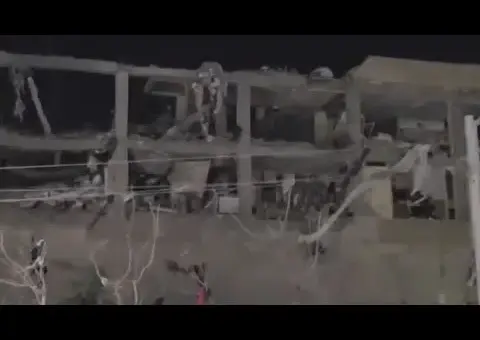
Iran and US Trade Blows as Tensions Spike
The U.S. and Iran are engaged in a dangerous exchange of strikes, with a critical deadline set by President Trump looming over the Strait of Hormuz. Both nations, along with Israel, are escalating military actions, while diplomatic channels remain open but strained.
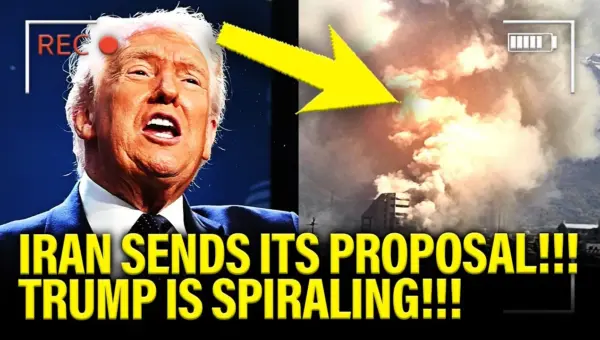
Trump’s Iran Threats Spark War Crimes Fears
Former President Donald Trump's extreme threats against Iran have led to a communication blackout and fears of war crimes. Iran has warned of severe regional retaliation if attacked, while international figures call for Trump's removal from office.


Iran Uses Civilians as Shields Amidst Escalating Tensions
Iran has reportedly deployed civilians as human shields around power plants and bridges amidst escalating tensions and collapsing diplomatic talks. This tactic aims to deter potential attacks by creating a moral dilemma, while official statements deny the use of nuclear weapons. The situation highlights a disturbing trend in modern warfare.