US Threatens Iran: Attack Bridges, Power Plants
President Trump has issued escalating threats to attack Iran's bridges and power plants if the Strait of Hormuz is not reopened, setting a deadline of 8 p.m. Eastern Time. Experts and international law observers question the justification and legality of targeting civilian infrastructure, arguing it would punish the Iranian people and potentially backfire.


US Threatens Iran with Infrastructure Attacks
President Trump has repeatedly threatened to attack Iran’s bridges and power plants if the country does not reopen the Strait of Hormuz. These threats, initially set for March 21, have been pushed back multiple times. On Easter morning, the president issued an expletive-laden warning, stating that the entire country could be devastated in a single night, possibly as soon as the next day.
Escalating Tensions and Iran’s Response
The president reiterated these threats, suggesting the deadline would be final while also acknowledging ongoing negotiations. Iran, however, has publicly rejected a 45-day ceasefire proposal from mediating countries. Instead, Tehran put forward its own 10-point plan, which includes a permanent end to the fighting. Iranian officials have warned that any U.S. action would result in a response they would regret.
The President’s Stark Warning
Speaking to reporters, President Trump described the potential military action in stark terms. “The entire country could be taken out in one night, and that night might be tomorrow night,” he stated. He elaborated, “every bridge in Iran will be decimated by 12 o’clock tomorrow night, where every power plant in Iran, will be out of business, burning, exploding and never to be used again.” He added that this complete demolition could happen within four hours if desired. However, he also suggested a desire to avoid such action, even offering to help rebuild the nation.
“We may even get involved with helping them rebuild their nation and you know what if that’s the case the last thing we want to do is start with power plants which are among the most expensive thing and and bridges.”
Diplomatic Stalemate and International Concerns
Despite the threats, negotiations are reportedly ongoing, with some countries assisting in mediation. Iran has been given until tomorrow at 8 p.m. Eastern Time, a deadline that has been extended several times. Experts like Richard Haass argue there is no justification for attacking Iran’s civilian infrastructure. He points out that such actions would punish the Iranian people, not just the regime, potentially turning them against the U.S. instead of fostering support for freedom.
International Law and War Crimes
The potential targeting of civilian infrastructure raises serious questions about international law. According to basic interpretations of these rules, attacking power plants and bridges not directly fueling military action against the U.S. could be considered war crimes. This is because the intent appears to be punitive, aiming to inflict suffering on the population to force political change.
The Cynicism of Current Strategy
Critics argue that the current U.S. strategy is cynical. Initially, President Trump encouraged the Iranian people to protest, suggesting help was on the way. Now, the threat is to destroy their infrastructure, which would cause immense suffering to the very people who might have hoped for liberation. This approach risks hardening the Iranian population against the U.S. and strengthening the regime, rather than achieving regime change or capitulation.
Negotiations and Future Outlook
The Pentagon is reportedly working to justify some of the potential targets, attempting to classify them as military facilities to avoid war crime definitions. However, the core threat of widespread infrastructure destruction remains on the table. The Wall Street Journal editorial page has criticized the indiscriminate targeting of critical infrastructure as both wrong and unwise. While public positions remain maximalist, there is a possibility that private messages between the U.S. and Iran are closer to reality. Negotiating through third parties is difficult, and experts suggest direct talks are needed. The current threats, rather than facilitating diplomacy, may be hardening the Iranian regime, which has a long history of resisting external pressure.
What to Watch Next
All eyes are on the looming deadline and whether diplomatic efforts can de-escalate the situation. The international community will be watching closely to see if the U.S. proceeds with its threats and what the consequences might be, both militarily and diplomatically. The effectiveness of these aggressive tactics in achieving U.S. objectives remains a significant question.
Source: Richard Haass: There is no argument for attacking Iran's bridges and power plants (YouTube)

Related Articles


Dem Rep. Calls Trump’s Iran Threats ‘Apocalyptic’
Democratic Congresswoman Yasemin Anzari has strongly condemned President Trump's "apocalyptic" threats against Iran, warning of potential genocide and nuclear war. She is calling for the 25th Amendment to be invoked and is introducing articles of impeachment against Defense Secretary Pete Hegseth. Anzari fears the President's rhetoric could strengthen the Iranian regime and harm its people.
US Strikes Iran’s ‘Mosquito Fleet’ to Secure Oil Lanes
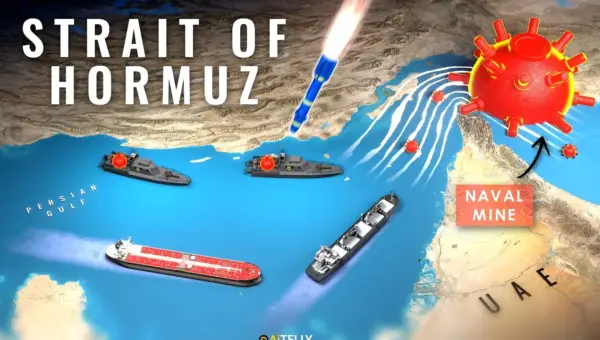
Iran's use of naval mines and fast attack boats in the Strait of Hormuz prompted a decisive US response. The US employed a preemptive strategy, striking mine-laying ships and storage facilities with precision-guided missiles and bombs.

Iran’s Strait of Hormuz Trap: How the US Fights Back
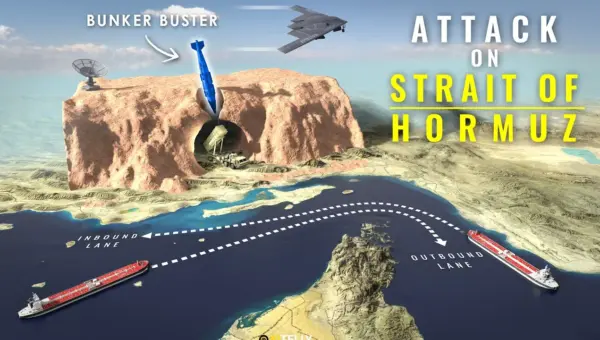
Iran's strategy to control the Strait of Hormuz involves using islands as bases for anti-ship missiles and launching swarm attacks with small boats. The US counters with advanced defense systems, surveillance drones, and powerful bunker-buster bombs, highlighting the ongoing tension in this vital global shipping lane.