Americans’ Worldview Exposed: Are We Truly Ignorant?
Online discussions reveal a surprising lack of global awareness among some Americans, from basic geography to cultural norms. This disconnect highlights the need for broader perspectives in an interconnected world.

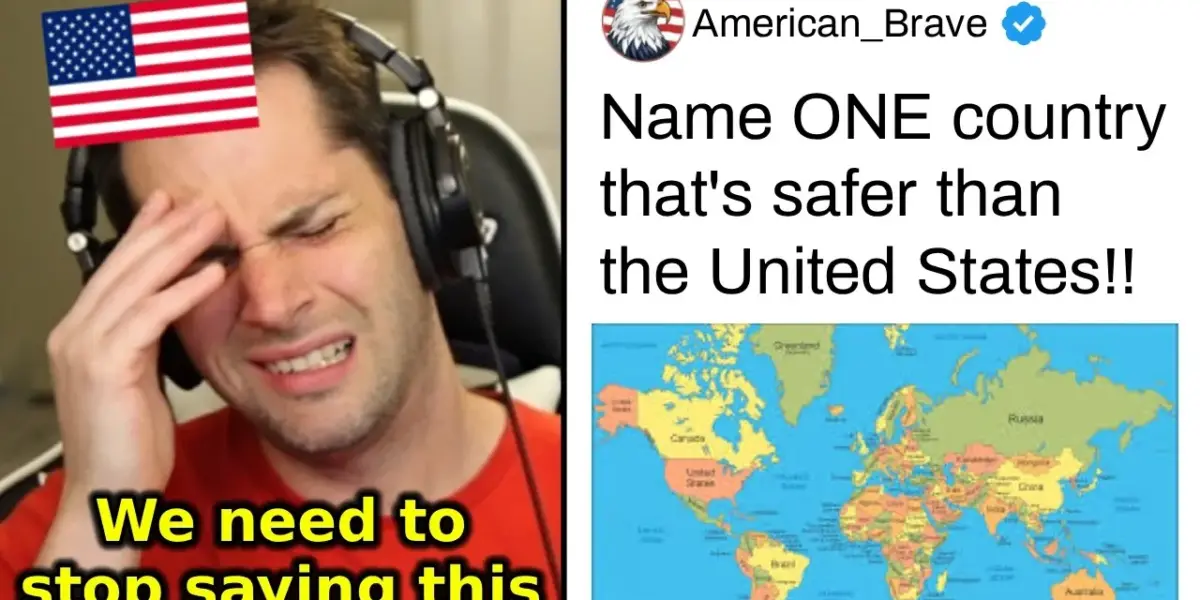
Americans’ Worldview Exposed: Are We Truly Ignorant?
A recent online discussion highlights a concerning trend: many Americans seem to lack basic knowledge about the rest of the world. This isn’t about being a history buff or a geography expert. It’s about fundamental misunderstandings that suggest a surprisingly narrow view of global realities.
Safety First? A Misguided Claim
One striking example involves a question posed online: “Name a European country that is way safer than the United States.” The response from an American was shock, implying the US is a top contender for safety. This viewpoint clashes sharply with objective data. When looking at global safety rankings, numerous European nations consistently rank higher than the US. Countries like Switzerland, Norway, and Sweden appear much further up the list, while the US often falls much lower, sometimes even below countries like France.
This isn’t to say the US is a dangerous place to live. Many areas are safe and welcoming. However, the ease of access to firearms and higher rates of crime and traffic fatalities, when compared to many European nations, paint a different picture. The initial American response suggests a disconnect between perception and reality, possibly fueled by a belief in American exceptionalism.
Lost in Translation: Basic Geography and Culture
Another viral moment involved a challenge: “Name a European country without having to Google it.” The response? “London, Paris, Hawaii.” This highlights a profound lack of geographical awareness. London and Paris are cities, not countries, and Hawaii is a US state. It raises the question of how many Americans truly know the difference between a city and a country, or even where certain major global landmarks are located.
This lack of basic geographical knowledge is mirrored in cultural assumptions. One American questioned if other people eat breakfast foods like eggs, bacon, and waffles. This suggests a belief that such common foods are unique to American culture. Such a thought implies a limited exposure to global cultures, leading to the assumption that if an American hasn’t experienced it, it likely doesn’t exist elsewhere.
The responses to these statements often come with a heavy dose of sarcasm from non-Americans. This sarcasm, while perhaps amusing, points to a frustration with what appears to be American ethnocentrism – the tendency to view the world primarily through an American lens.
History and Naming Conventions: An American-Centric View
The issue extends to historical understanding as well. A Quora question asked if the British named their university Cambridge to copy Harvard. This reveals a fundamental misunderstanding of historical timelines and origins. Harvard University in the United States was founded centuries after the University of Cambridge in the UK. The American version was named in honor of the older British institution, not the other way around. This indicates a common American tendency to assume precedence or origin, even when historical evidence suggests otherwise.
Another example involves a celebration of a school’s 420th birthday. An American questioned this, assuming it was too early for America to have such a history, implying America’s existence began much later. This thought process again centers America’s timeline as the default, overlooking the fact that the US was not settled until well after the 1500s, when 420 years ago would place us.
Everyday Life: Spelled Wrong or Just Different?
Even simple interactions online reveal these cultural blind spots. When an American encountered the name “Patryk,” spelled with a ‘Y’, they assumed it was a misspelling, suggesting the person didn’t have a girlfriend or boyfriend because of it. The response came from a Polish individual clarifying that “Patryk” is a common Polish spelling of the name Patrick. This shows an inability to accept that names and spellings can differ across cultures, defaulting to the American standard as the only correct one.
Similarly, when asked where someone is from, Americans often respond with their state or even city (e.g., “New Jersey” or “Ohio”). For an international audience, this is unhelpful. Someone from Iceland asking this question likely wants to know the country, not a specific region within the US. It implies an assumption that the other person will be familiar with American geography, which is not always the case.
Emergency Numbers and Global Systems
Even seemingly universal systems can be misunderstood. The confusion between 911 (the US emergency number) and 999 (used in the UK and other countries) highlights this. Some Americans seem to believe the internet is solely an American domain, failing to recognize that emergency numbers vary globally. This suggests a lack of awareness that the internet connects people from all nations, each with their own systems and protocols.
The same applies to common knowledge about different countries. Many Americans are surprised to learn that the drinking age in most of the world is 18, not 21. Likewise, the widespread use of the metric system globally is often a revelation to Americans, who are accustomed to the imperial system. These examples point to a sheltered perspective, where American norms are often assumed to be global norms.
Why This Matters
These instances, while sometimes humorous, reveal a broader issue. A lack of global awareness can lead to misunderstandings, missed opportunities, and even strained international relations. In an increasingly interconnected world, empathy and understanding are crucial. When individuals and societies operate with a limited worldview, they risk appearing ignorant and insular.
The ease of access to information via the internet should, in theory, bridge these knowledge gaps. However, as these examples show, it can sometimes reinforce existing biases or simply go unnoticed by those who aren’t actively seeking broader perspectives. The tendency to assume American ways are the default can hinder genuine connection and learning.
Implications and Future Outlook
The trend suggests a need for greater emphasis on global education and cultural exchange. Exposure to different cultures, whether through travel, media, or direct interaction, can significantly broaden perspectives. It helps individuals understand that their own way of life is just one of many, and that diversity is a strength, not a deviation from the norm.
As the internet continues to connect people across borders, the hope is that such instances of ignorance will decrease. However, it requires a conscious effort from individuals to remain curious, open-minded, and willing to learn about the world beyond their immediate surroundings. The examples shared online serve as a wake-up call, urging Americans to step outside their comfort zones and engage more fully with the global community.
Source: Proof Americans Have NO IDEA How the World Works | #2 (YouTube)

Related Articles


Europe’s Wild Easter Traditions Shock American Viewers
An American observer was stunned by diverse European Easter traditions, from rolling real eggs and burning effigies to rocket wars and witch dress-ups. These customs reveal deep historical and cultural differences compared to familiar American celebrations.

German Homes Defy American Expectations: More Doors, Less Closets?
An American's reaction to a German home tour reveals surprising differences in architecture and living styles. The video challenges stereotypes about size, showcasing unique layouts, abundant doors, and a strong emphasis on custom design and outdoor living.


Asian Savings Habits Outshine Americans
A discussion on Club Shay Shay highlights a perceived difference in savings habits between Asian and American cultures. While Asians are seen as building significant savings even with modest incomes, Americans often struggle with spending, leading to zero savings.