Russia Aids Iran in Striking US Base
Russia has provided Iran with crucial targeting intelligence, enabling a successful strike on a U.S. military base in Saudi Arabia. This alarming collaboration highlights growing Russian support for anti-U.S. actions and raises serious questions about American military defenses and global security.

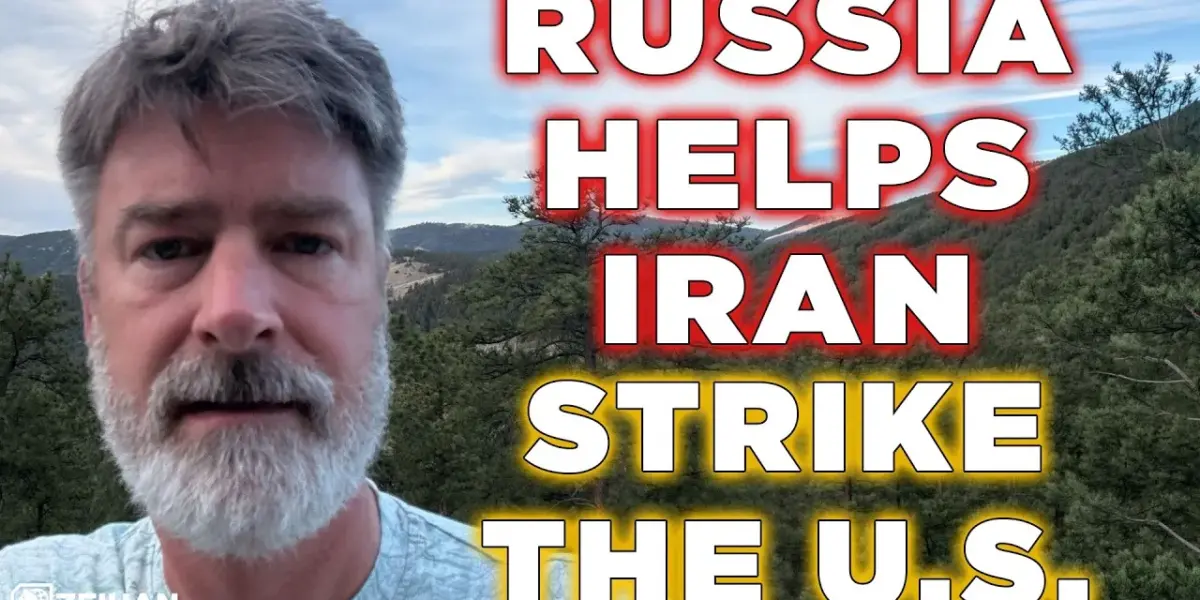
Russia Aids Iran in Striking US Base
A recent attack on Prince Sultan Air Base in Saudi Arabia, a key U.S. military site, has revealed a dangerous new level of cooperation between Russia and Iran. Several ballistic missiles and drones managed to bypass defenses, raising serious concerns about the security of American facilities in the Middle East.
The attack is troubling for several reasons. First, a U.S. air base should be one of the most secure locations against Iranian weaponry. The fact that these weapons got through shows a significant failure in defense. Second, the United States appears to be running low on the interceptors needed to stop such attacks.
The Critical Role of AWACS Planes
One of the most concerning targets hit was an E-3G AWACS aircraft. These large planes, easily recognizable by the radar dome on their backs, are vital for modern warfare. They patrol vast areas, providing real-time information on enemy aircraft, drones, and other threats. An AWACS can monitor about 120,000 square miles at once.
AWACS planes are especially important for detecting drones. Unlike ships that can track drones over water from a distance, AWACS are the best tool for spotting these threats early. The U.S. military has a very limited fleet of these aircraft, with only about 14 or 15 remaining. Even worse, about half of them are usually undergoing repairs at any given time. This means the U.S. has a much smaller ability to conduct air defense and missile defense operations, not just in the Middle East but around the world.
Russia’s Direct Involvement Revealed
The most disturbing part of this incident, revealed recently, is that Russia provided the crucial targeting information. Russia has military satellites that can gather intelligence. For years, Russia has been known to help countries that oppose the United States. However, this is different.
Now, Russia has been caught giving Iran real-time data on the exact locations of specific aircraft. This intelligence allowed Iran to precisely target key areas within American military facilities. This marks a direct escalation of Russian involvement in conflicts where the U.S. is a target.
Geopolitical Stakes and Motivations
The motivations behind this Russian-Iranian cooperation are complex. Russia seeks to weaken U.S. influence globally and test the limits of American power and response. By aiding Iran, Russia aims to distract the U.S. and potentially gain leverage in other areas, possibly related to ongoing conflicts in Europe or its own strategic interests.
Iran, facing international pressure and seeking to assert its regional power, sees Russia as a vital partner. The Islamic Republic aims to challenge U.S. military presence and alliances in the Middle East. This collaboration allows Iran to strike at U.S. interests with greater precision and effectiveness, boosting its own standing and deterring potential adversaries.
For the United States, this event represents a significant challenge. The administration must decide how to respond to direct Russian intervention that harms American military assets and personnel. Ignoring or downplaying the incident could embolden Russia and Iran further, while a strong response risks wider escalation.
Historical Context
This incident is not entirely out of the blue. Russia and Iran have a long history of cooperation, often driven by mutual opposition to U.S. foreign policy. Both countries have faced sanctions and diplomatic isolation from the West at various times. This shared experience has fostered a strategic partnership aimed at creating a multipolar world order, where U.S. dominance is reduced.
Historically, Russia has provided military and technical support to various states challenging Western influence. However, providing real-time targeting data for strikes against U.S. forces represents a new and more direct level of engagement. It echoes past proxy conflicts but with a contemporary technological edge.
Economic Considerations
Economic factors also play a role. Russia, heavily reliant on energy exports and facing Western sanctions, sees opportunities in deepening ties with Iran. Iran, also under sanctions, offers a market for Russian goods and a strategic partner in challenging global economic norms. The ability to disrupt energy routes or influence global energy prices is a shared interest that benefits both nations.
Global Impact
This event could reshape the global security landscape. It signals a growing willingness by Russia to directly support anti-U.S. actions, potentially encouraging other states to challenge American interests. The effectiveness of U.S. air defenses is also called into question, forcing a re-evaluation of military readiness and resource allocation. The U.S. faces a difficult choice: retaliate and risk wider conflict, or absorb the attack and risk appearing weak.
Future Scenarios
One possible future scenario is that the U.S. responds with targeted sanctions or diplomatic pressure against Russia and Iran. This could strain relations further but might avoid direct military confrontation. Another scenario involves the U.S. investing heavily in new defense technologies and bolstering its interceptor capabilities to prevent future attacks. A less likely but possible outcome is a significant de-escalation, perhaps driven by a change in leadership or a shift in geopolitical priorities.
Source: Russia Draws American Blood in Iran || Peter Zeihan (YouTube)

Related Articles


Dem Rep. Calls Trump’s Iran Threats ‘Apocalyptic’
Democratic Congresswoman Yasemin Anzari has strongly condemned President Trump's "apocalyptic" threats against Iran, warning of potential genocide and nuclear war. She is calling for the 25th Amendment to be invoked and is introducing articles of impeachment against Defense Secretary Pete Hegseth. Anzari fears the President's rhetoric could strengthen the Iranian regime and harm its people.
Iran’s Strait of Hormuz Trap: How the US Fights Back
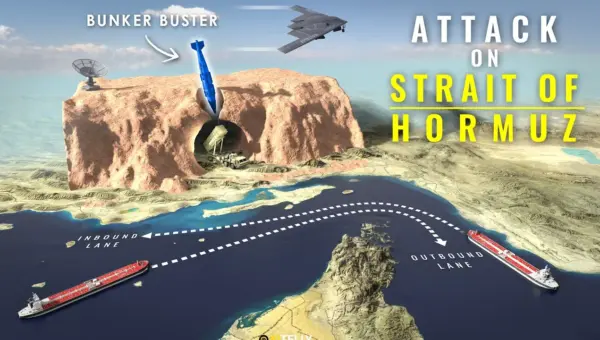
Iran's strategy to control the Strait of Hormuz involves using islands as bases for anti-ship missiles and launching swarm attacks with small boats. The US counters with advanced defense systems, surveillance drones, and powerful bunker-buster bombs, highlighting the ongoing tension in this vital global shipping lane.
US Aims to Cripple Iran’s Power Grid to Secure Strait of Hormuz
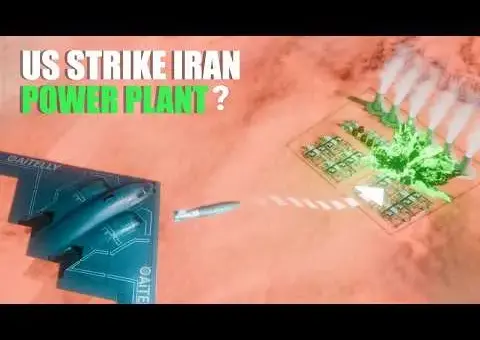
A new US strategy reportedly targets Iran's power grid, including major plants like Damavand, to force open the Strait of Hormuz. The plan involves multi-stage air attacks using advanced bombers and precision munitions to cripple energy infrastructure and cause cascading failures.