GOP Lawmaker: Democrats’ ‘America-Last’ Stance Sinks Polls
A Republican congressman asserts that the Democratic Party's "America-Last" rhetoric is causing a significant drop in their poll numbers. He criticizes their foreign policy stances and perceived alignment with adversarial regimes over American interests.

GOP Lawmaker Slams Democrats’ ‘America-Last’ Stance, Citing Poll Plunge
A prominent Republican congressman is directly linking the Democratic Party’s struggles in recent polls to what he calls an “America-Last” and “America-hating” agenda. Scott Perry, a member of the House Oversight Committee, stated that the American people are growing tired of policies and rhetoric that he believes disparage the United States.
Perry’s comments came in response to a contentious debate on CNN. During the segment, a former Obama administration official suggested that Iran was somehow “winning” due to its online propaganda efforts, including the use of internet memes. This assertion was met with strong disagreement from Scott Jennings, a political commentator, who highlighted that Iran has had a significant portion of its navy sunk or damaged.
Iran’s Actions vs. Online Influence
The discussion touched upon Iran’s capabilities, noting its use of cheap drones supplied to Russia for the conflict in Ukraine. However, the former Obama official’s focus on Iran’s internet propaganda was seen by Perry as a distraction from the regime’s more serious actions. He pointed out Iran’s ongoing public executions and its history of oppressing its own citizens since the 1979 revolution.
“Instead of blaming the terrorist regime that took over in 1979 for all these problems… they have to blame President Trump or anybody associated with President Trump,” Perry stated, criticizing what he sees as a reflexive opposition to anything related to the former president.
Perry further argued that this focus on criticizing former President Trump and his allies, even if it means siding with regimes like Iran, is alienating voters. He contrasted this with the Republican Party’s own challenges, acknowledging that the party sometimes struggles to deliver enough for the American people, citing the difficulty in passing the “Save America Act” even with a Republican-led Senate.
Criticism of Biden Administration’s Foreign Policy
The conversation also drew parallels between the current administration’s handling of foreign policy and past events. Perry criticized the Democratic Party’s perceived willingness to side with oppressive regimes like Iran and the Taliban, particularly in light of the U.S. withdrawal from Afghanistan. He recalled instances where U.S. military hardware was left behind, falling into the hands of terrorists.
He specifically referenced the Taliban parading U.S.-seized tanks and weaponry, contrasting it with criticism leveled against the Trump administration for destroying military assets. Perry argued that destroying hardware, such as two C-130 aircraft, was a necessary measure to prevent it from falling into enemy hands. This action was taken after the fall of Kabul, an event where, according to Perry, sensitive cryptographic equipment and information about individuals who aided U.S. forces were also compromised, leading to dire consequences for those individuals.
Perry emphasized that the American people understand the difference between wanting to avoid destroying American property and the necessity of preventing that property from being used by adversaries. He stressed that ensuring the safety of U.S. service members is paramount, suggesting that the cost of preventing enemy acquisition of military assets is a price worth paying.
Market Impact
While the transcript does not contain specific market data or stock movements, the political commentary suggests a potential impact on investor sentiment. A perception that a major political party is pursuing an “America-Last” agenda could influence confidence in the U.S. economy and its standing on the global stage. This, in turn, could affect investment decisions, particularly those sensitive to geopolitical stability and national economic policy.
What Investors Should Know
Investors closely watch political developments, as shifts in party platforms and public opinion can signal future policy changes. The criticism directed at the Democratic Party’s perceived foreign policy and national pride stance, as voiced by Representative Perry, highlights a potential area of voter concern. Such concerns can translate into electoral outcomes that may lead to different economic and trade policies, impacting various sectors.
The comparison to the handling of events in Iran and Afghanistan underscores the importance of geopolitical risk in investment strategies. Decisions made regarding military assets, international relations, and national security can have ripple effects across global markets. Investors may need to consider how these political narratives and potential policy shifts could influence sectors like defense, international trade, and energy.
Furthermore, the mention of propaganda and information warfare, while presented in a political context, points to the evolving nature of conflict and influence. In the financial world, understanding information flow, market sentiment, and the impact of narratives is crucial for navigating complex investment environments.
Source: Democrats have sunk SO LOW in the polls, GOP rep. says (YouTube)

Related Articles


Trump Ditches Vance’s Call, Shows Favor for Rubio
Senator JD Vance's live rally call to Donald Trump went unanswered, leading to an awkward voicemail. The incident suggests a potential cooling of relations between Vance and Trump, with a perceived favoritism towards Senator Marco Rubio.
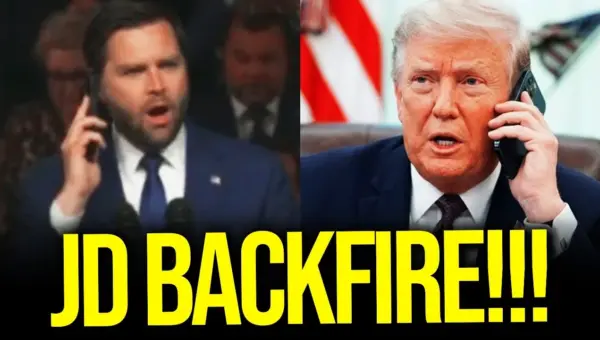
Trump’s Cold Shoulder: Vance Stumbles on Global Stage
Senator JD Vance faced public embarrassment during a trip to Hungary, appearing uninformed on U.S. actions against Iran and unable to reach Donald Trump by phone. The incident highlights communication breakdowns and raises questions about Vance's diplomatic effectiveness.
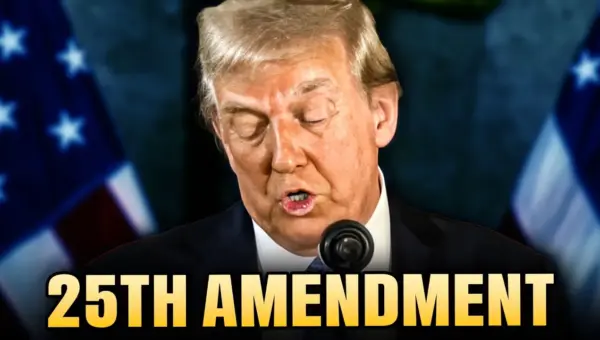
25th Amendment Calls: Can JD Vance Act Against Trump?
Searches for the 25th Amendment are spiking as public figures and citizens demand action regarding Donald Trump's behavior. The process hinges on Vice President JD Vance, who must secure support from Congress or the Cabinet to initiate removal. This analysis explores the challenges and potential future actions, including congressional hearings if Democrats regain control.