Trump’s War Threats: “Stone Age” for Iran?
President Trump has issued severe threats against Iran, warning of military action that could send the country back to the "stone ages." Experts and Iranians express deep concern over potential war crimes and the devastating impact on civilians. Analysts question the unpredictable nature of the threats and the president's understanding of conflict.

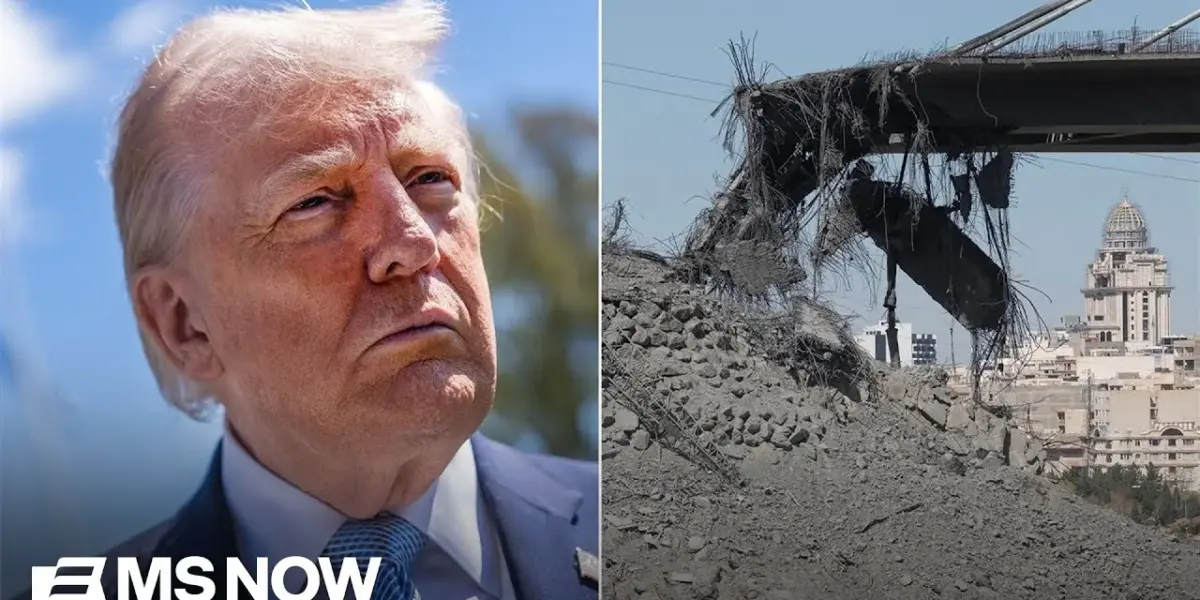
Trump Issues Stark Threats Against Iran
President Donald Trump has escalated his rhetoric against Iran, issuing severe threats of military action. In a series of social media posts and a press conference, Trump warned that the U.S. could strike Iran’s power plants and bridges. He described a potential outcome where Iran would be sent back to the “stone ages.” These statements came during the 38th day of U.S. involvement in the region, following an earlier threat made on Easter Sunday.
“Open the Effing Strait” or Face Demolition
Trump’s specific demands and threats were laid out clearly. He wrote, “Open the effing strait you crazy bastards or you’ll be in a living hell. Just watch. Praise be to Allah.” During a press conference about the rescue of an American airman from Iran, he repeated these warnings. Trump stated that the entire country could be “taken out in one night,” possibly as soon as the next day. He detailed a plan to destroy every bridge and power plant in Iran within four hours, leading to complete demolition. This aggressive stance was presented as a consequence if Iran did not comply with opening a specific strait by a certain deadline.
Experts Warn of War Crimes and Civilian Impact
The president’s threats have drawn serious concern from experts and international observers. Iran has promised a significant response if civilian targets are hit. Many experts agree that attacking power plants and bridges, which civilians rely on, could be considered a war crime. This would violate international laws designed to protect non-combatants during conflict. The potential consequences of such actions extend far beyond military targets, impacting essential services like water, sanitation, and healthcare.
Voices from Iran: Fear and Frustration
While the Iranian regime often controls the narrative, the voices of ordinary Iranians reveal deep anxiety about the escalating situation. One woman in her 20s described her mother filling every available bottle with water, expressing uncertainty about their future living situation. She felt that more Iranians were realizing Trump did not care about them. A man in his 20s, while acknowledging reasons for past U.S. and Israeli strikes, stated that hitting a power station would paralyze the country and help the ruling Islamic Republic. Another man expressed a feeling of being trapped, unable to stop the events unfolding and fearing a future without basic necessities like water and electricity.
Analysis from Journalists and Military Experts
Journalists and military analysts have weighed in on the unpredictable nature of Trump’s threats. Luke Broadwater, a White House correspondent, noted the president’s history with deadlines and questioned the credibility of this new one. He pointed out that the press conference, intended to celebrate a rescue, quickly turned into threats of war crimes and seizing Iranian assets. Susan Glasser, a staff writer, compared Trump’s approach to a television cliffhanger, aiming to keep everyone off balance. She described the situation as a disturbing mix of farce and tragedy, where threats of mass civilian destruction are used as a negotiation tactic. She also noted a similarity to actions taken by Vladimir Putin.
Military Perspective: Misunderstanding Conflict
Retired Lieutenant General Mark Hertling expressed concern over what he sees as a misunderstanding of warfare by the president and some advisors. He suggested that the military’s success in limited, well-executed operations might lead some to believe conflict can be easily controlled or turned on and off. Hertling emphasized that destroying civilian infrastructure would be catastrophic, impacting every citizen. He highlighted that the president’s descriptions of conflict, such as using rifles in a party, show a lack of understanding of real combat. Hertling concluded that the current approach, threatening to destroy an entire country, is unbelievable and not a viable strategy.
Looking Ahead: Uncertainty and De-escalation
The coming days will be crucial in determining whether Trump’s threats translate into action or if diplomatic efforts can de-escalate the rising tensions. The international community will be watching closely for any signs of military engagement, particularly any actions that could be construed as war crimes. The impact on civilian populations in Iran and the potential for regional retaliation remain significant concerns.
Source: 'Not exactly coherent': Trump's belligerent threats leave more questions in Iran (YouTube)

Related Articles


Dem Rep. Calls Trump’s Iran Threats ‘Apocalyptic’
Democratic Congresswoman Yasemin Anzari has strongly condemned President Trump's "apocalyptic" threats against Iran, warning of potential genocide and nuclear war. She is calling for the 25th Amendment to be invoked and is introducing articles of impeachment against Defense Secretary Pete Hegseth. Anzari fears the President's rhetoric could strengthen the Iranian regime and harm its people.
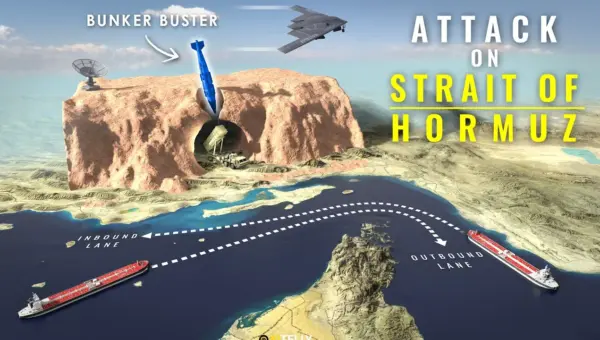
Iran’s Strait of Hormuz Trap: How the US Fights Back
Iran's strategy to control the Strait of Hormuz involves using islands as bases for anti-ship missiles and launching swarm attacks with small boats. The US counters with advanced defense systems, surveillance drones, and powerful bunker-buster bombs, highlighting the ongoing tension in this vital global shipping lane.
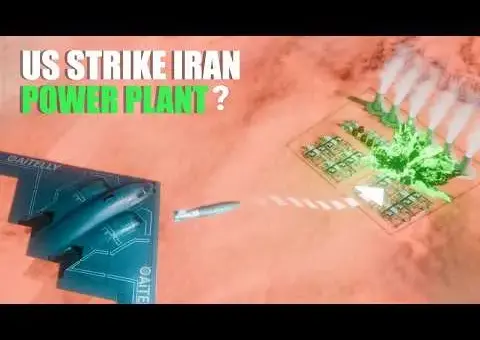
US Aims to Cripple Iran’s Power Grid to Secure Strait of Hormuz
A new US strategy reportedly targets Iran's power grid, including major plants like Damavand, to force open the Strait of Hormuz. The plan involves multi-stage air attacks using advanced bombers and precision munitions to cripple energy infrastructure and cause cascading failures.