US Military Faces Iran War Amidst Leadership Chaos
The U.S. military is reportedly fighting a war against Iran while simultaneously facing internal leadership disruptions and a lack of preparedness. Reports indicate significant aircraft losses despite claims of air superiority, and troops are being housed in hotels due to unsafe bases. High-ranking military officials have been dismissed, adding to concerns about the nation's strategic and operational readiness.


Military Faces Dual Threat of Iran and Internal Disruption
The United States military is engaged in a complex conflict on two fronts: confronting Iran and dealing with what critics describe as incompetence and disruption within its own leadership. This dual challenge is playing out against a backdrop of conflicting claims about military successes and significant losses. The situation raises serious questions about preparedness and strategic decision-making at the highest levels of government.
Conflicting Reports on Air Superiority
Following initial claims from President Trump and Defense Secretary Pete Hegseth that the U.S. held “complete control” and “uncontested airspace” over Iran, reports emerged of significant aircraft losses. Trump stated, “their air force is gone. Their anti-aircraft equipment is gone. We’re flying wherever we want.” However, subsequent events contradicted these assertions. Iran reportedly shot down an F-15 fighter jet, and an A-10 Warthog was also downed during a rescue mission. Two C-130s and several MH-6 helicopters were also destroyed in the same operation.
Undefended Assets and Friendly Fire Incidents
The transcript details further challenges, including the destruction of a $300 million AWACS plane by Iran while it was left undefended on an airbase in Saudi Arabia. Compounding the issues, three U.S. F-15s were shot down early in the conflict by allied forces in Kuwait. This friendly fire incident occurred because, according to the report, basic de-confliction protocols were not followed, leading allies to mistakenly target U.S. aircraft.
Vulnerable Bases and Troop Safety Concerns
Dozens of American troops have reportedly been killed or wounded by Iranian missile and drone attacks. These attacks targeted U.S. bases that were described as unprotected and within easy reach of Iranian weaponry. The U.S. initiated the conflict without adequately preparing its bases for inevitable retaliation. This lack of preparation has led to a situation where U.S. military commanders are scrambling to find alternative lodging, such as hotels, for troops because their own bases are considered unsafe.
The United States bizarrely started this war on its own terms and on its own timeline without first preparing its own basis for the inevitable Iranian retaliation with missiles and drones.
Shifting Deadlines and Strategic Uncertainty
The conflict has also been marked by shifting deadlines and a lack of clear communication regarding the war’s objectives. President Trump reportedly gave Iran a deadline to open the Strait of Hormuz on March 23rd, which passed. This deadline was then extended to April 6th, and subsequently to April 7th, with no clear explanation provided by the president for these changes. Critics question whether the president fully grasps the implications of these shifting timelines and the contradiction between his statements about Iran’s limited capabilities and the reality of downed U.S. aircraft.
Leadership Purges Amidst Conflict
Adding to the turmoil, a significant number of high-ranking military officials have been fired or pushed out. This includes the Army Chief of Staff, the head of Army Training Command, and the Army’s top chaplain. These dismissals come after a series of departures from key leadership positions, including the head of strategy for the Joint Chiefs, the head of U.S. Southern Command, the Navy Chief of Staff, the head of U.S. Special Operations Command, and top commanders from the Air Force. The Defense Intelligence Agency, Navy SEALs, U.S. Cyber Command, the National Security Agency, the Chairman of the Joint Chiefs, and the Commandant of the Coast Guard have also seen leadership changes.
Impact on Military Families
The report highlights a disturbing incident involving the family of a deploying U.S. Army Staff Sergeant. His wife, who had no criminal record and had lived in the U.S. since childhood, was reportedly arrested by ICE agents and taken to an immigrant detention facility. This occurred when she attempted to obtain her military spouse ID at Fort Polk, Louisiana. The incident draws parallels to a previous announcement, later walked back, that ICE agents would be present at Marine Corps Parris Island to arrest family members attending graduation ceremonies.
Veterans Face Housing Foreclosures
Beyond the immediate conflict, the administration’s actions have also impacted veterans. Over 10,000 veterans reportedly lost their homes to foreclosure since May of the previous year. This occurred after the Trump administration shut down a crucial safety net program within the VA home loan system, despite being warned of the potential consequences. This situation underscores a broader pattern of alleged mismanagement and detrimental policy decisions affecting both active-duty military personnel and veterans.
Looking Ahead
The coming weeks will be critical in assessing the U.S. military’s ability to manage the conflict with Iran while addressing internal leadership challenges. Attention will likely focus on the effectiveness of U.S. military strategy, the safety of deployed troops, and the impact of leadership changes on operational readiness. The administration’s approach to troop welfare and veteran support will also remain under scrutiny.
Source: Maddow: U.S. military fights war on two fronts: Iran and Trump incompetence (YouTube)

Related Articles


Trump Ditches Vance’s Call, Shows Favor for Rubio
Senator JD Vance's live rally call to Donald Trump went unanswered, leading to an awkward voicemail. The incident suggests a potential cooling of relations between Vance and Trump, with a perceived favoritism towards Senator Marco Rubio.
Trump’s Iran Threats Spark War Crimes Fears
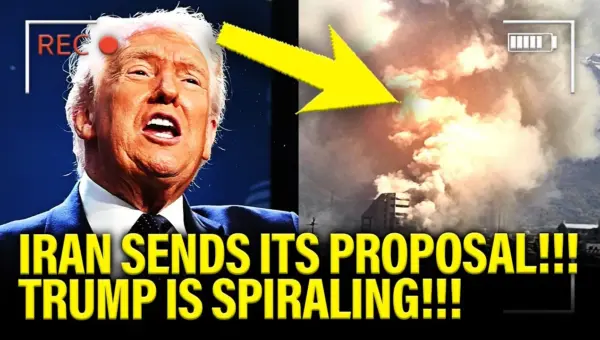
Former President Donald Trump's extreme threats against Iran have led to a communication blackout and fears of war crimes. Iran has warned of severe regional retaliation if attacked, while international figures call for Trump's removal from office.

Trump Threatens Iran With ‘Demolition’ Amid Impeachment Talk
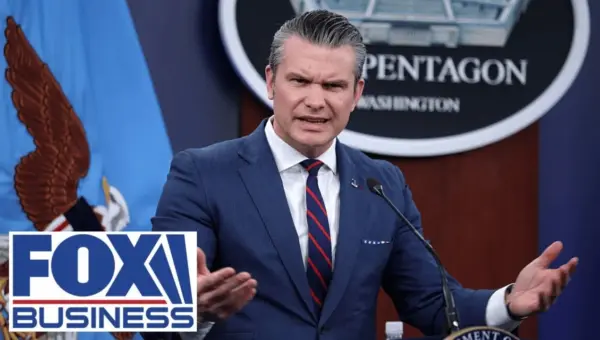
President Trump issued a stark warning to Iran, threatening widespread demolition of its infrastructure if a deal isn't reached. Meanwhile, domestic politics heat up as an Arizona Democrat plans to introduce articles of impeachment against Secretary of War Pete Hegseth, though success is unlikely in the current political climate.