Artemis Astronauts Shatter Space Records, Face Moon’s Dark Side
The Artemis II mission is making history by venturing further into space than ever before, breaking deep space records and providing new views of the moon. Despite a temporary communication blackout, the crew continues scientific observations. The mission also highlights the challenges of space travel, including technical issues and radiation exposure, while touching upon complex geopolitical tensions.


Artemis II Crew Makes History Beyond the Moon
The Artemis II mission is rewriting the history books of human space exploration. For the first time, astronauts have ventured further into space than any human before them, orbiting the moon and capturing unprecedented views. This monumental journey marks a significant leap forward, building on the legacy of past missions like Apollo 13.
Communication Blackout and Resilience in Deep Space
During their mission, the Artemis II crew experienced a critical 40-minute communication blackout. This occurred as the spacecraft traveled around the far side of the moon, temporarily cutting off contact with Mission Control in Houston. Despite the loss of communication, the astronauts remained in control, continuing their planned scientific observations. This demonstrated the crew’s training and the spacecraft’s capabilities in deep space operations.
Record-Breaking Journey and Historic Messages
The Artemis II mission has officially broken the human deep space travel record, previously held by the Apollo 13 astronauts in 1970. A poignant moment during the mission included a special pre-recorded message from Apollo astronaut Jim Lovell. Lovell, who was part of both Apollo 8 and Apollo 13, welcomed the current crew to his “old neighborhood” and encouraged them to continue pushing the boundaries of exploration for the benefit of all humanity.
The Artemis astronauts are not only setting new records but also reflecting on humanity’s place in the cosmos. Pilot Victor Glover shared a powerful Easter message from space, emphasizing the preciousness of Earth as a “spaceship” and an “oasis” in the vast emptiness of the universe. His words highlight the profound perspective gained from viewing our home planet from afar.
Scientific Discoveries and Technical Challenges
The crew has been busy conducting scientific observations, focusing on areas like a nearly 4-billion-year-old crater on the moon. They are using advanced cameras to capture details and colors of the lunar surface that were previously unseen, providing valuable data for scientists back on Earth. While high-definition images and video are still being processed due to communication limitations, the initial reports are generating excitement.
However, space travel is not without its challenges. The Artemis II mission has encountered technical issues, notably with the spacecraft’s toilet. A frozen vent reportedly caused problems, leading Mission Control to advise the crew to rely on backup methods for waste management as they near the end of their journey.
Looking Ahead: Eclipse, Return, and Future Exploration
The mission’s itinerary includes observing a solar eclipse from the far side of the moon, a unique vantage point for scientific study. Following this, the crew will begin their coast back to Earth for a splashdown later in the week. The success of Artemis II is crucial for the future of space exploration, paving the way for lunar colonization and eventual missions to Mars. Astronauts like Daniel Leas emphasize that each mission progresses scientific understanding and technological capabilities, inspiring future generations to explore even further.
Radiation Concerns and Protective Measures
A significant aspect of deep space travel is managing radiation exposure. Earth’s atmosphere and magnetosphere provide natural protection, but venturing beyond them exposes astronauts to higher levels of cosmic and solar radiation. The Van Allen belts, donut-shaped regions of charged particles around Earth, are a particular concern. The Artemis mission is testing advanced radiation monitors and shielding technologies, vital for ensuring astronaut safety on long-duration missions to the moon and Mars.
Geopolitical Tensions and Military Actions
Alongside space exploration, the transcript touches upon significant geopolitical events. There are mentions of a potential direct military strike on Iran by the United States and Israel, alongside statements from former President Trump regarding the Strait of Hormuz. The complexities of international relations and military actions are highlighted, including a dangerous rescue operation of an American airman after an F-15 was shot down.
Discussions around a potential ceasefire in the region also feature, though clarity on the specifics and the participants’ stances remains elusive. The situation is described as confusing, with differing interpretations of proposals and ongoing negotiations. The threat of targeting civilian infrastructure, such as power plants and bridges, is also noted, raising questions about international law and war crimes.
Source: Stay Tuned NOW Streaming Behind The Scenes! – April 6 (YouTube)

Related Articles


Moon Mission Sparks New Space Race Era
The Artemis II mission's return from the Moon marks a new era in space exploration, potentially sparking a modern space race. The mission provided new scientific data and breathtaking views, while also highlighting the inherent risks of deep space travel. This renewed focus on lunar exploration has significant geopolitical and economic implications for global powers.
Astronauts’ Silent Treatment Exposes Trump’s Space Rift
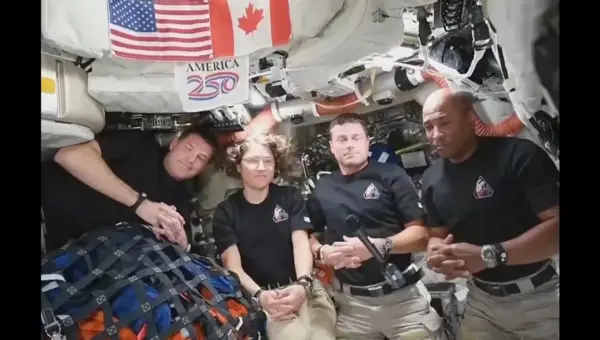
An awkward call between Donald Trump and the Artemis 2 astronauts, marked by prolonged silence from the crew, highlights a perceived disconnect in values and leadership. The incident contrasts with past presidential interactions and raises questions about Trump's stance on space exploration versus his proposed budget cuts.

Artemis II Crew Makes History, Sees Far Side of Moon
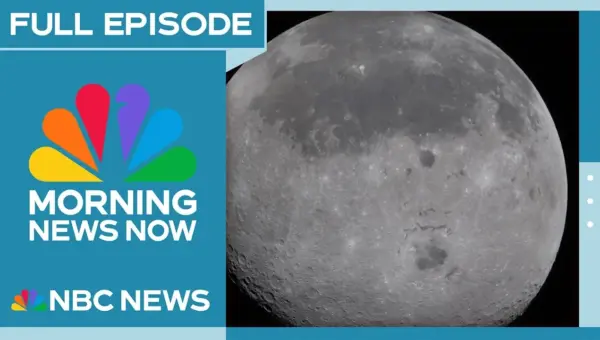
The Artemis II mission crew has made history by becoming the first humans to see the far side of the Moon with remarkable clarity. As they journey home, their mission has provided unprecedented views and scientific data. Meanwhile, escalating tensions in the Middle East and political developments in North Korea are also making headlines.