Artemis II Crew Shatters Space Record: 250K Miles From Earth
The Artemis II crew has officially set a new record for the farthest humans have traveled from Earth, surpassing 250,000 miles. The astronauts are currently orbiting the far side of the Moon, experiencing radio blackouts and solar eclipses. Mission Commander Reed Weisman also made a touching request to name a lunar crater in honor of his late wife.

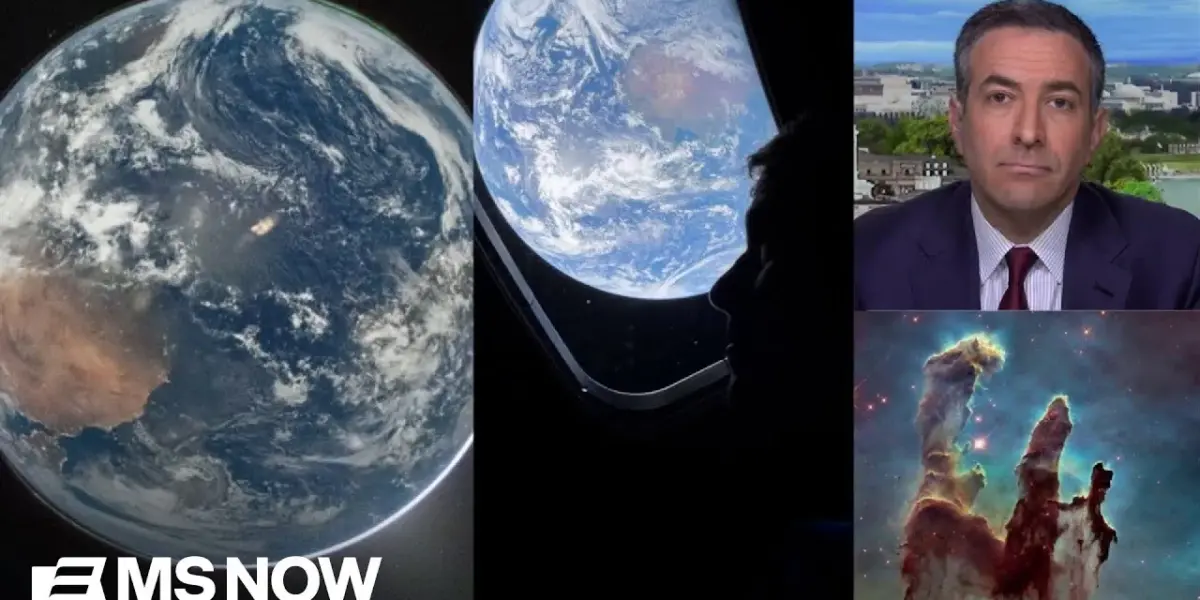
Artemis II Astronauts Set New Farthest Human Distance Record
In a stunning display of human achievement, the Artemis II crew has officially broken the record for the farthest humans have ever traveled from Earth. The astronauts surpassed the previous record, set by Apollo 13 at 248,000 miles, and are continuing to venture even farther into space. This historic mission marks a significant leap in space exploration, pushing the boundaries of what humanity can achieve.
A Journey Beyond the Moon
The Artemis II mission, which launched just five days ago, is designed to send humans back towards the lunar surface. The crew is currently traveling at speeds that will take them an astounding 252,000 miles from home. This journey is not just about distance; it’s a crucial step in NASA’s broader goals, laying the groundwork for future missions to Mars. The crew is preparing to orbit the far side of the Moon, a region rarely seen by humans, in what is being described as a “Pink Floyd moment.”
Navigating Space’s Challenges
During their orbit around the far side of the Moon, the Artemis II astronauts will experience a period of radio blackout lasting approximately 41 minutes. This occurs because they will be too far away to communicate directly with Earth. Following this blackout, they will witness a 53-minute solar eclipse, offering a unique opportunity to observe the Sun’s outer atmosphere. The Moon’s powerful gravity will then assist in flinging the spacecraft back towards Earth.
Inspiration from Space History
The Artemis II crew received a special message of encouragement this morning from Jim Lovell, the pilot of the Apollo 8 mission and commander of Apollo 13. Lovell, a legendary figure in space exploration, welcomed the crew to his “old neighborhood” and expressed pride in passing the torch. “We choose to go to the Moon, not because they are easy, but because they are hard,” Lovell’s message echoed, referencing President John F. Kennedy’s famous words. He emphasized the importance of this mission for future exploration, including journeys to Mars.
Capturing Earth’s Beauty
As they journeyed, the Artemis II crew has been sharing breathtaking photos captured from their unique vantage point. Mission Commander Reed Weisman took a striking image of Earth from inside the Orion capsule, a view that puts everyday photos taken from airplane windows into perspective. This image is reminiscent of the iconic “Earthrise” photo, taken during a past NASA mission, which showed our planet rising above the lunar horizon. These images highlight the fragility and beauty of our home planet from afar.
A Legacy of Exploration
The achievements of the Artemis II crew stand on the shoulders of giants. From the Wright brothers’ first flight in 1903 to the first human voice from space and the historic Moon landing in 1969, humanity has made incredible strides. The transcript highlighted key moments like the first American woman in space and the launch of the Hubble Space Telescope. Space exploration is presented not as a luxury, but as an essential part of America’s pursuit of a brighter future.
Expanding Our Cosmic Understanding
NASA’s missions have consistently pushed the boundaries of our understanding. Robotic explorers like the Sojourner rover on Mars and the Cassini mission exploring Saturn have provided invaluable data and stunning imagery. The Hubble telescope has captured images of distant wonders like the “Pillars of Creation” in the Eagle Nebula, thousands of light-years away. These technological advancements allow us to grasp our small but significant place in the vast universe.
A Personal Tribute in Space
In a deeply moving moment, Mission Commander Reed Weisman made a special request to Mission Control. While approaching the Moon, he asked for an unnamed crater to be named in tribute to his late wife, Carol Weisman. Carol, a nurse practitioner and mother of two, passed away from cancer in 2020 at the age of 46. Weisman’s request to name the crater, located northwest of Glushko crater, serves as a poignant personal memorial during this historic scientific endeavor, honoring both his wife and the spirit of human exploration.
Looking Ahead
The Artemis II crew is scheduled to splash down back on Earth this Friday. Their journey, filled with record-breaking distances, stunning vistas, and personal tributes, represents a significant chapter in human spaceflight. As NASA continues its ambitious Artemis program, the insights gained and inspiration generated by this mission will undoubtedly fuel future endeavors, including the long-term goal of sending humans to Mars.
Source: EPIC! See DAZZLING NEW PICS as NASA Crew SMASHES record: 250K miles from Earth (YouTube)

Related Articles
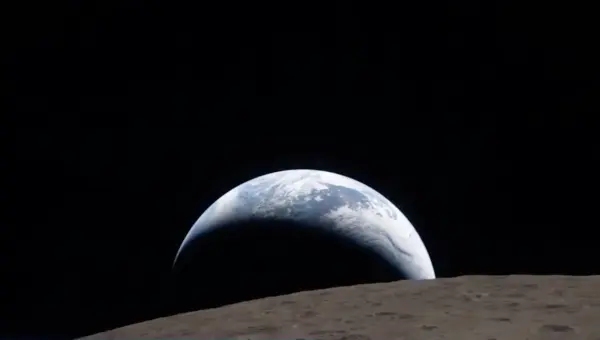
Artemis II Crew Recreates Iconic ‘Earthrise’ Photo
NASA's Artemis II astronauts captured stunning images during their lunar flyby, including a view reminiscent of the iconic Apollo 8 'Earthrise' photo. The mission marks a significant step in returning humans to the moon and exploring its mysteries.

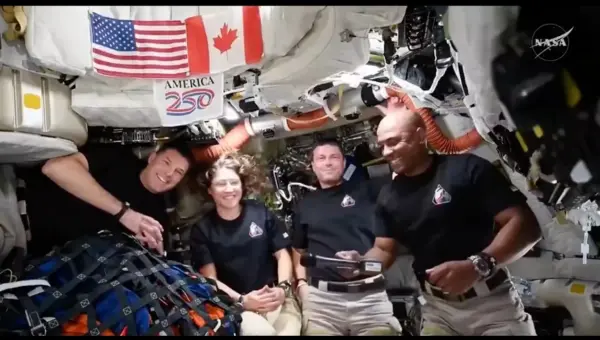
Artemis II Crew Captures Unseen Lunar Views, Rewrites Space History
The Artemis II crew has made history by becoming the first humans in 53 years to see the far side of the Moon. NASA released stunning photos from the flyby, capturing unseen lunar vistas and setting new distance records. This mission marks a crucial step in humanity's return to lunar exploration and future Mars endeavors.

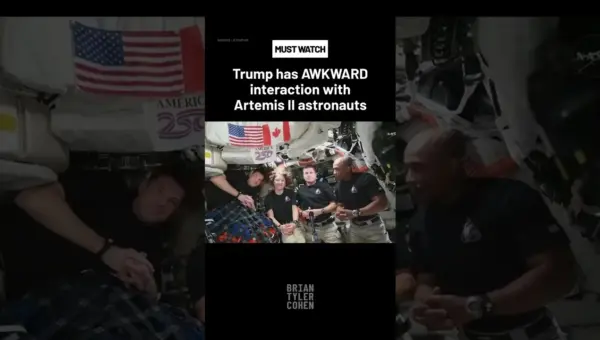
Astronauts Face Trump’s Odd Praise in Awkward Space Chat
Former President Donald Trump engaged in an unusual conversation with the Artemis II astronauts, praising their courage by comparing them to Wayne Gretzky. The exchange highlighted Trump's focus on personal connections rather than the mission's scientific goals.