Globalism Crumbles: Is the Economic World Order Over?
Chief Economist Daniel Lai argues that the era of easy globalization is over, citing a weakened middle class and China's strategic economic rise. He discusses the limitations of China's economic power and Europe's struggles with regulation, while highlighting the influence of leaders promoting free markets.

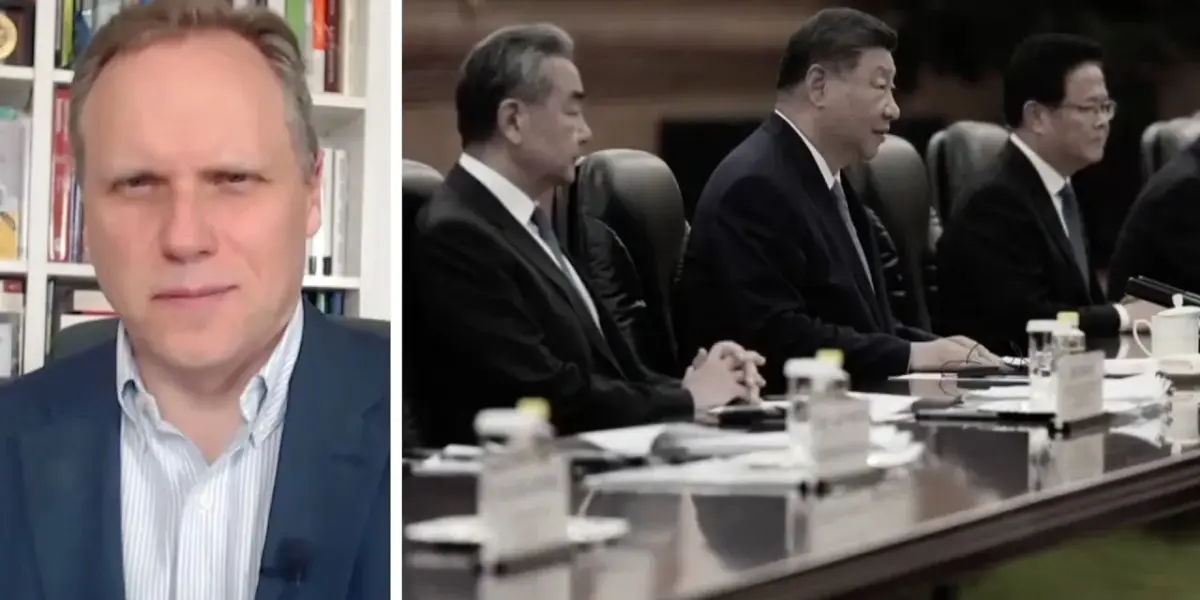
Globalism Crumbles: Is the Economic World Order Over?
The idea that the world is becoming more connected through trade and shared economies, often called globalism, is facing serious challenges. According to Daniel Lai, chief economist at Treses and author of the book The New Global Economic Order: America, China, Europe, and the Rise of Global Discontent, this era of easy globalization is over. He argues that the system, which was supposed to benefit everyone, actually led to problems like a disappearing middle class and a loss of control over important supply chains.
Why Did Globalization Stall?
Lai explains that many people wondered why the middle class seemed to be shrinking and why countries like the United States, China, and the European Union appeared to be drifting apart. He believes that changes in technology and energy played a big role. More importantly, he suggests that the promise of open trade was never fully realized. Instead, during times of supposed open markets, many Western nations gave China control over crucial supply systems.
At the same time, policies in Western countries led to lower purchasing power for salaries. Lai calls this the “predatorial state,” where governments might have used strategies that made people poorer and more dependent to maintain control. He sees a shift happening with leaders like Donald Trump and Javier Milei, who are bringing back ideas of freedom and strengthening the private sector.
China’s Rise and Its Limits
Lai points out that Western leaders once believed China would adopt Western ways of doing business if trade barriers were lowered. This, they thought, would help China’s economy and reduce barriers to freedom there. However, this didn’t happen as expected.
Instead, China grew stronger economically by taking advantage of open Western economies while keeping its own more closed. It also formed partnerships with countries like Russia and India, aiming to reduce Western influence. Lai notes that this led many around the world to realize the old system wasn’t truly fair, weakening Western economies, industries, and farming sectors while benefiting China and its partners.
But can China replace the United States as the top global economic power? Lai argues it cannot. He identifies three key elements for global economic leadership: technology, finance, and energy. While China is strong in technology, it has weaknesses in the other two areas.
China depends heavily on other countries for energy, unlike the United States, which is a major producer of oil and natural gas. Furthermore, China keeps its financial sector tightly controlled. This prevents its currency, the renminbi, from being widely used globally, making up less than 4% of international transactions. Lai believes that as long as China maintains capital controls and government intervention, it will be difficult for it to become the dominant global power, especially considering its lower GDP per capita compared to the US.
Europe’s Regulatory Hurdles
Lai also discusses Europe, acknowledging the European Union as a positive project for peace and cooperation among former rivals, and the euro as a reserve currency. However, he criticizes the EU’s excessive regulation and high taxes. These factors, he argues, have caused the EU economy to fall behind.
He uses the example of artificial intelligence, where some EU countries have more regulatory bodies focused on AI than actual AI companies. Lai believes this over-regulation and desire for control stifle innovation. He also points to the current energy crisis, where instead of encouraging investment in domestic energy sources, the EU is considering taxing companies that can provide solutions.
Lai stresses that the EU needs to defend its core strengths but must address its bureaucratic overreach and threats to the private sector to remain competitive.
The Impact of New Leadership
Lai sees leaders like Donald Trump and Javier Milei as important figures who are challenging the status quo. They are promoting ideas of freedom, private enterprise, and the strength of the private sector as the engine of economic growth, pushing back against what he calls “socialist ideas.”
For the past decade, Lai argues, international bodies have promoted policies like massive government spending, money printing, high taxes, and burdens on businesses. He believes Trump and Milei have reminded people that prosperity comes from encouraging investment, competition, and technology, not from bloated government. Their message has resonated with many people who felt that current policies were harming the middle class and that there was no clear ideological voice supporting their concerns.
These leaders, according to Lai, are bringing back ideas that focus on supply-side economics and supporting the private sector, which historically has led to periods of great prosperity. They advocate for a smaller, more efficient public sector that provides essential services while allowing the private sector to thrive.
Why This Matters
The idea that globalism is over suggests a significant shift in how countries interact economically. If supply chains become more national or regional, it could affect the prices of goods and the availability of products. The weakening of the middle class in Western countries, as described by Lai, is a major social and political concern that can lead to instability and discontent.
China’s economic strategy and its limitations are crucial to understand as it seeks a larger role on the world stage. Europe’s struggle with regulation could impact its ability to compete technologically and economically. The rise of leaders who champion free markets and national interests signals a potential move away from international cooperation towards more protectionist policies.
Future Outlook
The future may see a more fragmented global economy, with countries prioritizing national interests and strengthening domestic industries. Technology will continue to play a key role, but its development might be influenced by geopolitical tensions and differing regulatory approaches. The balance between government intervention and private sector freedom will likely remain a central debate in shaping economic policies worldwide.
The challenges of energy independence, technological competition, and financial stability will continue to shape international relations. How nations address these issues will determine the new global economic order and its impact on citizens around the world.
Source: ‘Globalism Is Over’ Says Chief Economist (YouTube)

Related Articles

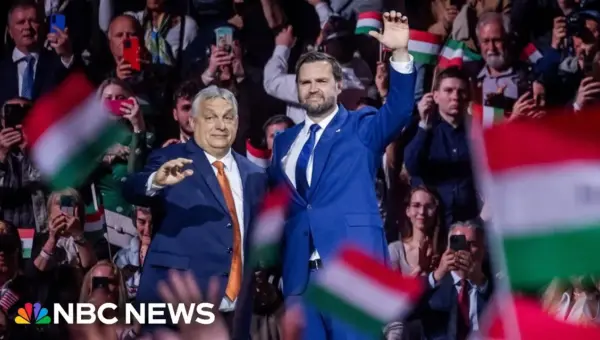
Vance Champions Orban in Hungary Ahead of Key Election
Vice President J.D. Vance publicly endorsed Hungarian Prime Minister Viktor Orban ahead of Hungary's national elections. Vance's rally appearance breaks diplomatic precedent, as Orban's government faces EU criticism for democratic backsliding. The VP emphasized shared Christian values and independence from Brussels.
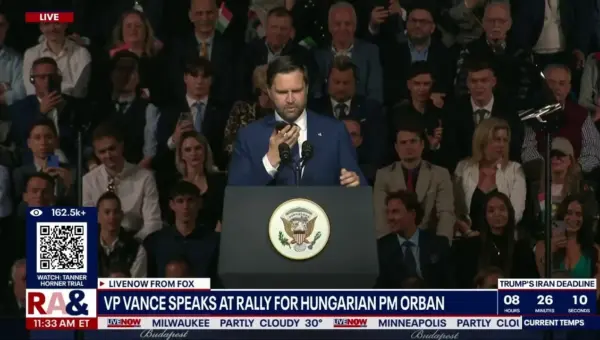
VP Vance Praises Hungary, Criticizes EU Bureaucrats
U.S. Vice President Vance spoke to thousands in Budapest, strongly endorsing Hungarian Prime Minister Viktor Orbán and his policies. Vance criticized European Union bureaucrats, championing national sovereignty and traditional values while contrasting them with what he called a "far-left ideology." The speech highlighted a shared political vision between the two nations.
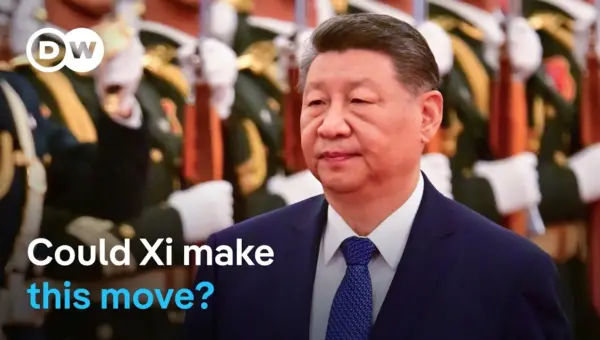
China’s ‘Quarantine’ Plan Could Trap Taiwan, Experts Warn
Experts are warning of a new Chinese strategy: a 'quarantine' of Taiwan. This scenario could see China blockade the island, cutting off supplies and exerting control without a direct invasion. The move presents complex dilemmas for the U.S. and its allies, who must decide how to respond to this gray-zone tactic.