Ukraine’s Strikes Cripple Russia’s War Chest
Ukraine's strategic strikes on Russian energy infrastructure are crippling its war funding. This, combined with Russia's long-standing economic vulnerability known as Dutch disease, points to an impending crisis. The war's immense cost is further exacerbating these deep-seated issues.


Ukraine’s Strikes Cripple Russia’s War Chest
Ukraine has shifted its strategy, now directly targeting Russia’s oil and gas export terminals. This move aims to cut off the revenue Russia desperately needs to fund its war effort. Instead of simply making production harder, Ukraine is trying to stop Russia from selling its energy to the world altogether.
This new strategy comes despite requests from some of Ukraine’s allies to stop. Ukraine has stated that it must prioritize its own interests, which now include weakening Russia’s economy. The impact has been significant, with Russian exports reportedly falling by about 40%. This drop in exports largely cancels out any financial gains Russia might have made from higher global energy prices.
The Deep Roots of Russia’s Economic Vulnerability
Russia’s economy has long been overly dependent on energy exports. This reliance creates a major weakness, a problem known as Dutch disease. It’s a condition where a country’s economy becomes dominated by one resource, like oil or gas, leading other industries to suffer.
This isn’t a new problem for Russia. The collapse of the Soviet Union was partly caused by a similar issue. The Soviets were heavily reliant on energy revenues. When global energy prices dropped, their economy couldn’t cope, contributing to their downfall. Russia’s current situation echoes this historical vulnerability.
Understanding Dutch Disease
The term “Dutch disease” originated from the Netherlands in the 1960s after they discovered large natural gas fields. Building an economy around this new, profitable resource led to unintended consequences.
As the gas industry boomed, it attracted workers with high wages. This made it harder and more expensive for other sectors, like manufacturing and agriculture, to find workers. These traditional industries, which often had smaller profit margins, couldn’t compete. They became less profitable and eventually struggled to survive. If the main resource industry eventually declines, the rest of the economy is left with little to fall back on, forcing a difficult rebuilding process.
Russia’s “Nesting Doll” of Economic Woes
Unlike the Netherlands, which used policy to manage the effects of Dutch disease, Russia has doubled down on its reliance on energy. This has made the problem worse, especially as the government prioritizes personal profits over national economic resilience.
The Russian federal budget heavily depends on energy sales. When these revenues drop, many other parts of the economy are affected. But Russia faces a more complex version of Dutch disease, layered like Russian nesting dolls.
The Arms Industry Drain
A significant layer of this disease comes from Russia’s massive military spending. This spending fuels the arms industry, which is now demanding huge amounts of labor. Russian arms factories offer extremely high wages to attract workers, pulling them away from traditional jobs.
These factories don’t necessarily need to be profitable; they just need to produce. As a result, other industries can’t compete for workers and are forced to shut down or go into debt. This creates a fragile situation where communities become dependent on an industry that may disappear after the war ends. The government is already struggling to fund this inflated industry, showing signs of financial strain.
Military Salaries and Societal Strain
Another layer of Dutch disease stems from high military salaries and bonuses. These payments are designed to attract soldiers but are injecting artificial money into communities.
This influx of cash leads people to prioritize spending on luxury goods and services rather than working in traditional jobs. It can cause people to leave smaller towns for bigger cities or shift from essential work to service jobs. This dynamic disrupts local economies and weakens the infrastructure that relies on a stable workforce.
The Coming Storm
The artificial stimulus from military spending is temporary. As the government’s ability to fund these programs shrinks, communities built on this support will face breakdown. Traditional industries are already damaged, leaving these areas with few alternatives.
The current situation in Russia points towards not just economic collapse but societal breakdown. By prioritizing war spending and artificial economic support, Russia is undermining the very fabric of its society. This mirrors some of the problems seen in the Soviet Union, but with different causes.
Why This Matters
Ukraine’s strategic attacks on Russian energy infrastructure, combined with Russia’s inherent economic weaknesses, are creating a critical situation. The concept of Dutch disease, amplified by massive military spending, shows how Russia’s economy is becoming increasingly unsustainable.
The current economic measures are propping up the system temporarily, but they are built on shaky foundations. As these artificial supports inevitably fail, Russia faces a severe economic crisis. This crisis will likely be compounded by inflation and the destruction of its traditional industries, leading to widespread societal problems.
Looking Ahead
The trend suggests that Russia’s economy is on a path toward significant contraction. Ukraine’s continued pressure on energy exports, coupled with the internal economic damage caused by war spending, creates a dangerous combination.
The cracks in Russia’s economic dam are widening. The system, weakened by years of over-reliance on energy and now strained by unsustainable military expenditure, appears headed for a major collapse in the coming years. The long-term implications for Russia and the global geopolitical landscape could be profound.
Source: Ukraine Just Put Russia’s Economy on Life Support (YouTube)

Related Articles

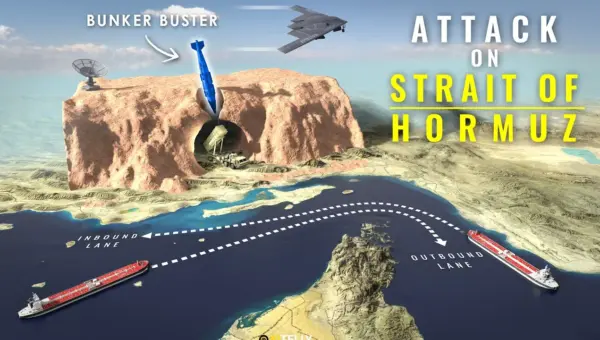
Iran’s Strait of Hormuz Trap: How the US Fights Back
Iran's strategy to control the Strait of Hormuz involves using islands as bases for anti-ship missiles and launching swarm attacks with small boats. The US counters with advanced defense systems, surveillance drones, and powerful bunker-buster bombs, highlighting the ongoing tension in this vital global shipping lane.


US Aims to Cripple Iran’s Power Grid to Secure Strait of Hormuz
A new US strategy reportedly targets Iran's power grid, including major plants like Damavand, to force open the Strait of Hormuz. The plan involves multi-stage air attacks using advanced bombers and precision munitions to cripple energy infrastructure and cause cascading failures.


Trump’s Iran Ultimatum: Civilization on the Brink?
President Trump issued a dire warning to Iran with a Tuesday deadline for a deal, fearing "a whole civilization will die." U.S. strikes on Kharg Island occurred, but officials state U.S. strategy remains unchanged. This escalation highlights ongoing tensions and their global implications.