Trump Threatens Iran’s “Total Destruction” by Tomorrow
President Trump has issued a stark warning to Iran, threatening "total destruction" of the country's civilian infrastructure by tomorrow night if a deal is not reached. The escalating rhetoric comes amid climbing oil prices and reports of potential ceasefire talks, creating uncertainty about the war's future course. Market reactions have been swift, with oil prices surging as global supply concerns mount.


Trump Issues Stark Warning to Iran: “Total Destruction” Possible by Tomorrow
President Trump has escalated his rhetoric against Iran, issuing a dire threat of “total destruction” for the country, including its civilian infrastructure, if a deal is not reached by 8:00 PM Eastern Time tomorrow. The President’s forceful warnings, delivered from the White House briefing room, come amidst climbing oil prices and ongoing tensions over the Strait of Hormuz.
Uncertainty Over War’s Duration and Scope
During a press conference, President Trump stated, “The entire country can be taken out in one night, and that night might be tomorrow night.” When pressed about the specifics of his threats, which include targeting bridges and power plants, he offered little clarity on the war’s potential duration. “I can’t tell you, I don’t know. It depends what they do,” Trump said, emphasizing a deadline of 8:00 PM tomorrow. He described a scenario where, if no deal is made, “every bridge in Iran will be decimated” and “every power plant in Iran will be out of business, burning, exploding, and never to be used again.” The President suggested this complete demolition could occur within a four-hour period.
Mixed Signals on Ceasefire and Negotiations
The President’s aggressive stance is juxtaposed with reports of a potential 45-day ceasefire being discussed. A White House official confirmed to NBC News that a ceasefire is among the topics being considered, though details on who the White House is engaging with remain unclear. President Trump himself acknowledged that Iran has made a “significant step” in negotiations, calling it a “very significant proposal” that is not yet good enough. He noted that Iran has made a “very significant step” and that there is an “active, willing participant on the other side” eager to make a deal. However, Iran’s state media has reportedly rejected the idea of a temporary ceasefire, advocating instead for a permanent end to the conflict.
Defense of Explicit Language and Military Operations
The President defended his use of explicit language, including a profanity-laced social media post on Easter Sunday demanding Iran “open the effing strait.” He stated, “Only to make my point. I think you’ve heard it before.” The White House also highlighted the recent military operation to rescue downed U.S. airmen. President Trump detailed the operation, noting that while some senior military officials were initially nervous about its risks, it ultimately showcased American strength and technological prowess. He specifically mentioned the involvement of 155 aircraft and hundreds of military personnel in the rescue, describing it as a historic and unprecedented mission.
Concerns Over Leaks and Potential War Crimes
President Trump also issued a stern warning to anyone who leaked information about the airman rescue operation, threatening jail time for reporters and media companies. He stated, “We’re going to go to the media company that released it and we’re going to say national security, give it up or go to jail.” This threat comes amid a broader administration effort to prevent leaks, particularly within the Department of Defense. The President’s threats to destroy civilian infrastructure also raised questions about potential war crimes under international law, though he expressed belief that the Iranian people might welcome such actions. He also reiterated claims that the Iranian regime has killed thousands of protesters.
Economic Ramifications and Market Reactions
The escalating tensions and threats have had a direct impact on global markets. Oil prices rose significantly following the President’s reiteration of his deadline and threats. Crude oil prices climbed above $112 a barrel, with diesel prices also increasing. Experts warn that if oil prices continue to surge, potentially reaching $120 a barrel, U.S. gasoline prices could exceed $4.50 per gallon. Christine Romans, NBC News Senior Business Correspondent, explained that reduced supply from the Strait of Hormuz, coupled with ongoing demand, inevitably drives up prices. She emphasized that even if the Strait were to reopen, the global oil shock would take considerable time to resolve due to complex supply chain effects.
International Perspectives and Future Outlook
From Saudi Arabia, Keir Simmons, NBC News Chief International Correspondent, reported that Gulf states are bracing for potential escalation and are worried about the situation. While these countries have improved their defenses, they desire an end to the war that does not result in a weakened yet empowered Iran. Keir noted that the difficulty in seeing how President Trump avoids further action to open the Strait of Hormuz, possibly involving taking islands within it, is a significant concern. Former Secretary of Defense Leon Panetta and retired Colonel Steve Warren discussed the war’s objectives, with Panetta stating that while military objectives have largely been achieved, resolving the Strait of Hormuz issue is crucial for a ceasefire. Colonel Warren highlighted the bravery of the U.S. military personnel involved in the airman rescue but also noted that Iran’s military capabilities, though downgraded, are not eliminated, posing continued risks. The discussion also touched upon the legality and strategic payoff of targeting Iranian civilian infrastructure, with concerns that such actions could further escalate oil prices without guaranteeing the opening of the Strait.
Source: Meet the Press NOW — April 6 (YouTube)

Related Articles
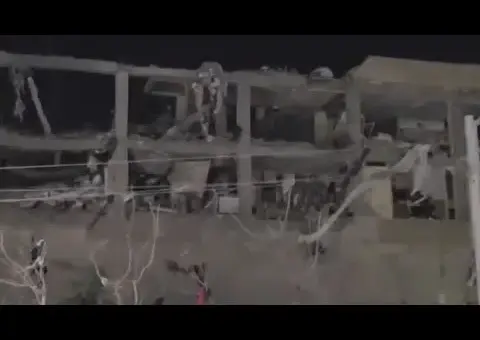
Iran and US Trade Blows as Tensions Spike
The U.S. and Iran are engaged in a dangerous exchange of strikes, with a critical deadline set by President Trump looming over the Strait of Hormuz. Both nations, along with Israel, are escalating military actions, while diplomatic channels remain open but strained.


Trump Ditches Vance’s Call, Shows Favor for Rubio
Senator JD Vance's live rally call to Donald Trump went unanswered, leading to an awkward voicemail. The incident suggests a potential cooling of relations between Vance and Trump, with a perceived favoritism towards Senator Marco Rubio.
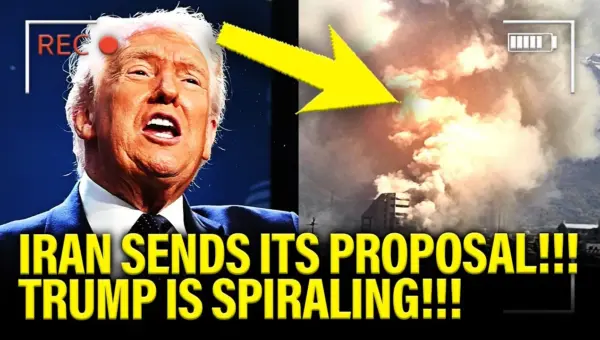
Trump’s Iran Threats Spark War Crimes Fears
Former President Donald Trump's extreme threats against Iran have led to a communication blackout and fears of war crimes. Iran has warned of severe regional retaliation if attacked, while international figures call for Trump's removal from office.