Trump’s Iran Threat: Civilian Targets or Military Necessity?
President Trump's threat to target Iran's civilian infrastructure raises questions about international law and military necessity. While some argue for a legal basis if civilian assets support military operations, the act risks escalation and civilian harm. The global economy's reliance on the Strait of Hormuz adds further weight to the situation.

Trump’s Iran Threat: Civilian Targets or Military Necessity?
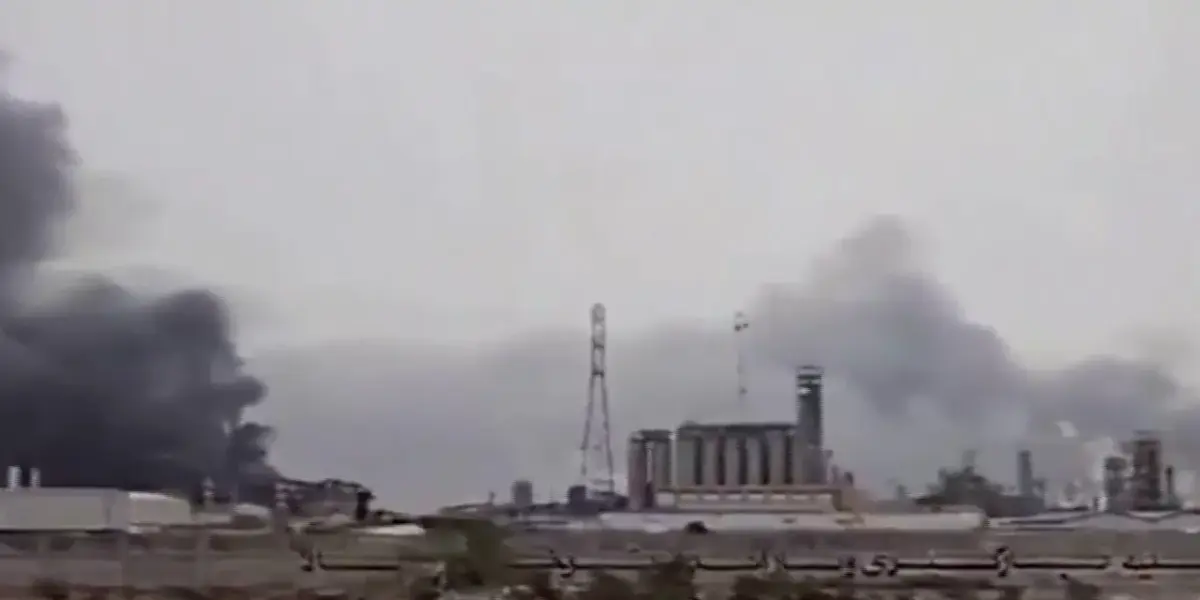
President Trump recently stated he would target Iran’s civilian infrastructure, like power plants and bridges, if the Strait of Hormuz isn’t reopened. This threat raises serious questions about international law and the definition of legitimate military targets. The Strait of Hormuz is a vital global shipping route. Over one-fifth of the world’s oil and gas passes through this narrow waterway every day.
Defining Legitimate Targets
Victoria Coates from The Heritage Foundation suggested that striking civilian infrastructure could have a legal basis. This is true if the targets are being used for military purposes by the enemy. However, she pointed out that Iran’s actions have focused exclusively on civilian areas in places like Israel, the UAE, and Saudi Arabia. This distinction is crucial in understanding the legal and ethical implications of such threats.
Historical Context and International Law
International humanitarian law, often called the laws of war, generally prohibits attacks on civilian objects. These laws are designed to protect non-combatants during armed conflict. However, there are exceptions. If civilian infrastructure is being used to support military operations, it can become a legitimate target. For example, a bridge used to transport enemy troops or weapons could be attacked.
The U.S. has previously faced similar debates. During past conflicts, discussions have arisen about what constitutes a military objective. The key principle is distinguishing between civilian and military targets. An attack must be aimed at military objectives. It must also avoid causing excessive harm to civilians compared to the military advantage gained.
Iran’s Actions and Escalation
The context for Trump’s threat appears to be Iran’s alleged actions against civilian targets in the region. Coates noted that these Iranian actions have gone largely uncommented upon. This suggests a potential double standard or a selective focus in international response. Iran’s alleged targeting of civilian areas could be seen as a violation of international norms, potentially justifying a response.
However, the threat to target Iran’s own civilian infrastructure is a significant escalation. It risks drawing the U.S. into a wider conflict. It could also lead to retaliatory attacks by Iran, further endangering civilians on all sides. The Strait of Hormuz’s importance means any disruption there has global economic consequences.
Why This Matters
This situation highlights the delicate balance between national security interests and international law. Threats to attack civilian infrastructure, even if framed as a response to aggression, carry immense risks. They can lead to unintended civilian casualties and further destabilize an already volatile region. The definition of what constitutes a military target is often debated, especially in modern warfare where civilian infrastructure can have dual uses.
The principle of proportionality is central here. Even if a target is military, the harm to civilians must not be excessive. Trump’s statements push the boundaries of accepted international discourse. They risk normalizing the idea of targeting civilian assets, which could have long-term negative consequences for global stability and the rule of law.
Implications and Future Outlook
The immediate implication is the potential for heightened tensions and even direct conflict. Iran’s response to such a threat is difficult to predict but could involve asymmetric warfare or further disruption of vital shipping lanes. The global economy, heavily reliant on oil and gas from the Persian Gulf, would suffer.
Looking ahead, this incident underscores the need for clear communication and adherence to international legal frameworks. Diplomatic solutions, even in the face of provocation, are often more sustainable than military threats. The international community must continue to uphold the laws of war to prevent a slide towards indiscriminate warfare. The focus should remain on de-escalation and finding peaceful resolutions to geopolitical disputes.
Source: Trump Threatens to Target Iranian Civilian Infrastructure (YouTube)

Related Articles


Dem Rep. Calls Trump’s Iran Threats ‘Apocalyptic’
Democratic Congresswoman Yasemin Anzari has strongly condemned President Trump's "apocalyptic" threats against Iran, warning of potential genocide and nuclear war. She is calling for the 25th Amendment to be invoked and is introducing articles of impeachment against Defense Secretary Pete Hegseth. Anzari fears the President's rhetoric could strengthen the Iranian regime and harm its people.
US Strikes Iran’s ‘Mosquito Fleet’ to Secure Oil Lanes
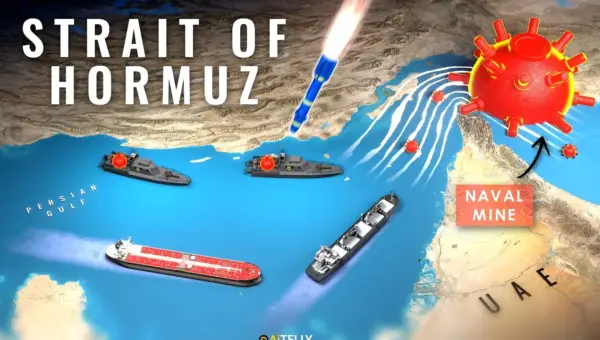
Iran's use of naval mines and fast attack boats in the Strait of Hormuz prompted a decisive US response. The US employed a preemptive strategy, striking mine-laying ships and storage facilities with precision-guided missiles and bombs.
Iran’s Strait of Hormuz Trap: How the US Fights Back
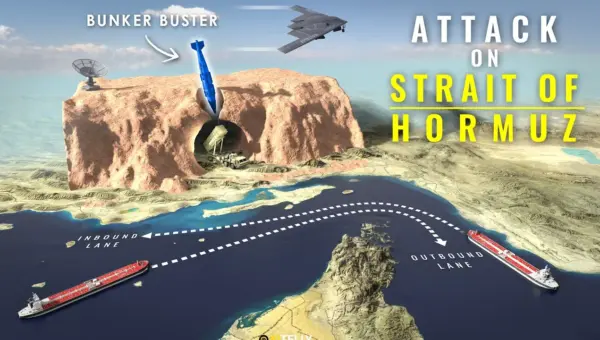
Iran's strategy to control the Strait of Hormuz involves using islands as bases for anti-ship missiles and launching swarm attacks with small boats. The US counters with advanced defense systems, surveillance drones, and powerful bunker-buster bombs, highlighting the ongoing tension in this vital global shipping lane.