Trump Details Iran Strategy, Warns of ‘Stone Ages’ if Deal Fails
President Donald Trump detailed his administration's strategy regarding Iran, emphasizing the goal of preventing nuclear proliferation and countering regional aggression. He warned that failure to reach a deal could result in Iran being pushed into the 'stone ages' with strikes on critical infrastructure.

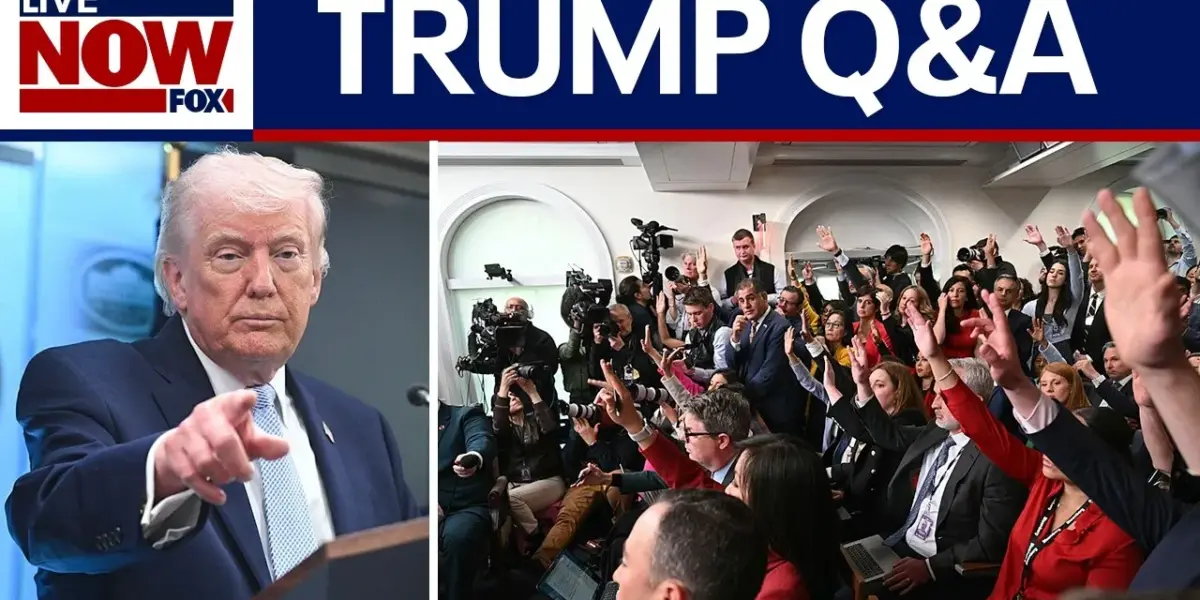
Trump Defends Iran Strategy Amidst Questions on Escalation
President Donald Trump addressed reporters, fielding questions about the escalating tensions with Iran and the recent military operations. In a candid exchange, Trump defended his administration’s approach, emphasizing a strategy focused on preventing Iran from acquiring nuclear weapons and pushing back against its aggressive regional actions. He asserted that the current Iranian regime is significantly weaker following recent military actions.
Kurds and Exporting Oil
When asked about Kurdistan resuming oil exports with U.S. support, Trump expressed that he had expected it, given the long-standing relationship between the United States and the Kurdish people. He stated, “We’ve gotten along with the Kurds for a long time. So, I expected that.”
Iranian People and Regime Change
The President also discussed the potential for the Iranian people to rise up against their regime. He acknowledged the risks, citing the brutal crackdown on protests. “They were told you if you protest, you will be shot immediately,” Trump said, referencing the execution of a young wrestler and his friends. He estimated that up to 45,000 people may have been killed in such crackdowns. Trump clarified that while the current administration is dealing with a “much different regime than before,” the actions were not primarily for regime change but to prevent Iran from obtaining nuclear weapons.
“We’re dealing with a much different regime than before. We’re dealing with different people. They’re smarter. I think they’re sharper uh and far less radical.”
Trump’s ‘Best Plan’ for Iran
Challenged on whether he had a plan, Trump responded, “I have the best plan of all.” He declined to reveal specific details, explaining that making the plan public would be detrimental. “I can’t reveal the plan to the media,” he stated, adding, “but we’re just thrilled by the success of this operation.”
Suffering for Freedom
Addressing concerns that bombing Iranian infrastructure would punish the people, Trump argued that Iranians would be willing to suffer for freedom. He shared accounts of intercepts where Iranians allegedly pleaded for continued bombing, even if it meant suffering. “They would be willing to suffer that in order to have freedom,” he asserted. Trump described a brutal reality where protestors face snipers and violent execution, citing a large women’s march where participants were allegedly shot by snipers. He painted a picture of a population living under extreme oppression, contrasting it with Iran’s past potential.
Internal Military Debate
Trump revealed that not everyone in the military was initially on board with the recent operations. “Not everybody was on board,” he admitted. “There was military people, very professional, that preferred not doing it.” He noted that some military personnel advised against entering the “heart of a very powerful military.” However, he ultimately decided to proceed, emphasizing the success of the mission and the minimal casualties.
Technological Superiority in Hostile Territory
The President highlighted the advanced technology used, particularly night-vision goggles, which he claimed allow him to see better at night than during the day. He described flying over Iran for seven hours in daylight, a mission he deemed very dangerous due to the heavily militarized environment and hostile territory. Despite taking out significant anti-aircraft and radar systems, he acknowledged the presence of handheld missiles. He praised the pilots and crew for their skill and timing, noting that the mission’s success with minimal injuries seemed impossible beforehand.
Negotiations and a ‘More Reasonable’ Iran
Trump expressed optimism about dealing with a potentially less radical leadership in Iran. “If they assume control, if we do something and they assume control, I think it’s very positive, a big step,” he said. He reiterated that the current Iranian regime is “decapitated” and that Iran is weaker now than it has been in 47 years. He criticized previous presidents for not handling the situation, stating, “This should have been handled by seven presidents.”
The Iran Nuclear Deal and Israel
The President strongly criticized the Obama-era Iran nuclear deal, calling it a “road to a nuclear weapon.” He accused the previous administration of choosing Iran over Israel. Trump credited his decision to terminate the deal and subsequent military actions, including the obliteration of an Iranian nuclear facility by B2 bombers and the killing of Qasem Soleimani, with preventing Iran from obtaining nuclear weapons. He warned that if Iran had acquired nuclear capabilities, Israel and large parts of the Middle East would have been “extinguished.”
“If I didn’t terminate the Barack Hussein, Obama Iran nuclear deal, they would have had a Don’t forget that was a path to a nuclear weapon.”
Ultimatum and Potential Infrastructure Strikes
Responding to questions about a 48-hour ultimatum, Trump confirmed that Iran had requested an extension, which he granted until Tuesday at 8:00 PM Eastern time. He stated that negotiations are ongoing and that some countries are assisting. However, he issued a stark warning: if a deal is not reached, Iran could face strikes on its bridges and power plants, leading to the “stone ages.” He also mentioned that Iran’s communication systems are severely degraded, making negotiations difficult.
Strait of Hormuz and ‘Spoils of War’
When asked about reopening the Strait of Hormuz, Trump indicated it was a high priority. He suggested the possibility of the U.S. charging tolls for passage, stating, “I’d rather do that than let them have them, right? Why shouldn’t we? We’re the winner. We won.” He described Iran’s military as defeated, with no navy, air force, or significant anti-aircraft weaponry. He also drew parallels to Venezuela, where he claimed the U.S. has profited from taking oil, suggesting a similar approach with Iran, where “to the victor belong the spoils.”
NATO and International Cooperation
Trump expressed disappointment with NATO’s response, stating, “I’m very disappointed in NATO.” He felt that some allies were hesitant to provide support until after a potential U.S. victory. He highlighted the technological superiority of the U.S. military, recounting an incident where 101 missiles were fired at the USS Abraham Lincoln, all of which were shot down.
Venezuelan Operations and Border Security
In a segment discussing Venezuela, Trump detailed a swift military operation that he claimed secured the country and prevented the formation of an ISIS-like group. He contrasted this with the situation in Iraq under the Bush administration. He also boasted about securing the U.S. border, stating that for nine months, “nobody is coming through our border and nobody even tries.”
Final Warning on Nuclear Weapons
The President concluded with a firm stance against Iran acquiring nuclear weapons. “We’re never going to let Iran have a nuclear weapon,” he declared. He dismissed concerns about violating international norms if necessary, calling the Iranian leadership “mentally disturbed” and a threat to global safety. He also reiterated his criticism of The New York Times, questioning its credibility.
Source: President Trump takes questions on Iran war (YouTube)

Related Articles
Trump’s Iran War Panic Fuels Escalation Fears
President Trump's aggressive rhetoric towards Iran signals desperation and a potential for massive escalation. Experts fear a breakdown in military-civilian communication and warn of a looming humanitarian catastrophe. A peaceful resolution seems distant as strategic options narrow.
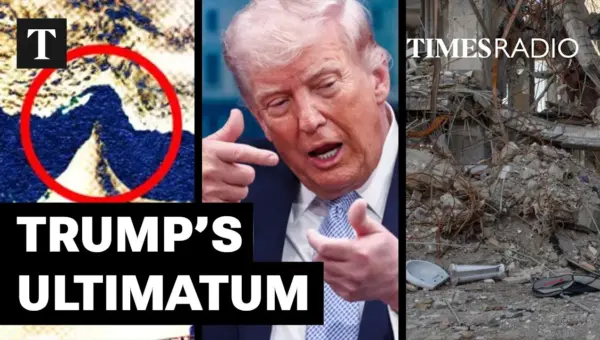
Trump Threatens Iran’s Infrastructure in Hormuz Standoff
President Trump has threatened to cripple Iran's infrastructure, including bridges and its power grid, if it continues to harass shipping in the Strait of Hormuz. Former Congressman Bob McEwen explained this strategy aims to force Iran to negotiate by severely damaging its operational capacity. The discussion also addressed the potential for such actions to be considered war crimes, with McEwen distinguishing between infrastructure attacks and the targeting of civilians.
Trump’s Rhetoric and Health Concerns Fuel Global Unease
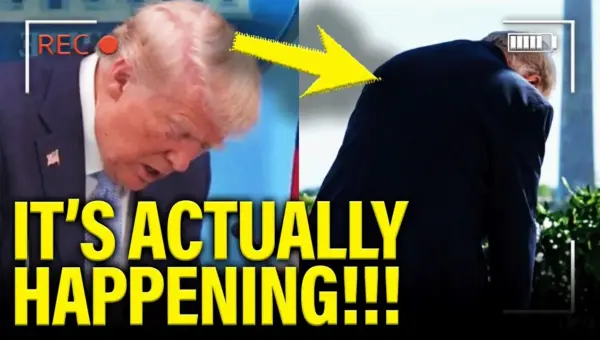
Recent public appearances by Donald Trump have fueled concerns about his health and the aggressive nature of his rhetoric. His threats towards Iran, coupled with puzzling public statements and a focus on unusual topics, raise significant questions about his fitness for office and the potential impact on global stability and domestic policy.