US Special Ops Stage Daring Rescue Deep Inside Iran
U.S. Special Operations forces conducted a daring rescue deep inside Iran to save a downed aircrew, involving dozens of personnel and multiple aircraft. Two $100 million jets were destroyed during the complex operation, which included a CIA deception campaign to aid the extraction.

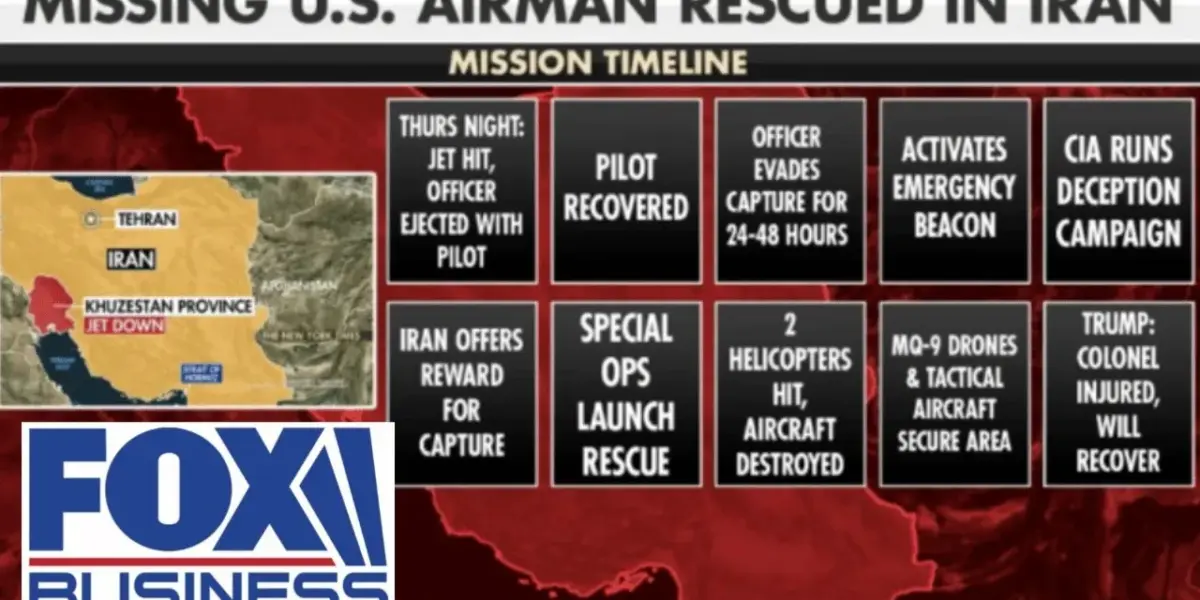
$100 Million Jets Destroyed in High-Stakes Iran Rescue
In a complex, multi-faceted operation, U.S. Special Operations forces executed a daring rescue mission deep inside Iran to extract a downed aircrew. The mission, involving dozens of U.S. personnel, multiple warplanes, and helicopters, faced significant challenges and resulted in the destruction of two high-value aircraft.
An F-15E Strike Eagle carrying a pilot and a Weapon Systems Officer (WSO) was shot down by enemy fire late Thursday night or early Friday morning over southwest Iran. The WSO, utilizing extensive Survival, Evasion, Resistance, and Escape (SERE) training, managed to evade initial capture. He moved to a high ridge, about 7,000 feet up, away from the crash site. Using an encrypted radio and beacon, he eventually signaled his location. His first transmitted message was, “God is good.”
Complex Extraction Operation
A specialized rescue unit, comprising many members who participated in the complex mission, worked to locate the crewmember and prevent Iranian forces from capturing him. Iranian Revolutionary Guard Corps (IRGC) members were actively searching for the downed American airman.
To support the rescue, four B-1 bombers dropped nearly 1,000-pound satellite-guided bombs, while drones engaged any suspected enemy fighters approaching within several kilometers of the WSO’s hiding spot. Eyewitness videos from locals reportedly show Iranian IRGC members injured or killed during the intense firefight with U.S. military forces attempting to keep them at bay.
The operation was not without its costs and complications. Two rescue helicopters were hit by enemy fire, injuring crew members, but they managed to leave Iran. In a critical decision to prevent sensitive equipment from falling into enemy hands, two aircraft, each valued at approximately $100 million, had to be destroyed. These planes became stuck in the sand at a makeshift landing strip inside Iran after the rescue crews were extracted.
CIA Deception Campaign Played Key Role
A crucial element of the mission was a Central Intelligence Agency (CIA) deception campaign. This effort spread misinformation within Iran, suggesting U.S. forces had already located and were exfiltrating the pilot and WSO by sea. This confusion bought valuable time for the U.S. forces conducting the search and rescue.
The CIA used its unique capabilities to help locate the airmen. For those involved, finding the WSO was described as searching for a needle in a haystack. The Air Force colonel, identified as the pilot, was found hiding in a mountain crevice and airlifted out by a specialized helicopter.
There were no casualties among the hundreds of American service members involved in the dramatic rescue. Another aircraft, an A-10, crashed in Kuwait during operations related to the rescue; however, its pilot ejected safely and was also rescued.
Market Impact
While this event is primarily a military and geopolitical matter, such high-stakes operations can sometimes lead to increased tensions in volatile regions. Investors often monitor geopolitical stability, as significant conflicts or escalations can impact global markets, particularly energy prices and defense sector stocks. In this instance, the successful, albeit costly, rescue likely reinforces perceptions of U.S. military capability, which can be a stabilizing factor in the eyes of international markets. However, the direct financial impact on broader markets is expected to be minimal, given the contained nature of the operation and the lack of wider conflict escalation.
What Investors Should Know
Geopolitical Risk: The incident highlights the ongoing geopolitical risks in the Middle East. Investors should remain aware of how regional instability can affect global supply chains, energy prices, and international relations. Companies involved in defense, cybersecurity, and aerospace may see increased interest during periods of heightened geopolitical activity.
Defense Spending: Successful, complex military operations can sometimes lead to discussions about defense budgets and capabilities. While not an immediate driver, sustained geopolitical tensions could influence future defense spending, potentially benefiting companies within that sector.
Operational Costs: The destruction of two $100 million aircraft underscores the significant financial and operational costs associated with such missions. While these are necessary expenditures for national security, they represent a direct cost to the government and, by extension, taxpayers.
Intelligence and Technology: The reliance on advanced technology, including encrypted radios, beacons, drones, and CIA deception campaigns, showcases the importance of intelligence and technological superiority in modern military operations. This reinforces the value of investing in companies that provide these critical capabilities.
Source: HIGH-STAKES RESCUE: Details emerge from DARING mission inside Iran (YouTube)

Related Articles

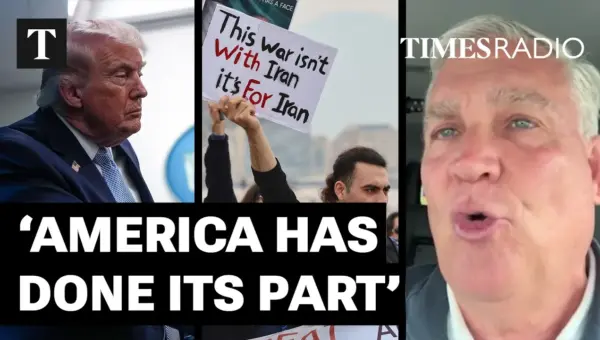
Trump Takes Tough Stance on Iran, Ex-GOP Chair Says
Former President Donald Trump's strong stance against Iran, including threats of widespread destruction, is being praised by former GOP chair Chad Connelly. Connelly believes Trump is the first president with the "guts" to confront the Iranian regime, despite concerns over rhetoric and shifting narratives. The discussion also covered the potential for an Iranian uprising and the long-standing desire for regime change in the region.


Trump’s Iran War Escalation: A Descent into Chaos?
Former President Trump's April 6th press conference revealed alarming threats of war crimes in Iran and bizarre claims about civilian support for bombing. Iran has rejected a ceasefire, offering a counter-proposal, while on-the-ground strikes continue.

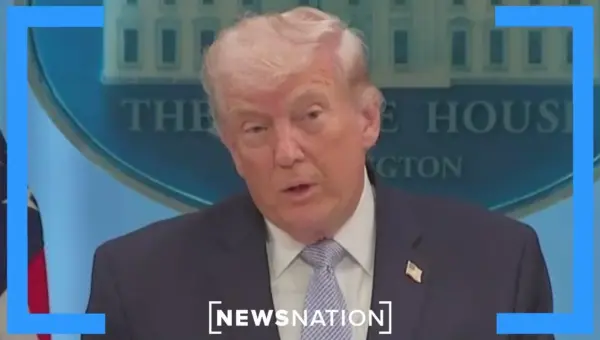
US Airmen Rescued from Iran in Daring Military Operation
Two US airmen were rescued from Iran in a complex, high-risk military operation involving extensive aircraft and personnel. President Trump hailed the mission as historic, emphasizing the US commitment to leaving no one behind while also addressing national security concerns over information leaks.