Iran Rejects Ceasefire; Trump’s Deadline Looms
Iran has rejected a U.S. proposal for a temporary ceasefire, demanding a permanent end to hostilities instead. President Trump's Tuesday deadline for reopening the Strait of Hormuz nears amidst escalating military actions and ongoing diplomatic efforts by regional powers.

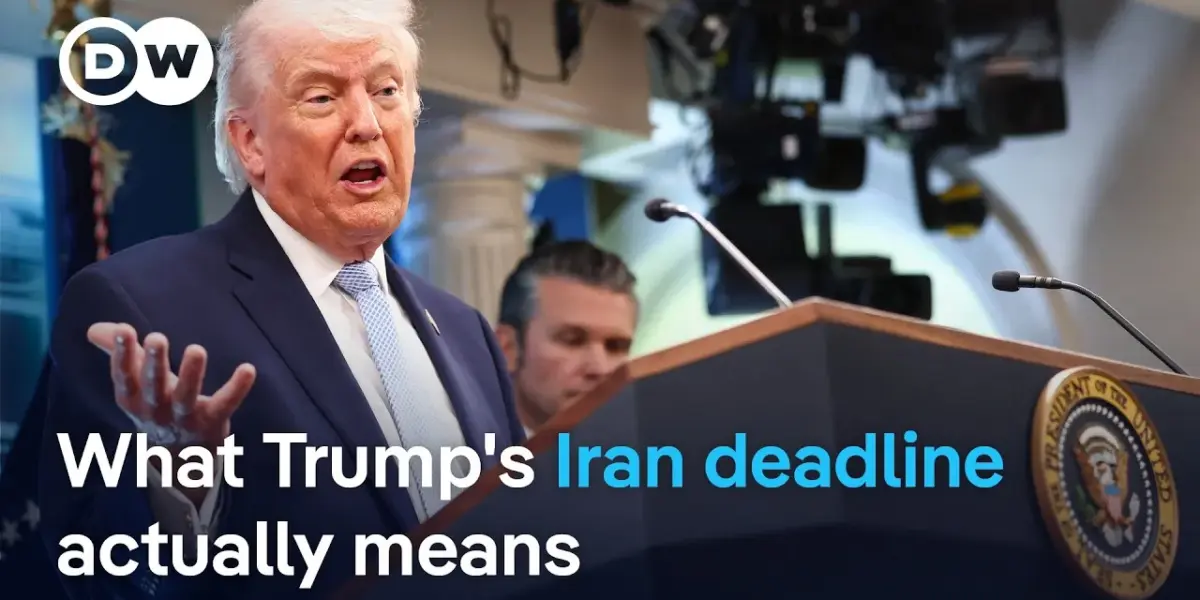
Iran Rejects Ceasefire, Demands End to Hostilities Amidst Escalating Tensions
Iran has rejected a proposed temporary ceasefire in its ongoing conflict, instead calling for a definitive and permanent end to hostilities. This stance comes as U.S. President Donald Trump nears a self-imposed Tuesday deadline, threatening severe consequences if Iran does not reopen the Strait of Hormuz.
The situation intensified following overnight strikes in Iran, with Israel confirming it killed Major General Majid Khadmi, the Revolutionary Guard’s intelligence chief. The Israeli Defense Ministry vowed to target Iran’s infrastructure and leadership, stating, “The leaders of Iran live in a sense of persecution. We will continue to hunt them one by one.” These actions followed an Iranian strike on a hospital in the Israeli city of Haifa, which resulted in four fatalities.
Trump’s Threat and Iran’s Response
President Trump issued a stark warning on social media, threatening to “destroy” Iranian power plants and bridges if the critical waterway remains closed. This ultimatum, set for 8:00 p.m. Tuesday U.S. Eastern time, adds another layer of pressure to an already volatile situation. Iran’s Foreign Ministry has warned of severe repercussions if its civilian infrastructure is targeted, vowing to retaliate in kind.
“Iran’s reaction would be one of reciprocating any such attack. Our armed forces have made it clear that in case Iran’s infrastructure is attacked, we would react in kind.”
Expert Analysis: Escalation or Diplomacy?
Farzan Sabet, an expert on Middle East security from the Geneva Graduate Institute, believes President Trump’s threats are less likely to be carried out in the short term. “He’s repeatedly made similar threats and then extended the deadline,” Sabet noted. Instead, Sabet suggests the U.S. may be positioning itself for a further round of escalation by moving additional troops and assets into the region.
Sabet explained the crucial difference between a ceasefire and an end to hostilities from Iran’s perspective. A temporary ceasefire, he said, would allow the U.S. to complete its military buildup and potentially strengthen its position. For Iran, accepting such a truce would be seen as admitting defeat. Iran seeks a definitive end to the war, using its leverage, such as control over shipping in the Strait of Hormuz, to negotiate broader outcomes and an end to the cycle of conflict.
U.S. and Israeli Objectives
According to Sabet, the U.S. and Israel have two main goals: to weaken Iran’s military and state, and to either modify the Iranian regime or achieve regime change. While they are making progress on degrading Iran’s military capabilities, achieving regime modification or change remains a significant challenge. The actions taken, including strikes on infrastructure, risk significant humanitarian consequences for the Iranian people and potentially for populations in neighboring countries if Iran retaliates against regional energy facilities.
Diplomatic Efforts Underway
Despite the looming deadline and escalating rhetoric, diplomatic efforts are ongoing. Pakistan has reportedly been a key mediator, conveying messages between the U.S. and Iran. Iran’s objections to the U.S. proposal include its demand for a permanent ceasefire, an end to regional conflicts, compensation for war damages, lifting of sanctions, and a protocol ensuring safe passage through the Strait of Hormuz. Many of these points are reportedly not acceptable to the U.S.
Other regional players, including Turkey and Egypt, are also involved in mediation efforts. A recent meeting of foreign ministers from Egypt, Turkey, and Saudi Arabia in Pakistan aimed to find a diplomatic solution. Following this, Pakistan’s foreign minister met with China’s foreign minister, and the two countries issued a five-point plan to de-escalate tensions.
Looking Ahead
With President Trump’s deadline rapidly approaching and a comprehensive deal appearing increasingly unlikely, the region watches anxiously. While diplomatic channels remain open, the possibility of further escalation looms large. Many countries in the region are keen to avoid such an outcome, highlighting the urgent need for a diplomatic resolution to prevent wider conflict.
Source: Iran rejects ceasefire as latest Trump's latest deadline nears | DW News (YouTube)

Related Articles


Trump’s Iran Threat Looms as Artemis II Reaches New Space Heights
Former President Trump issued a stern warning to Iran regarding a potential deal, while the Artemis II mission achieved a new distance record in space. The Education Department also announced it is rescinding Title IX agreements related to gender identity policies.


Iran Tensions Spike, Defense Budget Soars, DHS Shutdown Continues
Iran escalates threats in the Gulf, demanding a deal to reopen the Strait of Hormuz or face retaliation. Simultaneously, a massive $1.5 trillion defense budget is proposed in the U.S., while the Department of Homeland Security remains in a protracted shutdown. The debate over Cuba policy also intensifies, with China stepping in to aid the island nation.


Trump Warns Iran: Civilian Targets Could Face Destruction
President Trump has threatened to destroy Iran's bridges and power plants if a deadline regarding the Strait of Hormuz is not met. International alarm is growing as negotiations falter and concerns mount over potential war crimes and the impact on civilians. Allies are expressing deep concern over the U.S. approach and the potential for wider conflict.