Altcoin Woes: Tokenomics Report Reveals Key Market Drivers
A comprehensive report by Tokconomist reveals how tokenomics, particularly buybacks and burns, have significantly impacted altcoin performance in 2025. The analysis highlights evolving burn mechanisms and the substantial losses incurred by new token generation events, underscoring the critical role of sound tokenomics for long-term project success.

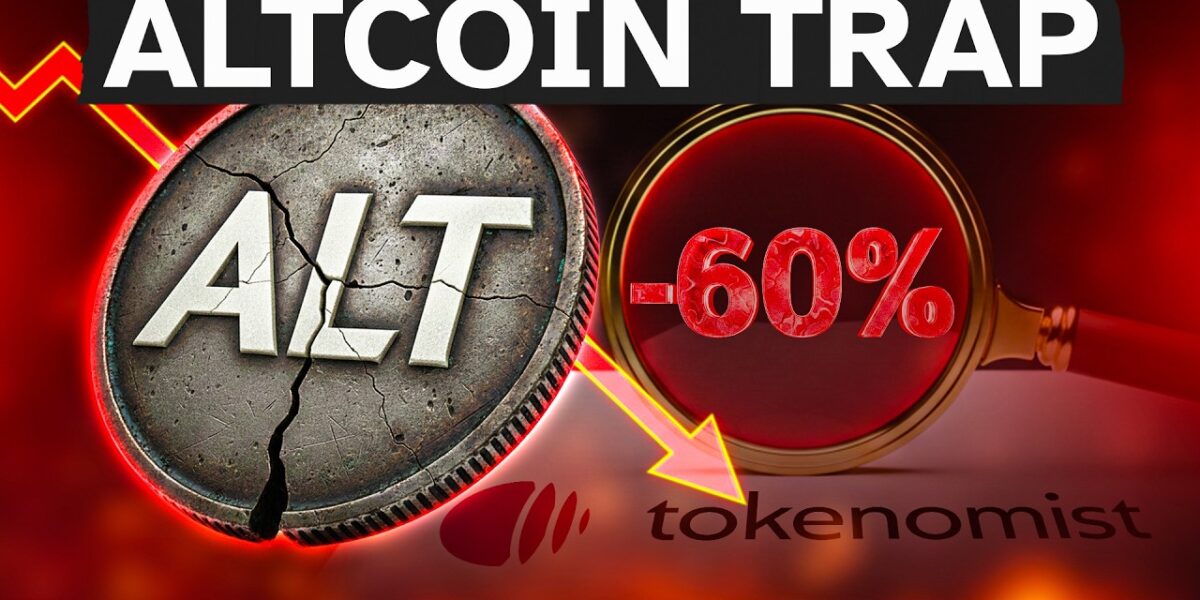
Altcoin Underperformance Linked to Tokenomics Issues
The cryptocurrency market has witnessed a prolonged period of altcoin underperformance, a stark contrast to the optimistic expectations for significant gains in 2025. A recent comprehensive report by Tokconomist, titled “Annual Report 2025,” sheds light on the intricate role of tokenomics, particularly token unlocks and buybacks, in shaping altcoin prices. The report indicates that a deeper understanding of these mechanisms is crucial for navigating the current market landscape and identifying future potential.
Buybacks: A Growing Trend with Varied Impact
In 2025, the total value of token buybacks surged to $8.1 billion, a substantial 145% increase from the $3.3 billion recorded in 2024. A significant portion of this activity, 79%, was attributed to OKX’s exchange token, OKB. Even excluding OKB, monthly buybacks saw a fivefold increase from January to October 2025, largely driven by projects like Hyperliquid and ATA. Notably, 17 out of 25 tracked DeFi projects engaged in buybacks, often triggering short-lived price rallies.
However, the report emphasizes that the source and destination of buyback funds are critical. Buybacks funded by revenue and used for token burns demonstrated the most positive impact, with an average 90-day token price increase of 73%. Revenue-funded buybacks for the treasury followed, yielding approximately 61% gains. Conversely, treasury-funded buybacks resulted in an average token price drop of 33%, while combined funding sources led to an even steeper decline of around 52%.
The report suggests that buybacks are most effective for established projects with consistent revenue and reserves. Revenue-funded buybacks offer scalability, whereas treasury-funded ones have a limited runway. Burning tokens permanently reduces supply, a more impactful deflationary measure than holding repurchased tokens in a treasury. However, treasury holdings can still support ecosystem growth and liquidity, especially for nascent projects.
Case Studies in Buybacks
- OKB: Achieved a 46% deflationary rate through $6.4 billion in revenue-funded buybacks and zero emissions, leading to a 300% price jump in a few days. It also burned 93% of its supply, reducing it to 21 million tokens.
- Hyperliquid: Allocated 97% of trading fee revenue to buybacks and burns, creating significant deflationary pressure with a capped supply of 1 billion tokens.
- Aave: Initiated $50 million in annual buybacks, with 20% going to liquidity providers and 80% to stakers of its stablecoin, GO. While not directly boosting price, this model supports ecosystem growth and user acquisition.
Evolution of Token Burn Mechanics
Token burns have evolved from primarily short-term hype generation to creating long-term value. The report identifies three emerging burn mechanisms in 2025:
- Revenue-based burns: A portion of project revenue is used to burn tokens. This is predictable but can attract regulatory scrutiny due to similarities with stock buybacks.
- Algorithmic treasury burns: Tokens are burned directly from the treasury based on an algorithm. This is less predictable but carries lower regulatory risk.
- Governance-driven burns: Community votes determine the amount and timing of burns. This offers transparency and decentralization but is the least predictable due to potential future reversals.
Exchange Tokens and Layer 1s Embrace Burns
- OKB: Burned $6.4 billion, reducing supply by 93% and achieving a 46% deflation rate.
- BNB: Burned $4.7 billion, cutting supply by 3% with zero net emissions.
- Bit (BGB): Burned over $1.3 billion, reducing supply by 15%. However, with 12% added through emissions, the net deflation was 3%.
- Ethereum (ETH): Burned approximately $280 million, but remained slightly inflationary (0.5%) due to a shift to Layer 2 solutions post-Dencun upgrade, reducing mainnet transaction burns.
- Solana (SOL): Modified its priority fee mechanism in February 2025, reducing its daily burn rate by 95%. Despite burning $338 million (0.3% of supply), net inflation was 3.9% due to staking emissions.
Surprisingly, meme coins like Pingu and Bon led in burn adoption, with Pingu burning 38% and Bon burning 12% of their supplies, driven by team decisions signaling maturity.
Major Governance-Driven Burns
- Hyperliquid: A validator vote converted trading fees to HYPER and sent them to a burn address, reducing its FDV by $1 billion and circulating supply by 13%.
- Uniswap: Approved a proposal to burn 100 million UNI from the treasury, activate fee switches, and implement features to make UNI deflationary, described as the most sophisticated burn mechanism in DeFi.
The report indicates investors prioritize consistent burns over one-off events, highlighting key metrics for 2026: percentage of supply burned, 30-day burn value, burn type (programmatic vs. discretionary), and the reasons for burning.
New Token Generation Events (TGEs) Face Significant Losses
Seven major projects that launched in 2025 with a combined market cap of $9.3 billion and raised $3 billion collectively experienced significant downturns, averaging over 60% losses. These projects include Bio Protocol, Beer Chain, Plasma, Kaito, Pump.fun, Story Protocol, and Monad.
Pump.fun was the largest fundraiser, securing $1.8 billion, with Pump.fun, Plasma, and Bio Protocol raising substantial amounts publicly. Projects with extremely high Fully Diluted Valuations (FDVs) were hit hardest:
- Kaito: Launched at a $2.8 billion FDV (261x multiple) after raising $10 million, subsequently dropping 80%.
- Bio Protocol: Launched at a $2.8 billion FDV (77x multiple) after raising $37 million, with its BIO token collapsing by 94%.
- Plasma (XPL) and Beer (BEER): Both experienced significant drops of roughly 88% and 87% respectively due to high valuation multiples.
Conversely, projects with more reasonable FDV multiples, such as Pump.fun (3x multiple, 38% drop) and Monad (6x multiple, 20% drop), fared better. Story Protocol, despite a 19x multiple, only fell 9%, attributed to strong project quality.
The report highlights Bio Protocol as an example of valuation disconnect, where a $37 million raise could not justify a $2.8 billion FDV. After its collapse, BIO’s valuation dropped to $78 million, a more reasonable 2.1x multiple. No correlation was found between fundraising method (public vs. private) and project performance.
Major Tokenomics Adjustments in 2025
Several projects implemented significant tokenomics changes in 2025:
- Jupiter (JUP): Slashed its total supply from 10 billion to 7 billion tokens through a governance proposal, affecting only non-circulating supply and preventing 3 billion JUP from entering circulation. Future airdrops are now subject to governance votes.
- Wormhole (W): Introduced a tokenomics overhaul (W version 2.0) that smoothed out its vesting schedule. Key allocations now unlock bi-weekly instead of annually, and investor/validator vesting was extended by six months to October 2028.
- Solana (SOL): Adjusted its inflation rate, initially 8% declining annually to a steady 1.5%. This change could reduce total emissions by approximately 22 million SOL, potentially making staking more attractive.
These adjustments reflect a trend towards mature projects using real-time data to refine their tokenomics for long-term sustainability.
2025 Token Unlocks and Their Market Impact
Token unlocks, which increase supply, typically pressure prices downward, though other factors like fundamentals, market conditions, and token utility also play a role.
- WhiteBIT (WBT): Saw a $2.3 billion unlock, increasing supply by 15%. Despite this, WBT rallied 136% due to strong revenue, utility, and burn mechanisms.
- Atena (ENA): Experienced a $1 billion unlock, a 140% supply increase, leading to a 73% price drop.
- Ondo (ONDO): With an $860 million unlock, supply increased by 134%, and the price fell by 67%.
- Dogecoin (DOGE): A 3% supply increase resulted in a 52% price drop.
- Avalanche (AVAX): A 9% supply growth caused a 60% price decline.
- Worldcoin (WLD): A $1.1 billion unlock ballooned supply by 76%, pushing the price down 71%.
Ten projects experienced extreme dilution, with supply increases ranging from 231% to 858%, all resulting in dramatic token price drops, with some going to zero.
The Future of Tokenomics: Maturity and Value Creation
The report concludes that project maturity is a key theme shaping the future of tokenomics. Projects are increasingly refining their economic models based on market data to enhance value and longevity. This evolution, sometimes dubbed “Tokenomics 2.0,” focuses on providing direct value back to token holders through mechanisms like airdrops and revenue distribution.
Large token unlocks remain a factor for 2026, though their impact can be mitigated as not all unlocked tokens are immediately sold. Fear and panic selling by existing holders often exacerbate price drops more than the unlocks themselves.
Upcoming Unlocks to Watch in 2026:
- WhiteBIT (WBT): 81 million WBT unlocking on March 13th, increasing supply by 27%.
- Pump.fun: 82 billion PUMP unlocking on July 12th, inflating supply by 19%.
- Arbitrum (ARB): 92 million ARB unlocking on February 16th (1.8% supply growth).
- Sui (SUI): 43 million tokens unlocking on March 1st (1.1% increase).
- Atena (ENA): 171 million ENA unlocking on March 5th (2.2% increase).
The report stresses the importance of factoring tokenomics into investment research, as even projects with strong technology, teams, and marketing can falter with poor tokenomics. Understanding these dynamics is crucial for identifying projects with 100x potential versus those destined for failure.
Source: Altcoins Are Broken. Here's Proof (YouTube)

Related Articles

S&P 500 Hits Highs Amid War Fears
The S&P 500 has unexpectedly reached all-time highs despite global conflicts and economic worries. Meanwhile, the crypto market faces regulatory delays, and AI's impact remains a mixed bag of innovation and public concern.

AI Finds Thousands of Crypto Security Flaws
A new AI model, Mythos, has discovered thousands of critical security flaws in software, posing potential risks to cryptocurrency platforms. The threats are more likely to target centralized exchanges and applications rather than the core blockchain technology itself.

CME Ditches Weekends, Goes 24/7 for Crypto Futures
The CME Group is launching 24/7 trading for its crypto futures and options starting May 2026. This move eliminates the "CME gap" but raises concerns about traditional finance controlling crypto prices and diluting its decentralized ethos.