Europe’s Geopolitical Earthquake: France’s Nuclear Offer Signals a New Era for Transatlantic Relations
A recent offer by French President Emmanuel Macron to extend France's nuclear umbrella to Germany has sparked profound discussions about the future of European security and America's long-standing military dominance. Emerging from the Munich Security Conference, this proposal signifies a potential withdrawal of Europe from its historical reliance on the United States, challenging the very foundations of the post-World War II global order and hinting at a significant reduction in US military influence worldwide.

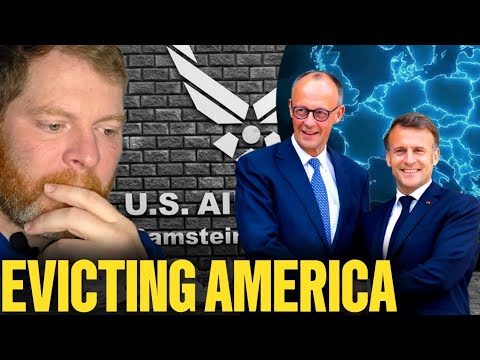
A Defining Moment at Munich: The Shifting Sands of European Security
The recent Munich Security Conference, a pivotal annual gathering for global security discussions, has become the unexpected stage for what many observers are calling a monumental shift in international geopolitics. At the heart of this transformation is a provocative offer from French President Emmanuel Macron: to extend France’s nuclear umbrella to Germany. This proposal, largely unreported in mainstream American media, carries profound implications for the future of European defense, the role of NATO, and the long-held military hegemony of the United States.
For decades, American military influence, underpinned by its vast network of global bases and its nuclear deterrent, has been the bedrock of Western security. This ‘sole monopoly on violence’ on the world stage, as described by some analysts, has granted the US immense leverage across economic, domestic, and foreign policy spheres. However, the discussions emerging from Munich suggest that Europe is now actively seeking to recalibrate this relationship, drawing back from its traditional reliance on American military power.
The Nuclear Gambit: France Steps Forward
The idea of France offering its nuclear umbrella to Germany is not entirely new, but its re-emergence with such prominence signifies a critical juncture. France, a long-standing nuclear power with its independent ‘Force de Frappe,’ has historically guarded its nuclear autonomy. The willingness to share this ultimate deterrent, even conceptually, underscores a deep desire within Europe for greater strategic independence.
The implications for the United States are immediate and far-reaching. The primary justification for a significant American military presence in Europe, exemplified by bases like Ramstein Air Force Base in Germany with its 35,000 troops, has been as a nuclear deterrent against potential adversaries. If Germany were to fall under France’s nuclear protection, the perceived necessity for such a large-scale American presence would diminish considerably. This move challenges the very rationale for US bases, which have been cornerstones of American power projection and political influence for over 70 years.
The Erosion of American Military Influence
The potential closure of US military bases in Europe, starting with Germany, would trigger a compounding effect globally. These bases are not merely staging grounds for troops; they are vital nodes in America’s global power projection network, enabling rapid deployment, intelligence gathering, and logistical support. Their reduction or closure would severely restrict the United States’ ability to wage war globally and significantly curtail its sphere of influence.
The narrative suggests that this shift is not merely a European re-evaluation but also a reaction to perceived American actions. The transcript alludes to instances of ‘saber rattling’ in regions like Greenland, Mexico, and Canada, as well as the ‘complete blockade and collapse of Cuba,’ leading to mass starvation. While the specifics of these actions require further context, the sentiment conveyed is that such aggressive postures have alienated historic allies, pushing them towards greater self-determination and away from American leadership.
Europe’s Quest for Strategic Autonomy
Europe’s desire for self-determination has been a growing theme, particularly since the tumultuous geopolitical events of the past decade. The European Union has increasingly explored avenues for enhanced defense cooperation and strategic autonomy, aiming to become a more unified and capable security actor on the world stage. Initiatives like the Strategic Compass and the European Intervention Initiative reflect this ambition to develop independent military capabilities that can rival other global superpowers.
The French nuclear offer, therefore, fits into a broader European strategy to reconstruct its military power and reduce its reliance on external security guarantors. This momentum is reportedly not confined to policymakers but is also gaining traction among the general population across Europe, indicating a deeper societal shift in sentiment towards greater independence.
The ‘Fortress North America’ Pivot
In response to these global shifts, the United States appears to be pivoting towards a ‘Fortress North America’ strategy. This involves fortifying the North American continent, bringing strategic resources under its own protection and umbrella, regardless of current ownership. This inward-looking approach suggests a potential redirection of American focus and resources, potentially at the expense of its traditional global commitments.
The transcript posits that the US is not leaving Europe by choice but is being ‘evicted’ as European nations seek new security arrangements. This perspective challenges the narrative often presented within the US, where political figures like Marco Rubio have attempted to reassure allies of America’s enduring commitment. Such reassurances, according to the analysis, are a ‘farce,’ masking the reality of a significant and irreversible departure.
The End of an Era: Instability and New Power Plays
The potential end of America’s role as the ‘world’s police force’ marks a profound historical change. While some might view this as a positive development, fostering greater self-reliance among nations, it also carries the significant risk of massive instability. Transitions in global power structures are rarely smooth, often leading to power vacuums, regional conflicts, and a scramble for influence among emerging contenders.
The implications for future global conflicts are stark. Should the US engage in military actions, for instance, against Iran, it may find itself lacking the traditional support from its G7, NATO, EU, and Australian allies. The willingness of these nations to commit ‘boots on the ground’ alongside the US would likely be significantly reduced, reflecting a broader distrust and a realignment of strategic priorities.
Economic Repercussions and Domestic Disconnect
The financial cost of maintaining America’s global military footprint is substantial, with billions of dollars allocated annually to retain nuclear deterrents in Europe and maintain bases worldwide. While the closure of these bases might suggest a potential for these funds to be repatriated and benefit the American populace, the transcript casts doubt on this, suggesting that a loss of leverage would not automatically translate into domestic economic improvements.
A striking aspect highlighted in the analysis is the apparent disconnect between these monumental geopolitical shifts and their coverage within the United States. The average American household, according to the transcript, remains largely unaware of France’s nuclear offer to Germany or the broader implications for US global standing. This lack of information could contribute to a misunderstanding of America’s evolving role and the challenges it faces in a rapidly changing world.
The Future of Alliances and the Void of Hegemony
While America is expected to retain a place within NATO and continue working alongside European allies, its role is projected to be significantly reduced. The departure of the US as the undisputed global hegemon creates a void, raising critical questions about which powers will step in to fill it, particularly concerning Europe’s security architecture.
The EU, in this new landscape, will face increased pressure to fulfill its security role within the region, potentially accelerating its path towards a more unified defense policy. This transition period, characterized by diplomatic and geopolitical instability, promises a turbulent but transformative era for international relations.
The developments stemming from the Munich Security Conference and France’s nuclear offer signal not just a shift in alliances but a fundamental restructuring of the global order. It underscores a growing desire for multipolarity, where power is distributed among several major poles, rather than concentrated in a single hegemon. The world is undeniably entering a period of historic change, the full ramifications of which are yet to unfold, but the message from Europe is clear: the era of unquestioning reliance on American military dominance may well be drawing to a close.
Source: Warning: France Just Ended The American Empire. (The Nuclear Switch) (YouTube)

Related Articles
Trump’s Middle East Gambit: Escalation or Empty Threat?
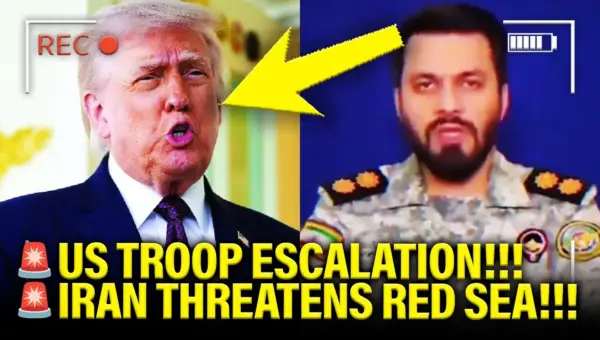
The US is sending troops and imposing a blockade in the Middle East, signaling escalation. Yet, conflicting messages from Donald Trump suggest peace is near. This analysis explores the contradictory actions, Iran's defiant response, and the potential global economic and political fallout.


Oil Prices Surge to $91 Amid Geopolitical Tensions
Oil prices have surged to $91 a barrel, driven by disruptions in the Strait of Hormuz. This is leading to higher gas prices across the U.S., with California facing particularly steep costs. The situation is fueling debate on energy policy, exports, and the transition to renewable fuels.

China’s Iran Gambit: Deception or a New World Order?
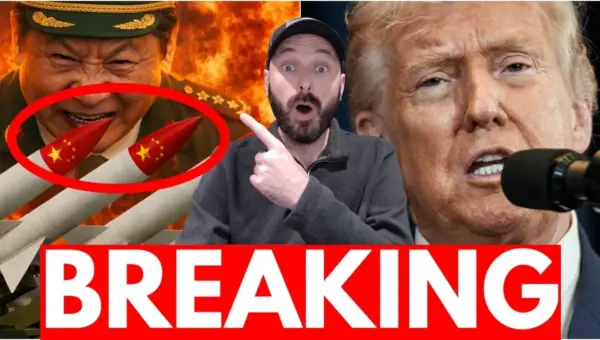
President Trump claims China will stop sending weapons to Iran, but deep skepticism remains due to China's past support and use of spy satellites to aid Iran. This move could be a strategic ploy to weaken the US military.