Trump’s Iran Grid Threat Called ‘War Crime’ Amid Ceasefire Talks
Experts are calling Donald Trump's threats to dismantle Iran's entire electrical grid a potential war crime. As the U.S. and Iran consider a Pakistan-brokered ceasefire plan, skepticism remains high regarding Iran's willingness to reopen the Strait of Hormuz. The volatile situation is marked by mixed messaging and concerns over international law.

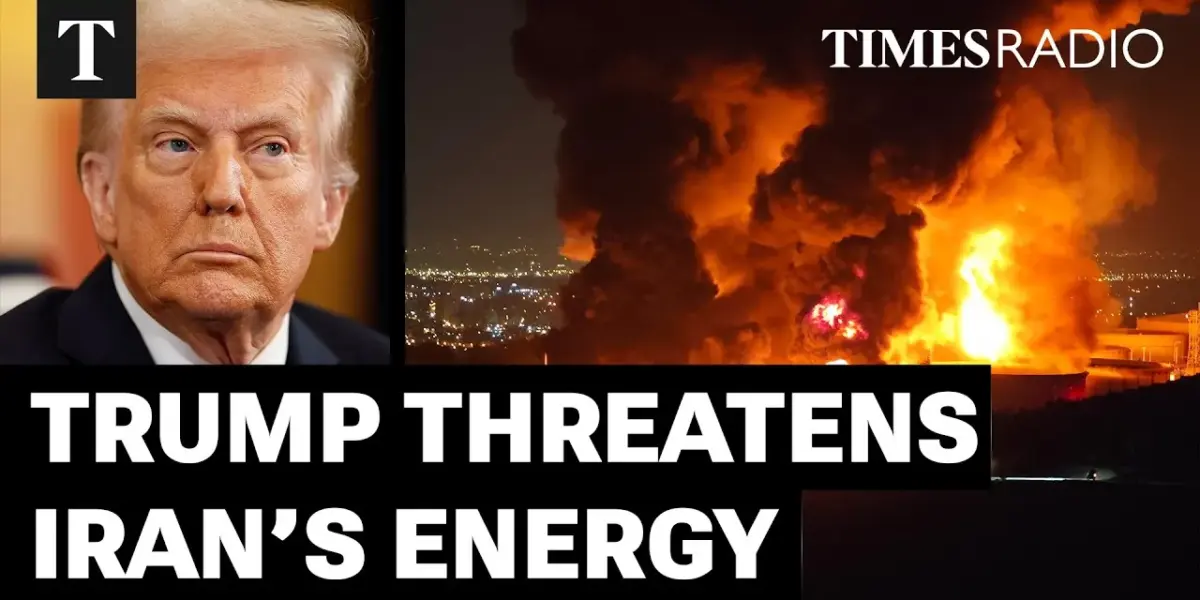
US Mulls Ceasefire Plan Amid Tensions with Iran
As the United States and Iran consider a ceasefire plan presented by Pakistan, former President Donald Trump’s threats to cripple Iran’s electrical grid have drawn sharp criticism, with experts calling such an action a potential war crime. The ongoing conflict, marked by Israeli airstrikes on Iranian facilities and Iranian attacks on U.S. troops, has created a tense diplomatic atmosphere. Trump is expected to address the situation soon, while international mediators work to de-escalate the conflict.
Ceasefire Proposal Faces Skepticism
A new ceasefire plan, reportedly a simplified version of previous proposals, suggests an initial truce of several weeks. During this period, the U.S. and Iran would negotiate a permanent ceasefire. However, a key condition sought by the U.S. is Iran’s reopening of the Strait of Hormuz during the initial truce. This demand has led to widespread skepticism about the plan’s success.
Experts like Greg Carlstrom, Middle East correspondent for The Economist, note that Iran views control of the Strait of Hormuz as its most significant leverage. Iran sees security benefits and potential revenue from tolls charged to ships using the vital waterway. The idea of relinquishing this control for only a temporary truce, which might not even lead to a permanent ceasefire, seems unlikely to be accepted by Iran.
“The idea that they would relinquish that card, reopen the straight, lower energy prices in exchange for only a temporary truce that might not become a permanent ceasefire. I’m very skeptical that they would go along with that.”
Reports from within the Iranian regime indicate a firm stance against opening the Strait of Hormuz during any temporary ceasefire, with some calling it a move that would make them a “laughingstock.” This highlights the deep divisions and hardline positions within Iran’s leadership, particularly the Revolutionary Guard, which appears to be making key decisions.
Debate Over ‘War Crime’ Threat
Donald Trump’s repeated threats to target Iran’s civilian infrastructure, specifically power plants, have sparked a debate about their legality under international law. While attacking such infrastructure is not automatically a war crime, it depends on the balance between military advantage and civilian impact.
Greg Carlstrom explained that international law allows for strikes on infrastructure if it is vital for the enemy’s military. However, he pointed out two major issues with Trump’s threats. Firstly, Trump is not talking about striking a single power plant but the entire Iranian electric grid, which he believes would “indisputably be a war crime doing it at that scale.”
Secondly, Trump’s stated reason for targeting the grid is not military necessity but to pressure Iran into making a deal. Carlstrom emphasized that using civilian infrastructure attacks solely for political pressure is not permitted under international law. If Trump follows through with these threats, they would likely constitute war crimes.
Mixed Messaging and Unpresidential Language
Gina Abberrombi Win Stanley, a Middle East expert and former U.S. ambassador, anticipates continued mixed messaging from Donald Trump. She described his communication style as a “sweet spot” for him on various issues, including the current conflict.
Win Stanley noted Trump’s recent social media posts, which included strong language and frustration, were “unpresidential” and regrettable. She suggested that such outbursts might signal to Iran that they are getting under his skin, especially as his initial expectations for a quick resolution have not materialized.
“Clearly not. It It was unfortunate. He showed his frustration which is also unpresidential in a state of war and regrettable. I think it sent a signal to the Iranians that they are getting to him as it were.”
She compared the situation to the Chinese saying about “riding the tiger” – easier to get on than to get off. Both sides, she believes, are facing immense pressure. Iran is enduring significant destruction, yet its leadership, particularly the hardline IRGC, appears to remain unified.
Potential Paths Forward and Lingering Uncertainty
The prospect of the current ceasefire plan succeeding hinges on Iran’s willingness to reopen the Strait of Hormuz. Given Iran’s firm stance, many experts are doubtful that the plan, as currently outlined, will be accepted.
However, Win Stanley suggested potential modifications could make the plan more palatable. These might include Iran still charging tolls for passage through the strait or an immediate unfreezing of Iranian assets. Such measures could provide Iran with the economic relief and compensation it seeks for the damages incurred.
The duration of the conflict remains uncertain. Iran’s apparent willingness to withstand significant pressure, coupled with the lack of internal division, suggests the conflict could continue. Trump faces a challenge in defining a credible success for the war to justify the costs to the American people and allies.
The conflict could persist in a low-intensity fashion for an extended period. The outcome may depend on whether Iran continues to charge passage fees or if shipping resumes naturally. With many military objectives potentially met, Trump might find grounds to declare victory, though the broader geopolitical implications continue to unfold.
Source: Trump’s Plan To Knock Out Iran Grid Would ‘Indisputably’ Be ‘A War Crime’ | Gregg Carlstrom (YouTube)

Related Articles

Trump’s Iran Threat Looms as Artemis II Reaches New Space Heights
Former President Trump issued a stern warning to Iran regarding a potential deal, while the Artemis II mission achieved a new distance record in space. The Education Department also announced it is rescinding Title IX agreements related to gender identity policies.


Astronauts Shatter Space Record, Trump Hails New Lunar Era
NASA's Artemis 2 astronauts have achieved a historic milestone, flying farther from Earth than any humans before. The record-breaking mission around the moon also included a touching tribute and a renewed vision for lunar and Martian exploration.

Iran Tensions Spike, Defense Budget Soars, DHS Shutdown Continues
Iran escalates threats in the Gulf, demanding a deal to reopen the Strait of Hormuz or face retaliation. Simultaneously, a massive $1.5 trillion defense budget is proposed in the U.S., while the Department of Homeland Security remains in a protracted shutdown. The debate over Cuba policy also intensifies, with China stepping in to aid the island nation.