US Expels Soleimani Relatives, Tightens Iran Grip
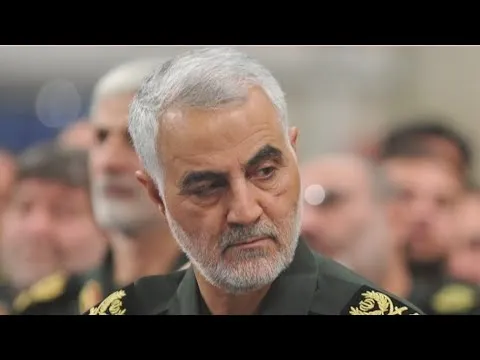
The U.S. has detained relatives of the late Iranian commander Qassem Soleimani, revoking their green cards. This action is part of a broader U.S. campaign to counter Iranian influence and potential security threats within the United States.

US Expels Soleimani Relatives, Tightens Iran Grip
The United States has taken strong action against relatives of a prominent Iranian commander, revoking their green cards and detaining them. This move signals a tougher stance by the U.S. against individuals linked to Iran’s government, especially those seen as promoting its agenda or posing a security risk.
Soleimani’s Family Members Detained
The niece and grandniece of Qassem Soleimani, the Iranian commander killed in a U.S. drone strike in 2020, were taken into custody by Immigration and Customs Enforcement (ICE) in Los Angeles. This happened just one day after Secretary of State Marco Rubio revoked their green cards. Officials stated the family members had used the U.S. as a platform to support Iran’s regime and celebrate attacks on American soldiers.
Reasons for Revocation and Detention
The State Department explained that Holiday Soleimani Afshar, identified as a supporter of the Iranian regime, was living in the U.S. as an asylum seeker with her daughter. While in America, she allegedly promoted Iranian regime propaganda. She also reportedly celebrated attacks on American soldiers and denounced the U.S. as the “Great Satan.” The State Department believes these actions undermine her claim for asylum.
Afshar entered the U.S. on a tourist visa in June 2015. She was granted asylum in 2019 and became a green card holder in 2021. When she applied for citizenship last year, she admitted to making multiple trips back to Iran after receiving her green card. This travel, coupled with her public statements, appears to have triggered the government’s action.
Broader U.S. Campaign Against Iranian Influence
This action is described as part of a wider effort by the U.S. government. The goal is to prevent individuals with connections to Iran’s government, who could be a danger, from staying in the United States. National security experts suggest that more deportations of people linked to the Iranian regime could follow.
Experts also noted that Iran has placed individuals within the United States over the years. The relative lack of major organized terrorist attacks suggests these individuals may feel comfortable in their current positions. This could indicate a strategic patience rather than an immediate military threat.
Historical Context: Soleimani and U.S. Tensions
Qassem Soleimani was a key figure in Iran’s military and foreign policy. The U.S. drone strike that killed him in 2020 was a major escalation. At the time, the State Department said Soleimani was responsible for the deaths of hundreds of American service members. This event significantly heightened tensions between the two countries.
The situation also echoes past security concerns. Former National Security Adviser John Bolton, a target of a murder-for-hire plot believed to be retaliation for Soleimani’s death, commented on the case. He pointed out that claiming to be in danger in one’s home country is hard to justify if one can freely travel back and forth between that country and the U.S.
Similar Cases and Economic Leverage
This is not the first time individuals with ties to the Iranian government have lost their legal status in the U.S. recently. The daughter of Iran’s former National Security Adviser Ali Larijani, who was reportedly killed in an airstrike last month, was also stripped of her legal status. She had been working as a professor at Emory University in Atlanta.
While the transcript doesn’t detail specific economic sanctions or trade figures, the U.S. has long used sanctions as a tool against Iran. These measures aim to pressure the Iranian government by restricting its access to financial markets and international trade. Revoking green cards and detaining individuals can be seen as another form of pressure, targeting those who may support or benefit from the regime.
Global Impact and Future Scenarios
This crackdown on Soleimani’s relatives and others linked to Iran’s government sends a clear message. It shows the U.S. is serious about countering Iranian influence and potential threats within its borders. This could lead Iran to retaliate, possibly through its proxies or by targeting U.S. interests abroad.
One scenario is increased diplomatic tension and potential reciprocal actions between the U.S. and Iran. Another possibility is that Iran might become more cautious about embedding operatives in Western countries, fearing further crackdowns. The U.S. may continue to monitor and act against individuals perceived as threats, potentially leading to more such detentions and deportations.
Why This Reshapes the World Order
The U.S. decision to detain and revoke the status of relatives of a high-profile figure like Qassem Soleimani highlights a shift. It suggests a more proactive and assertive U.S. policy towards Iran. This could further isolate Iran diplomatically and economically. It also demonstrates the U.S. government’s willingness to use immigration and national security tools to address perceived foreign threats. This approach could influence how other nations manage citizens with ties to adversarial states.
Source: US revokes green cards, detains relatives of late Iranian commander Soleimani | NewsNation Live | Ne (YouTube)

Related Articles
Trump Threatens ‘Civilization’s Death’ in Iran Standoff
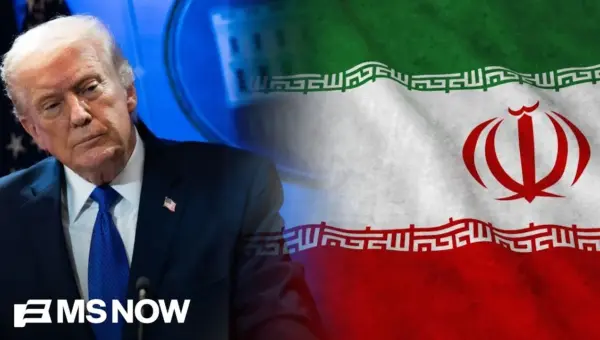
President Trump has issued a stark warning, threatening that a "whole civilization will die tonight" if Iran does not meet his deadline. The escalating conflict enters its sixth week with just hours left before the U.S. President's ultimatum expires.
China’s ‘Quarantine’ Plan Could Trap Taiwan, Experts Warn
Experts are warning of a new Chinese strategy: a 'quarantine' of Taiwan. This scenario could see China blockade the island, cutting off supplies and exerting control without a direct invasion. The move presents complex dilemmas for the U.S. and its allies, who must decide how to respond to this gray-zone tactic.

Trump’s Unhinged Threats Ignite Mideast Firestorm
Donald Trump's recent social media posts and actions have ignited a firestorm in the Middle East, with escalating violence and dire threats. Amidst widespread death and destruction, global markets are in turmoil, and the specter of nuclear escalation looms.