Iran Rejects Trump’s War Ultimatum, Sparks Market Chaos
Iran has rejected President Trump's ultimatum regarding the Strait of Hormuz and a ceasefire, demanding long-term security guarantees and reparations. This standoff has led to market volatility and accusations of manipulation, as both sides engage in escalating rhetoric and military posturing.

Iran Rejects Trump’s War Ultimatum, Sparks Market Chaos
Tensions are escalating between the United States and Iran, with President Donald Trump facing a significant diplomatic challenge. Reports indicate that Iran has rejected proposals for a ceasefire and the opening of the Strait of Hormuz, a critical global oil shipping route. This rejection has led to increased oil prices and market instability, prompting accusations of market manipulation and a desperate, perhaps even erratic, approach from the Trump administration.
Iran’s Demands for Security and Reparations
Iran has made its stance clear: it seeks long-term security guarantees not only for itself but also for its allies like the Houthis, Hezbollah, and Lebanon. Furthermore, Iran is demanding full reparations for the war and insists on retaining its ballistic missiles and drones. These demands are presented as non-negotiable prerequisites for any talks. Iran has also stated it is open to bilateral negotiations with allies and other countries, but not under the current pressure from the Trump regime.
Strait of Hormuz: A Point of Contention
The Strait of Hormuz remains a central issue. While Donald Trump previously downplayed its importance to the U.S., he is now aggressively pushing for its opening. Iran, however, has firmly stated that the strait will not reopen, especially not for the U.S. and Israel. Social media accounts associated with Iran have mockingly responded to Trump’s aggressive rhetoric, with one post stating, “The Strait of Hormuz is not going to open. Buy oil, sell your stocks. Praise be to Allah.” This mirrors a sarcastic response to Trump’s own social media posts, which have included aggressive language and shifting deadlines for negotiations.
Accusations of Market Manipulation
The situation has been further complicated by accusations that the Trump administration is using news of potential negotiations to manipulate financial markets. When oil prices surged above $115 per barrel and stock markets like the S&P, Nasdaq, and Dow Jones began to fall, a report emerged citing U.S. officials discussing a potential 45-day ceasefire. Critics argue this report, appearing in outlets like Axios, is intended to calm markets rather than reflect genuine progress. The source of these reports and their timing have led to suspicions of a coordinated effort to influence economic indicators.
Escalating Rhetoric and Military Posturing
The rhetoric from both sides has intensified. Donald Trump has reportedly warned that if Iran refuses to negotiate, “very little will be off the table,” a statement interpreted by some as a veiled threat of nuclear escalation. He has also suggested the conflict should be resolved in days, not weeks, and has expressed skepticism about the willingness of allies like NATO to become involved. Meanwhile, Iranian military officials have stated their forces are prepared to defend their territory and infrastructure, vowing to retaliate in kind if attacked. Footage reportedly shows recent airstrikes in Tehran and Iranian missile responses over Israel, highlighting the ongoing military engagement.
Historical Context and Broader Implications
This standoff is not occurring in a vacuum. It follows a period of heightened tensions and military actions in the region. The U.S. has reportedly conducted operations near Iran’s nuclear facilities, leading to the destruction of several aircraft and drones. Iran’s foreign ministry spokesperson has emphasized that their actions are defensive measures against perceived U.S. aggression. The situation also raises questions about the role of proxy groups and the long-term stability of the Middle East. The Pope has called for peace, urging those with weapons to lay them down, contrasting with the aggressive stance attributed to the Trump administration.
Why This Matters
The escalating conflict and the aggressive, often contradictory, communication from the U.S. administration have significant global implications. The control of the Strait of Hormuz directly impacts the global oil supply, and any disruption can lead to widespread economic consequences. The accusations of market manipulation erode trust in official statements and can create further volatility. Furthermore, the potential for miscalculation or unintended escalation in a region already fraught with tension is a serious concern for international security. The approach taken by the U.S. under Trump, characterized by strong rhetoric and shifting deadlines, contrasts sharply with calls for diplomacy and de-escalation from international bodies and religious leaders.
Future Outlook
The immediate future remains uncertain. Iran’s firm stance on its non-negotiables suggests that a quick resolution is unlikely unless significant concessions are made. The Trump administration’s strategy appears to be one of intense pressure, but the effectiveness and consequences of this approach are debatable. The ongoing military actions, coupled with the economic fallout, paint a grim picture. Whether this leads to a broader conflict or eventually a negotiated settlement, possibly on Iran’s terms, is yet to be determined. The world watches closely as this high-stakes diplomatic and military standoff continues to unfold.
Source: Trump PANICS as WAR ULTIMATUM REJECTED!!! (YouTube)

Related Articles
Trump Threatens Iran’s Infrastructure in Hormuz Standoff
President Trump has threatened to cripple Iran's infrastructure, including bridges and its power grid, if it continues to harass shipping in the Strait of Hormuz. Former Congressman Bob McEwen explained this strategy aims to force Iran to negotiate by severely damaging its operational capacity. The discussion also addressed the potential for such actions to be considered war crimes, with McEwen distinguishing between infrastructure attacks and the targeting of civilians.

Trump’s Rhetoric and Health Concerns Fuel Global Unease
Recent public appearances by Donald Trump have fueled concerns about his health and the aggressive nature of his rhetoric. His threats towards Iran, coupled with puzzling public statements and a focus on unusual topics, raise significant questions about his fitness for office and the potential impact on global stability and domestic policy.
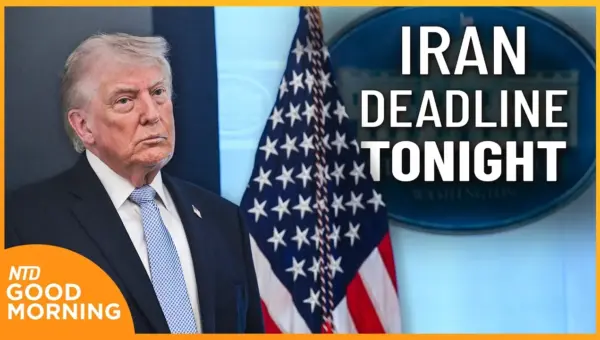
Trump’s Iran Threat Looms as Artemis II Reaches New Space Heights
Former President Trump issued a stern warning to Iran regarding a potential deal, while the Artemis II mission achieved a new distance record in space. The Education Department also announced it is rescinding Title IX agreements related to gender identity policies.