Iran Conflict Escalates: Trump Ultimatum, Military Strikes
President Trump issued a 48-hour ultimatum to Iran following military strikes and a daring U.S. airman rescue. Meanwhile, a U.S. government shutdown continues, impacting the Department of Homeland Security and creating a funding impasse.

Iran Conflict Escalates: Trump Ultimatum, Military Strikes
Tensions flared in the Middle East as senior Israeli officials confirmed the elimination of the head of intelligence for Iran’s Islamic Revolutionary Guard Corps (IRGC). Simultaneously, another commander from a special operations unit was also reportedly taken out. These developments occurred as the U.S. military successfully rescued a wounded airman whose aircraft was shot down over Iran over the weekend.
Daring Rescue Operation
The rescued airman survived for nearly 48 hours behind enemy lines. He managed to climb 7,000 feet, seeking refuge in a mountain crevasse armed only with a pistol for survival. U.S. Central Command confirmed its forces struck targets in Iran amidst these events.
President Trump’s Ultimatum
Adding to the rising tensions, President Trump issued a stark warning to Iran. He stated that Iran has 48 hours to reach a deal, or face the consequence of the entire country being attacked. This ultimatum was shared on his social media platform, Truth Social, setting a deadline of Tuesday at 8:00 P.M. Meanwhile, The Wall Street Journal reported that the U.S. and regional mediators are actively pursuing a 45-day ceasefire. Such an agreement could potentially lead to an end to the ongoing conflict.
“We do not leave our men behind. That’s what’s different about the United States of America.” – Congressman Brian Mast
Diplomatic Efforts and Military Spending
Congressman Brian Mast, Chairman of the House Foreign Affairs Committee, praised the military personnel for their role in bringing the downed pilot home. He highlighted this as a testament to American operational standards. Congressman Mast also commented on a proposal from Pakistan aimed at resolving the situation through negotiations. He acknowledged that while such diplomatic efforts are positive, he views the likelihood of their success as low, particularly concerning the release of frozen assets. He suggested that asset release is more likely to be discussed after a regime change.
The conversation also touched upon the significant military funding being requested. President Trump’s fiscal proposal for 2027 includes $1.5 trillion for the military, on top of an additional $200 billion request currently before Congress. Congressman Mast emphasized the necessity of this funding, especially after the loss of two C-130 aircraft over the weekend and the costly rescue operation. He noted that these missions, while successful, are extremely expensive.
U.S. Military Capabilities and Evolving Warfare
The U.S. military’s advanced capabilities were underscored as a key differentiator. Congressman Mast explained that these unique strengths are a major topic of discussion, even concerning bases in Europe. He stated that the U.S. possesses capabilities that many other nations, including European allies, do not. This is currently being demonstrated throughout the Middle East.
The discussion also addressed the changing nature of warfare, particularly the rise of drone technology. The U.S. military needs to remain at the forefront of developing and utilizing advanced systems, including those needed to defend against and attack with drones. This represents a shift from traditional warfare involving aircraft like the F-35.
Government Shutdown and DHS Funding Impasse
Separately, the U.S. government faced a prolonged partial shutdown, impacting the Department of Homeland Security (DHS) for its 52nd day. House and Senate Republicans were working to end the shutdown. Lawmakers urged House Speaker Johnson to reconvene the House of Representatives, which was not scheduled to return until the week of April 13th.
House Minority Leader Hakeem Jeffries called for the House Republicans to reconvene to reopen DHS, criticizing the chaos at airports and the fact that essential workers, like TSA agents, were forced to work without pay for weeks.
In response to the shutdown’s impact, President Trump issued an order on Friday directing the Department of Homeland Security to pay all employees. This presidential memo restored paychecks to approximately 35,000 workers who had not been paid since mid-February. The order came as TSA callout rates reached 7% nationwide, a significant increase from previous levels.
Political Divisions and Funding Challenges
Reports indicated that Republican divisions and President Trump’s stance were hindering efforts to reopen the Department of Homeland Security. Congressman Mast expressed gratitude for President Trump’s executive orders, which provided funding for TSA, Coast Guard, Secret Service, and FEMA employees. He stated that these entities would not have been funded under previous Democratic proposals.
Congressman Mast believes it is highly unlikely that any legislation will pass the House without including funding for border security. Similarly, he stated that any bill passing the Senate would likely require border security funding. This creates a significant impasse. President Trump has suggested pursuing budget reconciliation, which is unlikely to occur before late May. This is why, Congressman Mast explained, the current executive orders are crucial for ensuring federal workers receive their paychecks.
The ongoing shutdown affects critical agencies beyond TSA, including CISA (Cybersecurity and Infrastructure Security Agency), which is vital for major upcoming events like America 250 and the FIFA World Cup. The lack of funding raises concerns about cybersecurity preparedness.
Congressman Mast reiterated that while executive orders are providing immediate relief, a legislative solution is needed for a broader range of federal workers within DHS. He admitted that finding a way through the current impasse, which hinges on border security funding, has not yet been achieved. He stated that it would be dishonest to claim otherwise.
Regarding the House returning to session, Congressman Mast indicated a slim chance of them reconvening that week. He expressed a desire to be working on a legislative solution rather than relying solely on executive orders for funding.
Market Impact
The escalating geopolitical tensions in the Middle East, marked by military strikes and an ultimatum, could introduce volatility into global markets. Oil prices, in particular, may react to concerns about supply disruptions. Investor sentiment could shift towards safe-haven assets if the conflict intensifies. Domestically, the ongoing government shutdown and the debate over border security funding create uncertainty, potentially impacting economic activity and government services. The significant military spending proposals also signal a potential shift in fiscal priorities, which could influence sectors related to defense and technology.
What Investors Should Know
Investors should monitor the developments in the Middle East closely, as any escalation could have ripple effects across various asset classes, especially energy. The political gridlock surrounding the U.S. government shutdown and border security funding may continue to weigh on domestic markets. The proposed increases in military spending could present opportunities in defense-related industries, but investors should also consider the broader economic implications of such fiscal policies. Diversification and a long-term perspective remain crucial for navigating this complex environment.
Source: IRAN ULTIMATUM: Trump gives FINAL WARNING as clock runs down (YouTube)

Related Articles
Trump’s Iran Threat Looms as Artemis II Reaches New Space Heights
Former President Trump issued a stern warning to Iran regarding a potential deal, while the Artemis II mission achieved a new distance record in space. The Education Department also announced it is rescinding Title IX agreements related to gender identity policies.

Iran Tensions Spike, Defense Budget Soars, DHS Shutdown Continues
Iran escalates threats in the Gulf, demanding a deal to reopen the Strait of Hormuz or face retaliation. Simultaneously, a massive $1.5 trillion defense budget is proposed in the U.S., while the Department of Homeland Security remains in a protracted shutdown. The debate over Cuba policy also intensifies, with China stepping in to aid the island nation.

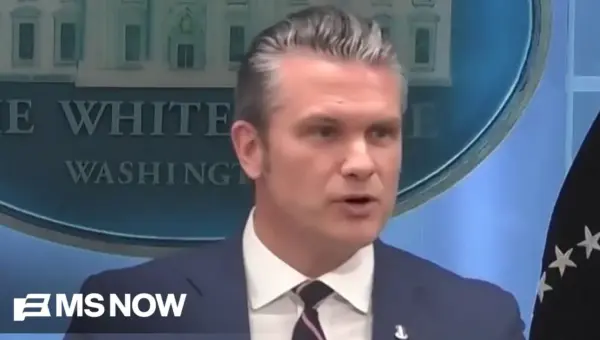
Defense Secretary’s Easter Rescue Comparison Sparks Debate
The U.S. Defense Secretary's comparison of a downed airman's rescue to Jesus' resurrection has sparked debate. Critics argue this religious framing of military action plays into Iran's hands and hinders diplomacy. Experts warn of escalating conflict and historical blowback from such strategies.