Iran’s Strait of Hormuz Control ‘More Powerful’ Than Bomb
Iran's control of the Strait of Hormuz is deemed more powerful than a nuclear bomb, offering significant global economic leverage. Meanwhile, U.S. policy is questioned, while Pakistan attempts mediation. The discussion also covers domestic issues like obesity in Ebbale and the free speech debate surrounding Kanye West's concert.

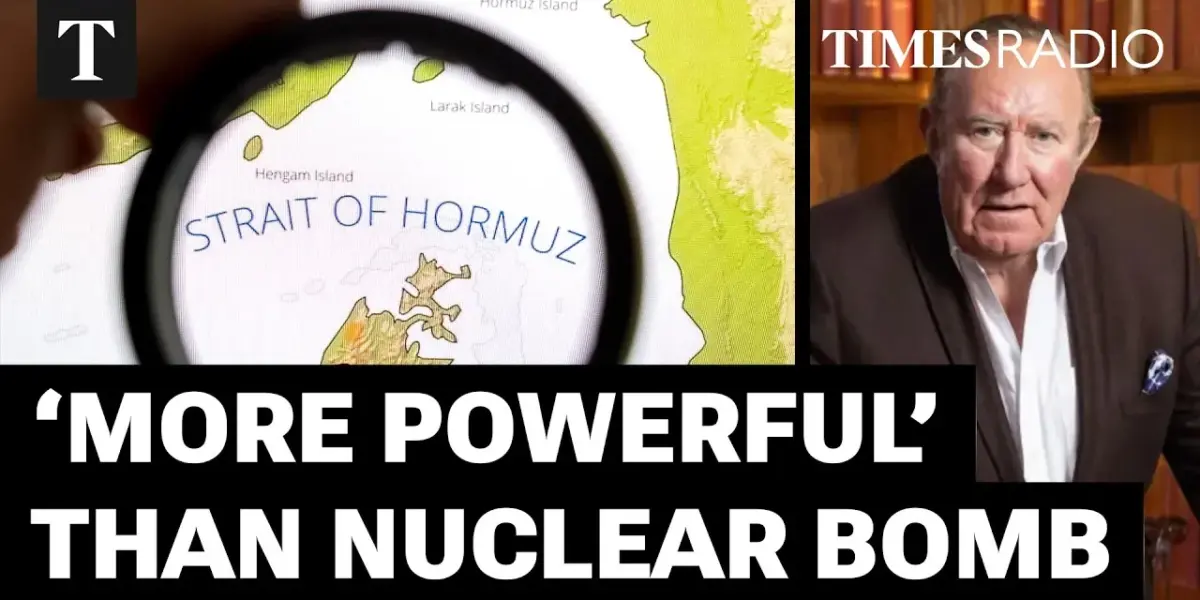
Iran’s Strategic Leverage: The Strait of Hormuz
Iran views its control over the Strait of Hormuz as a more potent weapon than a nuclear bomb, according to insights shared by Andrew Neil on Times Radio. This strategic waterway offers Iran significant influence over the global economy, a leverage point it is unlikely to relinquish easily. Despite ongoing international pressure and military actions, the Iranian regime believes it is surviving and even winning by maintaining this crucial chokepoint.
US Policy Under Trump: A Floundering Approach?
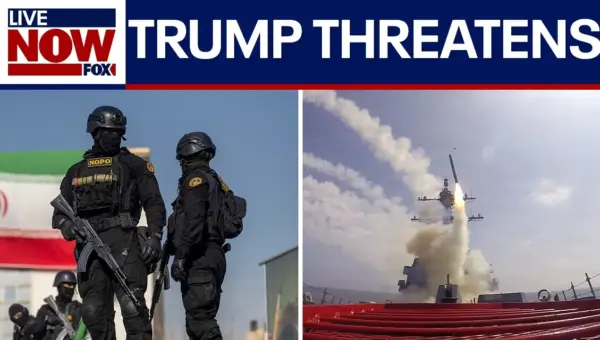
The commentary suggests that the United States, under President Trump, is struggling to find effective strategies in its dealings with Iran. President Trump’s public statements, including a strong warning on Truth Social about unleashing “hell” if the Strait of Hormuz is not reopened, are seen by some as erratic and lacking thoughtful consideration. Jim Townsend, a former US defense official, described the President’s actions as being “drunk” on recent successes and speaking without proper strategic thinking.
“He is the president of the United States of America. He is not the moral authority of our nation… I would have used different words. I would not have used those words at all.”
Pastor Mark Burns, Spiritual Adviser to Donald Trump
Pakistan’s Peace Efforts Amidst Tensions
Amidst the escalating tensions, Pakistan’s army chief, Field Marshal Asim Munir, has reportedly put forward a peace deal. This initiative involves communication with U.S. Vice President Vance and Iran’s Foreign Minister. However, the effectiveness of such diplomatic efforts is questioned given President Trump’s unconventional negotiation style and Iran’s perceived strength derived from controlling the Strait of Hormuz.
Iran’s Evolving Position and Regime Strength
Contrary to expectations, Iran’s regime appears to be strengthening its position despite facing significant military strikes. While the regime is described as “bloodied” and “bruised,” it has not collapsed. Iran continues to control the Strait of Hormuz, selectively allowing passage for allies and maintaining oil exports to countries like China and India. Furthermore, the hardline IRGC (Islamic Revolutionary Guard Corps) has reportedly gained more power, effectively running the country.
Concessions and the Prospect of a Nuclear Iran
The analysis points to potential concessions from the U.S., including statements suggesting Iran could retain control of the Strait of Hormuz. There are also concerns that Iran may not be fully prevented from developing nuclear capabilities. Experts suggest that while a negotiated peace might pause nuclear development, military strikes could inadvertently accelerate Iran’s determination to acquire a bomb. The fear is a scenario where Iran emerges stronger, potentially with nuclear ambitions, and uses the Strait of Hormuz to fund its rebuilding efforts.
The Obese Town of Ebbale and Societal Issues
The discussion also touched upon domestic issues, highlighting the town of Ebbale in Britain, which is reportedly the “fattest town” with a high percentage of its population classified as overweight. Local efforts to ban fast food advertising are seen as a small part of a larger problem. Andrew Neil argued that such issues are deeply rooted in socioeconomic factors, including the local economy, employment, and education, suggesting that government policies have, in some cases, contributed to the creation of “failed states” within the country. He contrasted past eras where poverty led to thinness with the current situation where poverty often correlates with obesity due to diets of processed foods.
Kanye West Controversy and Freedom of Speech
The controversial booking of Kanye West (Ye) to headline a music festival in London also sparked debate. Despite his history of anti-Semitic remarks, organizers proceeded with the booking, leading to the withdrawal of a major sponsor and comments from the Prime Minister. Andrew Neil expressed a dislike for banning things, emphasizing that while hate speech is illegal and should be prosecuted, individuals should have the freedom to express views, even those that are profoundly disagreeable. He noted that the public’s response to such controversies often defies expectations.
Artemis II Mission and the Inspiration of Space Exploration
The conversation concluded with a look at NASA’s Artemis II mission, which will send astronauts around the far side of the Moon. While acknowledging the technological feat, Neil expressed a sense of déjà vu, recalling the original moon landing in 1969. He suggested that while space exploration can be inspiring, the current missions need to achieve more ambitious goals, like a journey to Mars, to recapture the awe and wonder of the initial space race. He challenged younger generations to surpass the achievements of their predecessors in space exploration.
Source: Iran’s Control Of The Strait Of Hormuz Is ‘More Powerful’ Than A Nuclear Bomb | Andrew Neil (YouTube)

Related Articles


Iran War Looms: Trump’s Ultimatum Sparks Global Alarm
President Donald Trump's ultimatum to strike Iran's power plants and bridges has sparked global concern. This escalates tensions, raising fears of wider conflict and humanitarian crises. The situation demands careful consideration of diplomatic versus forceful approaches.
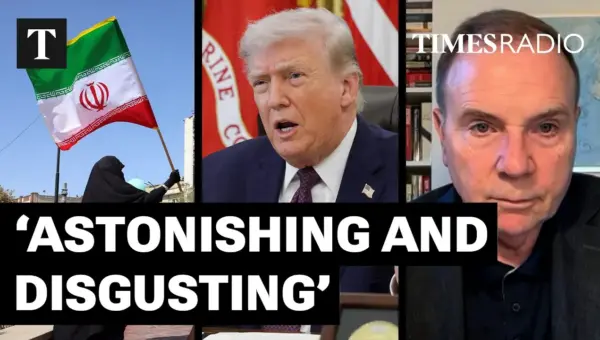
General Hodges: US Officers Must Resist Illegal Trump Orders
Former NATO commander Lt. Gen. Ben Hodges stated that President Trump's threats to destroy Iranian civilian targets could constitute war crimes. He urged U.S. officers to use their moral courage to resist illegal orders, even from the commander-in-chief.
GOP Congressman Discusses Iran Threats, DHS Funding
Congressman Marlon Stutzman discussed former President Trump's strong statements on Iran and the challenges of funding the Department of Homeland Security. He believes reconciliation is the key legislative path forward for DHS funding. Stutzman also suggested potential savings to offset costs by reducing fraud and waste in government programs.