America’s Lost Trust: The Moment Global Faith Crumbled
A critical look at how the U.S. lost global trust, focusing on events like the Greenland threat and Mark Carney's Davos speech. The analysis explores the shift from respect to fear in international relations and the rise of middle powers seeking stability.

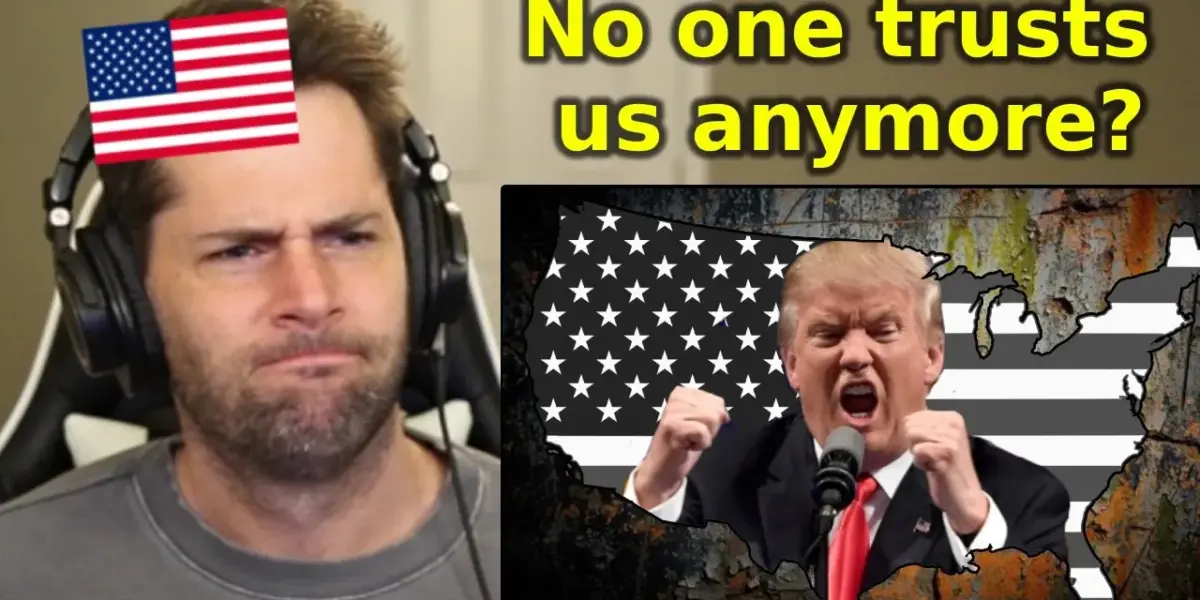
America’s Lost Trust: The Moment Global Faith Crumbled
Hearing that the world has stopped trusting the United States is a hard truth for any American to accept. It’s disturbing, and frankly, sad. But as one American viewer noted while reacting to a video titled “The Moment the World Stopped Trusting the USA,” this feeling might not be entirely surprising, especially considering recent actions. The core question is: when did this loss of faith happen, and why?
Davos and a Shift in Global Dialogue
The video points to the World Economic Forum in Davos, Switzerland, as a key moment. Leaders from around the globe gather there annually, but the atmosphere in one particular year was different. Europe was on edge, partly due to then-President Donald Trump’s unusual threats regarding Greenland and his increasingly harsh stance towards traditional American allies. This approach seemed to stun many, even within the United States.
The viewer found the idea of threatening to buy or take over Greenland truly insane. Many Americans, regardless of their political views, reportedly felt the same way. This event, the viewer suggested, could very well be the moment the world’s trust in America began to crumble. It seemed less like a show of strength and more like erratic behavior, leaving global leaders wondering what would happen next.
A Canadian Leader’s Bold Statement
While Trump prepared to take the stage at Davos, a different kind of leader emerged. The Prime Minister of Canada, Mark Carney, delivered a speech that geopolitical analysts later called highly significant. Carney, from a country of 40 million people, spoke directly about the need for countries to stop relying so heavily on the United States. He urged them to form their own alliances and work together for the future, suggesting that the U.S. might not be a necessary partner.
Carney described the global order that had existed for decades as broken. He stated, “This bargain no longer works. We are in the midst of a rupture, not a transition.” He pointed out that major powers were using economic ties as weapons. His message was clear: smaller and middle-sized countries must unite. “If we are not at the table, we are on the menu,” he declared. This was a call for nations feeling exploited or threatened by larger powers to recognize that the old ways were gone and to build their own strength.
The End of American Hegemony?
Carney’s speech, which received a standing ovation, was remarkable coming from a leader of a close U.S. ally like Canada. He openly acknowledged what many were hesitant to say: the era of American dominance, or hegemony, was ending. The video argues that the United States itself was playing a major role in this breakdown, often through self-inflicted wounds caused by its own policies and decisions.
The viewer expressed that this self-inflicted damage has ruined America’s reputation. People are traveling and investing less, and fewer countries want to work with the U.S. Before this period, the United States was doing very well. The core issue, as seen by many, was a shift from leading through respect to leading through fear and threats.
Trump’s Leverage and International Relations
Analysis of Donald Trump’s approach to international relations reveals a pattern. He seemed to possess little leverage over powerful nations like China. When Trump initiated a trade war with tariffs, China immediately responded with its own tariffs. This happened because China’s economy is deeply connected to U.S. markets, and retaliating had a significant impact on American businesses and investors.
The phrase “Taco”—Trump Always Chickens Out—was used to describe how Trump often backed down when confronting countries that could effectively fight back. China didn’t need to escalate; it simply waited for the pressure to shift back to the U.S. In contrast, Trump acted aggressively towards weaker states with little leverage, like Venezuela. The U.S. military operation there, which involved detaining the country’s president, was seen as a disturbing show of power and a lack of respect for international norms.
Allies Feel the Pressure
Even close allies like Europe were not immune to Trump’s aggressive tactics. Despite viewing themselves as key partners, they faced public pressure, threats, and humiliation. The attempt to acquire Greenland, a territory of Denmark, and even the suggestion of military force against a NATO member, highlighted this pattern. The U.S. government’s actions, like the Venezuela operation, were disturbing examples of power without seeking permission.
This behavior eroded predictability, which had been America’s greatest strategic asset for decades. The rules-based international order, which had promoted peace and stability, began to falter. The viewer noted that under Trump, the problem wasn’t American strength but its unpredictability. Tariffs could appear and disappear overnight, security guarantees became conditional, and allies felt disrespected.
Adapting to Instability
As a result, countries began to adapt. Instead of confronting the U.S. directly, they quietly diversified their relationships and reduced their dependence. The world wasn’t splitting into pro-American and anti-American camps, but rather into countries that could tolerate instability and those that couldn’t. Middle powers, in particular, sought options, realizing that trust had become more valuable than threats.
This led to actions like Canada’s Prime Minister Mark Carney traveling to China and Qatar to secure new trade deals. The underlying conclusion for many nations was that they needed to secure their own interests and build their own resilience, independent of U.S. policy shifts. The viewer lamented that the U.S. was once in a strong position, respected enough to lead, but now seemed to be acting like the “bad guy” through fear and threats.
A New Global Order?
The video draws an analogy from Soviet Union shopkeeper’s sign that read “Workers of the world, unite.” Everyone knew it was a lie, but as long as the sign remained, the system appeared intact. Mark Carney used this to suggest it was time to take down the signs of American hegemony. The implication was that the world had been pretending to trust the U.S., but that pretense was now over, starting with events at Davos.
The speaker felt this message needed to be on mainstream U.S. news, as it was eye-opening. Many Americans, the viewer believes, are still unaware of how negatively they are perceived globally. The shift means countries can no longer rely on the U.S. for consistent stability. This unpredictability forces nations to look elsewhere for partnerships and security.
China’s Rising Influence
In contrast to the U.S.’s perceived unreliability, China’s approach was highlighted. China pledged allegiance to the United Nations, even rejecting Trump’s invitation to a new organization called the “Board of Peace.” Germany’s chancellor noted that China had strategically positioned itself among great powers, while the U.S. was reacting by reshaping its foreign policy. China’s message at Davos emphasized equality and opposed the “law of the jungle,” stating a commitment to expanding global trade and being both the world’s factory and market.
The viewer acknowledged the effectiveness of China’s statements, contrasting it with the U.S. using its power and wealth as weapons. The speaker concluded that the world had reached a tipping point. For Americans, this reality is difficult but necessary to face. Understanding how the U.S. is perceived and what it has become is the first step toward potentially changing course, though the future remains uncertain.
Why This Matters
This analysis highlights a critical shift in global power dynamics and international trust. The perceived unreliability and aggressive foreign policy of the United States, particularly under the Trump administration, have led many nations to question its leadership and seek alternative alliances. This erosion of trust has tangible consequences, impacting trade, diplomacy, and global stability.
The departure from a rules-based international order, where predictability and alliances were key, means that nations are now prioritizing their own security and economic interests in a more fragmented world. The rise of middle powers and the growing influence of countries like China present new challenges and opportunities for the United States to redefine its role on the global stage.
Implications and Future Outlook
The trend suggests a move away from a unipolar world dominated by the U.S. towards a more multipolar system. Countries are increasingly seeking to diversify their partnerships and reduce dependence on any single power. This could lead to new regional blocs and a reordering of global economic and political influence.
For the United States, regaining global trust will likely require a significant shift in foreign policy, emphasizing diplomacy, respect for allies, and consistent, predictable actions. The future outlook depends on whether the U.S. can adapt to this changing landscape and rebuild the confidence it once held on the world stage. The challenge is to move from a policy based on fear and threats to one based on mutual respect and cooperation.
Source: American Reacts to "The Moment the World Stopped Trusting the USA" (YouTube)

Related Articles
Trump Warns Iran: Civilian Targets Could Face Destruction
President Trump has threatened to destroy Iran's bridges and power plants if a deadline regarding the Strait of Hormuz is not met. International alarm is growing as negotiations falter and concerns mount over potential war crimes and the impact on civilians. Allies are expressing deep concern over the U.S. approach and the potential for wider conflict.
Trump Threatens ‘Civilization’s Death’ in Iran Standoff
President Trump has issued a stark warning, threatening that a "whole civilization will die tonight" if Iran does not meet his deadline. The escalating conflict enters its sixth week with just hours left before the U.S. President's ultimatum expires.
Iran Deadline Looms: Key Decisions Ahead
Iran faces a critical 8:00 PM Eastern Time deadline to strike a deal with the U.S. or risk severe consequences. Meanwhile, discussions highlight U.S. defense budget needs and the complex alliances of global adversaries.