Explosives Found Near Gas Pipeline; Hungary Election Looms
Explosives found near a key Russian gas pipeline in Serbia have raised fears of sabotage, just days before Hungary's crucial general election. While Hungary has accused Ukraine, Kyiv denies involvement, suggesting a Russian "false flag" operation. The incident adds another layer of tension to an election where Prime Minister Viktor Orbán faces a strong challenge.

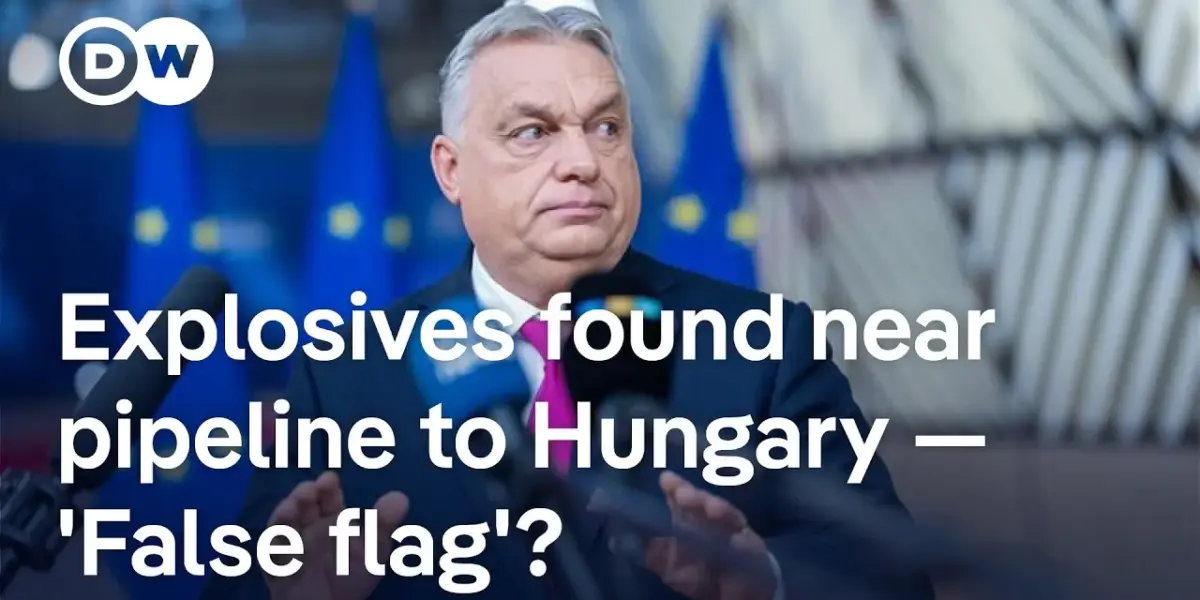
Explosives Discovery Sparks Sabotage Fears Near Key Gas Pipeline
Serbian authorities have discovered two backpacks filled with explosives and detonators near a crucial natural gas pipeline in northern Serbia. The pipeline, known as Balkan Stream and an extension of the Turk Stream pipeline, carries Russian gas to Hungary. Officials in both Serbia and Hungary are investigating the find, which occurred close to the Serbian town of Kanyia, an area with a significant Hungarian-speaking population.
Serbian President Aleksandar Vučić stated that if the explosives had detonated, gas supplies to both Serbia and Hungary would have been cut. He informed Hungarian Prime Minister Viktor Orbán about the discovery, emphasizing the potential impact on Hungary’s energy security. Hungarian officials have labeled the incident a planned act of sabotage, though they confirmed the pipeline remains operational without disruption. Prime Minister Orbán thanked Serbian authorities for their efforts in securing the pipeline.
Accusations Fly: Ukraine Blamed Amidst Election Tensions
Following the discovery, Hungary’s Foreign Minister quickly accused Ukraine of being behind the incident. He described it as an “attempted terrorist attack” and part of Ukraine’s alleged efforts to disrupt Russian energy supplies to Europe. He asserted that an attack on energy supply is an attack on Hungary’s sovereignty and vowed to protect the nation’s energy security and prevent price hikes.
Ukraine has vehemently denied these accusations. A spokesperson for Ukraine’s Foreign Ministry stated that Ukraine has “nothing to do with this” and suggested it was likely a Russian “false flag operation” aimed at interfering in Hungary’s upcoming elections. The spokesperson cited Moscow’s history of interference in Hungarian affairs.
Expert Analysis: A “False Flag” Operation?
Kim Lane Scheppele, a professor at Princeton University specializing in international affairs, shared her initial thoughts on the incident. She suggested it sounded like a “false flag operation,” noting that a Hungarian analyst had recently posted a hypothetical scenario on Facebook describing exactly such an event. This, she explained, led many in the Hungarian opposition to suspect a staged event.
Professor Scheppele also questioned the logic of Ukraine attacking this specific pipeline. She pointed out that the area where the explosives were found has a large Hungarian-speaking population, many of whom hold Hungarian citizenship and can vote in the upcoming election. Furthermore, she highlighted that another pipeline, carrying oil from Russia through Ukraine to Hungary, had recently stopped working after being bombed by Russia. This makes the Balkan Stream pipeline the primary energy source for Hungary, a fact that aligns with Prime Minister Orbán’s narrative of Ukraine posing a threat to Hungary’s energy grid.
Why Target This Pipeline?
The pipeline’s location is significant not only due to the Hungarian minority but also because it plays directly into Prime Minister Orbán’s political strategy. For years, Orbán has portrayed Ukraine as an adversary, often citing its treatment of the Hungarian minority in western Ukraine. This narrative is amplified by energy concerns, especially after the disruption of the other Russian oil pipeline.
Professor Scheppele also considered the possibility of Serbian President Vučić being involved, suggesting it could be a favor to Orbán to bolster his election campaign. She noted the close relationship between the two leaders, including joint infrastructure projects supported by China. The discovery of the explosives in a remote area, she added, could be seen as a “lucky strike” for Serbian officials, raising questions about the circumstances.
Hungarian Elections: High Stakes and Suspicious Timing
The incident occurs in the final week before Hungary’s general election, where Prime Minister Orbán faces his strongest challenge in years. Polls indicate his opposition rival, Péter Márki-Zay, and his TISA party hold a significant lead. This has led to speculation that Orbán might be resorting to desperate measures.
One possibility, according to some analysts, is the use of a “national security emergency” to postpone the election. However, Professor Scheppele believes this is unlikely, given the impending visit of the U.S. Vice President and the presence of international election observers. She also noted that the number of undecided voters is small, making it difficult for Orbán to sway many minds directly.
International Interest in the Election
The Hungarian election has attracted attention from both the United States and Russia, who, unusually, find themselves on the same side regarding Orbán’s potential victory. For the U.S., Orbán’s conservative government serves as a model for projects like Donald Trump’s “Project 2025.” Orbán’s repeated election wins offer a “proof of concept” for this political vision.
Russia, meanwhile, views Orbán as a crucial ally within the European Union. Leaked recordings have suggested that Hungary’s Foreign Minister has been in regular contact with his Russian counterpart, sharing insights from EU meetings regarding Ukraine and even influencing decisions on sanctions. Orbán’s defeat would be a significant blow to Putin’s influence in Europe.
What to Watch Next
As the election approaches, several factors remain critical. The fairness of the election itself is a major concern, with allegations of rigged rules and surveillance of opposition parties. Leaks of compromising material from the Hungarian security services are possible in the final week.
Beyond the election outcome, the ability of any new government to effectively govern is in question. Hungary’s constitutional structure, requiring a two-thirds parliamentary majority for significant changes, and the president’s veto power, could allow Orbán’s party to obstruct a new administration even if they lose the election. The potential for further “trumped up emergencies” to disrupt the political process also looms.
Source: Serbia reports explosives near Russian gas pipeline as Hungary enters final campaign week | DW News (YouTube)

Related Articles


VP Vance Champions Western Values, Peace in Hungary Visit
Vice President JD Vance visited Hungary, emphasizing shared Western values and condemning foreign election interference. He and Prime Minister Viktor Orbán discussed ending the Ukraine war through diplomacy and addressed European energy security. Vance also touched on critical negotiations with Iran regarding its nuclear program.


Vance Seals $500M Energy Deal, Boosts Sovereignty Vision
Senator JD Vance and Hungarian PM Viktor Orbán announced a $500 million energy deal in Budapest. The agreement emphasizes energy security and a shared vision for national sovereignty amidst global conflict. This development could spur investment in the energy sector and influence international trade dynamics.


US Voters Weigh War vs. Wallet Ahead of Elections
American voters are increasingly torn between supporting military action abroad and addressing pressing economic needs at home. This tension is becoming a major factor in political debates and electoral strategies as the nation weighs its global responsibilities against the immediate concerns of its citizens.