Artemis II Astronauts Reach Record Distance From Earth
The Artemis II crew has set a new distance record from Earth, surpassing Apollo 13 as they journey around the Moon. This mission is a critical step in NASA's plan to return humans to the lunar surface and develop resources. Experts see it as a pivotal moment, shifting focus from pure exploration to long-term development and paving the way for future Mars missions.


Artemis II Reaches Historic Distance in Lunar Mission
The Artemis II crew has achieved a significant milestone, traveling farther from Earth than any humans in history. As of the fifth flight day of their mission, the four astronauts aboard the Orion spacecraft have surpassed the previous distance record set by the Apollo 13 mission. This voyage marks a crucial step in NASA’s ambitious program to return humans to the lunar surface and establish a long-term presence there.
A Bold Leap Back to the Moon
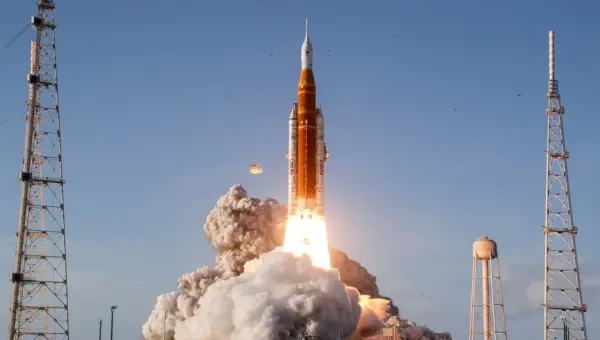
Launched from Florida on Wednesday aboard NASA’s powerful Space Launch System rocket, the Artemis II mission represents the United States’ most significant human spaceflight endeavor since the Apollo era. The mission is designed to test critical systems and prepare for future expeditions. The four-person crew, comprised of three American astronauts and one Canadian astronaut, is on a trajectory that will take them around the Moon, pushing the boundaries of human exploration.
Expert Insights on Artemis II’s Significance
Dr. Andrew Aldrin, executive director of space programs at Embry-Riddle Worldwide Campus and son of Apollo 11 astronaut Buzz Aldrin, shared his perspective on the mission’s importance. “It’s the first mission since Apollo to actually go back to the moon,” Dr. Aldrin stated. “The most important thing about Artemis 2 is it signals that we’re starting the whole Artemis program.” This program aims for increasingly ambitious missions, ultimately leading to permanent human habitation on the Moon.
From Exploration to Development: A New Lunar Relationship
Unlike the Apollo missions, which focused on discovery and reaching the Moon for the first time, the Artemis program emphasizes development and resource utilization. “This time it’s about development. It’s not just exploration,” Dr. Aldrin explained. The long-term goal is to explore the Moon’s potential as a source of resources that can support further activities in space, fundamentally changing humanity’s relationship with the Moon.
Next Steps and Future Milestones
The success of Artemis II paves the way for subsequent missions. “The biggest milestone will be the next mission in which we’re going to actually start testing out the lunar lander,” Dr. Aldrin noted. Following that, the plan is to take a lunar lander to the Moon and achieve a landing, a monumental achievement that has not occurred in decades. These steps are critical for building the necessary infrastructure for a sustainable space-based economy.
Artemis II as a Stepping Stone to Mars
The Artemis program is not only focused on the Moon but also serves as a vital testing ground for technologies needed for future missions to Mars. “It is testing many of the technologies that we’ll need to get to Mars,” Dr. Aldrin said. Furthermore, the Moon could potentially provide rocket fuel, making Mars missions more efficient. Key challenges for Mars, such as long-term exposure to deep-space radiation, will also be studied during the Artemis missions.
Inspiring Future Generations
The Artemis II mission, like its Apollo predecessors, is expected to inspire future generations of scientists, engineers, and explorers. “This will be an inspiration and the coming missions will be an inspiration,” Dr. Aldrin commented. He envisions a future lunar economy with jobs beyond being an astronaut, even suggesting roles like a barista on the Moon. The program aims to make space exploration accessible and relatable, encouraging people to see themselves as part of this expanding frontier.
A Legacy of Forward Thinking
Reflecting on his father’s legacy, Dr. Aldrin highlighted Buzz Aldrin’s consistent focus on future advancements. “As soon as my dad came back, he was talking about the next big project. He was talking about the shuttle. He was talking about space stations,” he shared. This forward-looking perspective is at the heart of the Artemis program, driving innovation and the continuous pursuit of new frontiers in space exploration.
Source: Artemis II crew set to break Apollo 13 distance record (YouTube)

Related Articles


Artemis 2 Crew Sees Unseen Moon Side for First Time
Astronauts aboard the Artemis 2 spacecraft have captured the first human views of the Moon's far side, a region largely unseen by human eyes. This historic moment offers unparalleled detail and perspective, highlighting the unique capabilities of human observation in space exploration. The mission progresses towards its April 10th splashdown, marking a significant step in NASA's lunar ambitions.

Artemis II: Moon Mission Continues, Honoring Apollo’s Legacy
The Artemis II mission is in its fifth day, marking a significant return to lunar exploration. Astronaut Charlie Duke honored the Apollo legacy, sending encouragement to the current crew as they entered the moon's sphere of influence. This mission is a vital step towards future lunar landings and beyond.


Artemis II Crew Shares Stunning Moon Views from Deep Space
The Artemis II crew is traveling towards the Moon, sharing stunning images and historic interviews from deep space. For the first time since 1972, humans are venturing this far, experiencing breathtaking views and preparing to photograph the Moon's far side.