Trump’s Vulgar Iran Threat Sparks Global Outrage
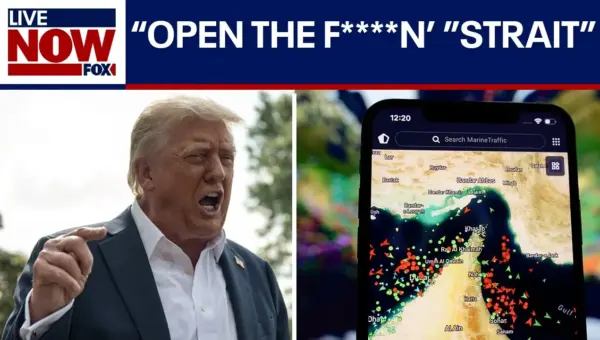
President Donald Trump issued a highly profane threat against Iran via social media, warning of attacks on civilian infrastructure if the Strait of Hormuz was not opened. Experts suggest the outburst stems from frustration and desperation, while legal scholars warn of potential war crimes. The situation continues to escalate, with significant economic and political implications for the region.

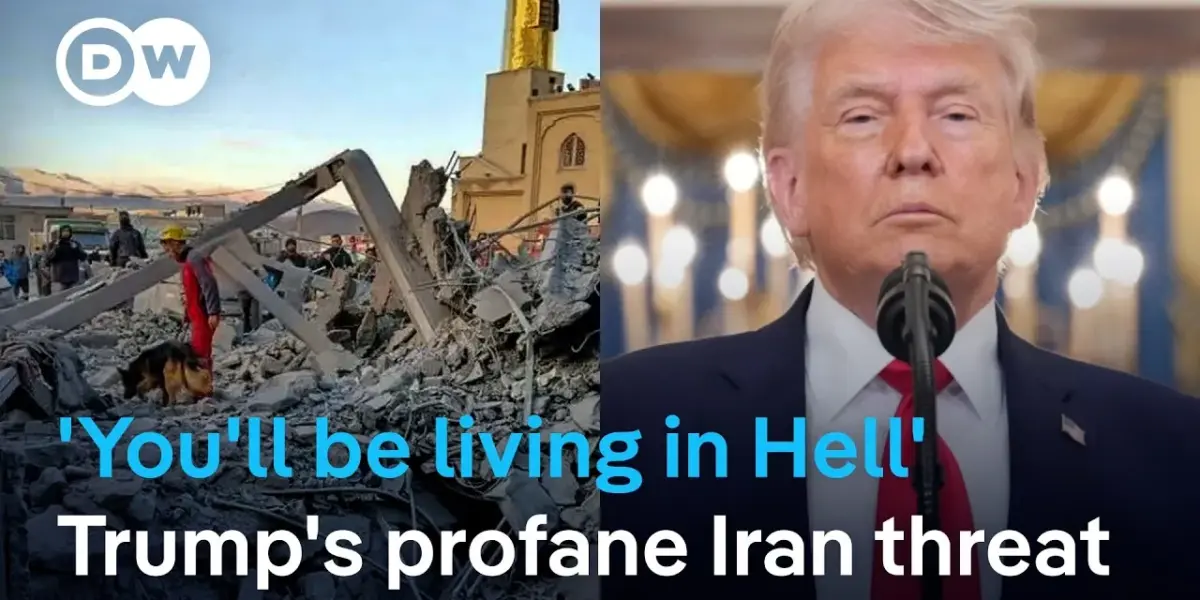
Trump Issues Profane Ultimatum to Iran
In a fiery social media post, U.S. President Donald Trump issued a stark and profanity-laced warning to Iran. He declared that Tuesday would be a day for attacking power plants and bridges, threatening dire consequences if Iran did not comply with his demands. The post, shared on his Truth Social platform, included explicit language and a chilling promise: “Open the… strait… or you’ll be living in hell. Just watch.” Notably, Trump concluded the aggressive message with the phrase, “Praise be to Allah.” This unprecedented online declaration has drawn sharp criticism and concern from international observers and Iranian officials alike.
Expert Analysis: Anger, Frustration, or Desperation?
Scott Lucas, a professor of American studies at University College Dublin, weighed in on the nature of Trump’s outburst. He suggested the president’s language and threats signal more than just his typical political style. “It is a sign of anger. It is a sign of frustration. And it is a sign, I think, of desperation that he has not gotten what he wanted,” Lucas stated. He explained that Trump’s desire for “regime surrender” from Iran has not been met in recent weeks, leading to escalating rhetoric. Lucas fears this could lead to increased retaliation from Iran and a wider, “uncontained war” across the Middle East.
Domestic Audience vs. Foreign Policy
The question arises whether Trump’s message was aimed at a domestic audience to rally his base, rather than signaling a clear foreign policy objective. However, Lucas argued against this, pointing out that Trump chose a “vindictive approach” on a holy day, rather than highlighting positive news like the rescue of a downed U.S. airman. He noted that public opinion in the U.S. largely opposes the conflict, with a significant majority, including many Republicans, against ground operations. “So I think what Trump was doing is you might be right. He’s playing with this red meat to a fraction of the American public,” Lucas conceded, but emphasized that Trump’s options for achieving regime change through bombing alone are limited.
War Crimes and International Law
Legal experts have raised serious concerns that Trump’s threat to strike civilian infrastructure could constitute war crimes under international law. Lucas acknowledged that while such actions might not be significant to certain parties, like Israel or Trump’s inner circle who have previously disregarded international law, they are crucial for the rest of the world. “I think it’s significant for the rest of the world,” he stated. He urged international communities and the United Nations to “call this out for what it is,” even if it doesn’t immediately halt military actions. Recent strikes on bridges and petrochemical plants, and Iran’s retaliatory attacks, highlight the ongoing escalation and the potential destruction of the international system if not addressed.
The Impact of the Airman’s Rescue
The successful rescue of a U.S. airman provided a brief moment of relief for the Trump administration. Lucas suggested this might offer some “breathing space” and a platform for a White House ceremony. However, he cautioned that the operation came at a cost, with reports of lost U.S. aircraft and helicopters. More importantly, the rescue does not resolve the core issue: the ongoing conflict and Iran’s continued control of the Strait of Hormuz. “He doesn’t escape the fundamental problem here. Come Wednesday, Thursday, Friday, he’s back to the point that the regime is still in place,” Lucas explained.
Iran’s Response and Regional Implications
Da Mai, a doctoral researcher at the German Institute for Global and Area Studies, shared insights into how Iran views Trump’s ultimatum. Mai believes the Iranian leadership takes these threats “quite seriously” and sees them as a potential escalation. Iran has already stated it would retaliate in kind if the U.S. attacks civilian infrastructure, potentially extending attacks to U.S. allies in the Persian Gulf. Iran’s strategy, Mai explained, involves expanding the war zone to harm U.S. defense structures, bases, and economic interests.
Domestic Unity or Division in Iran?
Contrary to Trump’s assumption that the conflict would trigger an uprising, Mai suggests the situation is more complex. While supporters of the Islamic Republic have become more vocal, those who might have favored U.S. intervention are becoming disillusioned. They see civilians and infrastructure, not just the regime, being targeted. “They have also become much more skeptical and are united in at least in a sense that they think the country and the nation is being under attack and not the Islamic Republic,” Mai observed. This sentiment could lead to a generation more critical of the U.S. and the West.
Economic and Political Fallout
The ongoing conflict is already reshaping the region economically and politically. Mai warned of significant economic costs, with rising prices, disrupted supply chains, and a potential global food crisis. Politically, Arab states in the Persian Gulf may rethink their alliances with the U.S., as they feel unprotected. Within Iran, Mai anticipates increased militarization of politics, greater repression, and the Revolutionary Guards becoming the dominant force. The economic strain on ordinary citizens is expected to be severe if the conflict continues, with warnings from the World Food Programme about a potential global food crisis.
Source: 'Open the F—in' Strait' — Trump fires off a profanity laden social media attack on Iran | DW News (YouTube)

Related Articles

Trump Threatens Iran, Shaking Global Stability
Former President Trump's aggressive Easter Sunday warning to Iran has ignited global concerns, highlighting a volatile intersection of politics, religion, and foreign policy. The analysis explores the motivations behind such rhetoric, the deep divisions within American society, and the potential for severe economic and geopolitical repercussions worldwide.
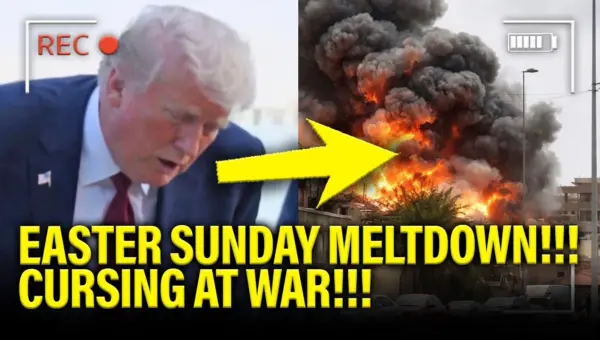
Trump’s Rhetoric Fuels Iran Tensions, Raises War Crime Alarms
Former President Donald Trump's aggressive Easter weekend social media posts directed at Iran have sparked international concern. His threats of military action and ultimatums, coupled with conflicting narratives about military engagements, have raised alarms about potential war crimes and a dangerous escalation of conflict. Critics accuse both Trump and segments of the media of downplaying the severity of his rhetoric.

Trump Threatens Iran: “Open Strait or Live in Hell”
President Trump issued a severe warning to Iran, threatening "hell" if the Strait of Hormuz is not reopened, while U.S. forces successfully rescued a downed airman. Experts suggest potential escalation and regional realignments are unfolding.