Ukraine Deploys AWACS, Bolstering Air Defense Against Russia
Ukraine has reportedly deployed its new Swedish-made AWACS aircraft, significantly enhancing its air defense capabilities. The Saab 340 AEW&C provides crucial early warning and tracking, particularly against Russia's glide bomb attacks. While facing operational limitations, the aircraft offers a vital tactical advantage by improving situational awareness and disrupting enemy strike planning.

Ukraine Deploys AWACS, Bolstering Air Defense Against Russia
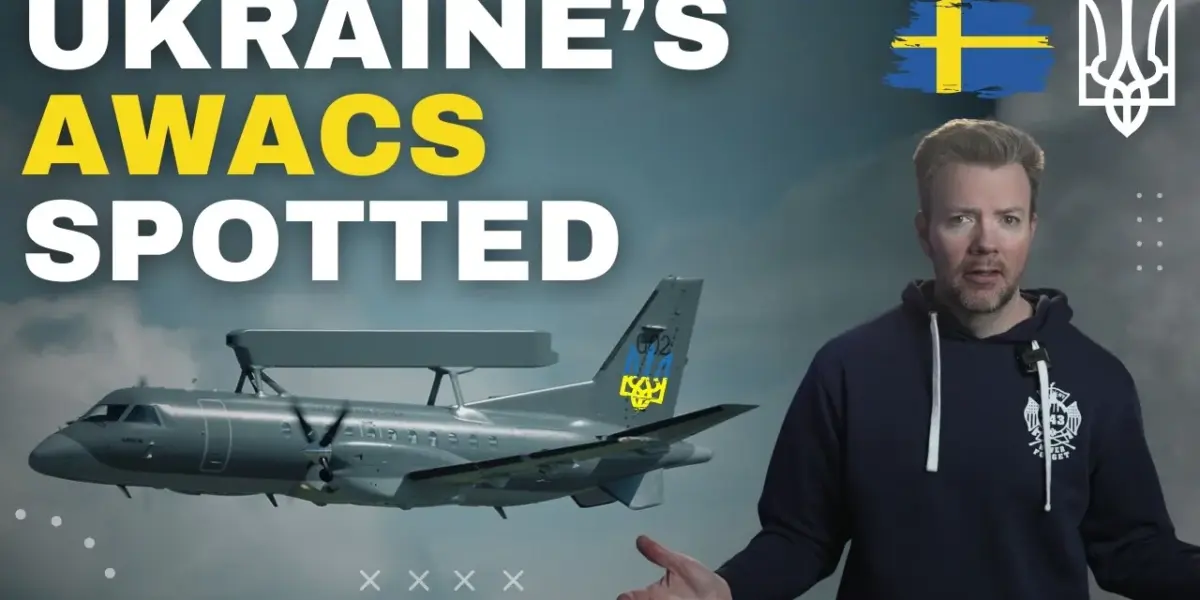
Ukraine has reportedly begun operating its new airborne early warning and control (AWACS) aircraft, a significant development that could challenge Russia’s spring offensive. Footage has emerged showing a Swedish-made Saab 340 AEW&C aircraft, known as ASC890, flying over Ukrainian territory. This marks the first time Ukraine has possessed such a capability, which functions as a mobile radar station and a command and control platform.
The introduction of the AWACS aircraft is a major boost for Ukraine’s air defense efforts. For over a year, Ukraine has actively targeted Russia’s own AWACS fleet, specifically the A-50 Mainstay, highlighting the critical role these planes play in military operations. The presence of the Saab 340 is expected to provide a substantial increase in situational awareness for Ukraine, which has previously relied on a patchwork of ground radars, fighter jets, and anti-aircraft batteries to build its air picture.
A New Eye in the Sky
The Swedish-supplied Saab 340 AEW&C aircraft is equipped with the powerful Saab Erieye radar system, mounted in a distinctive dorsal radome. This radar can detect both air and sea targets up to approximately 280 miles away. Operating at altitudes around 20,000 feet, the aircraft can simultaneously track up to 1,000 airborne targets and 500 surface targets. This capability is particularly crucial for spotting low-flying threats, such as drones and cruise missiles, which are often obscured by terrain when viewed by ground-based radars.
The “look down” capability of the AWACS radar is a key advantage. Unlike ground radars that struggle with terrain features like hills and forests, an airborne radar can see over them. This allows for earlier detection of low-altitude threats that might otherwise go unnoticed until they are much closer to their targets.
Countering Russia’s Glide Bomb Threat
One of the most pressing tactical problems for Ukraine has been Russia’s use of glide bombs. These are standard bombs fitted with wings and guidance kits, allowing them to be launched from a distance. Russian strike aircraft, such as the Su-34, can release these bombs from outside Ukraine’s effective air defense range, meaning they do not need to enter the most dangerous areas. The bombs then glide towards Ukrainian positions, towns, and supply lines.
Stopping glide bombs once they are in the air is extremely difficult, especially when launched in large numbers. The more effective strategy is to disrupt the launch process. This involves detecting the strike aircraft earlier, tracking them more effectively, and either vectoring fighter jets to intercept them or alerting ground-based air defenses to engage them. The AWACS aircraft is designed to facilitate precisely this kind of proactive defense.
By spotting the launch aircraft, rather than just the bomb, the AWACS can significantly complicate Russia’s strike planning. Russian pilots operate under predictable patterns, and the knowledge that a capable airborne radar is monitoring their approach can force them to launch from greater distances, fly different routes, or operate under more restrictive conditions. Any of these factors can degrade the accuracy and effectiveness of the glide bomb attacks, thereby improving Ukrainian survivability.
Strategic Context and Limitations
Sweden announced the transfer of two Saab 340 AWACS aircraft to Ukraine in May 2024, as part of a significant military aid package. The timeline for delivery and training indicated that these aircraft would become operational around 2025-2026, which aligns with the current situation. The Ukrainian Air Force is believed to have received both aircraft.
However, operating these high-value assets comes with significant challenges. Ukraine is likely to operate the AWACS from airfields in the western part of the country to minimize the risk of Russian strikes. With only two aircraft, continuous 24-hour coverage of the entire front line is impossible. One aircraft might be kept on standby for critical periods, such as during major missile or drone barrages.
The effectiveness of the AWACS could also be impacted by communication systems. Ideally, the radar data from the Saab 340 would be shared in near real-time with Ukrainian fighter jets, like the F-16s, and air defense systems via NATO’s Link 16 data network. However, there have been reports that Ukraine’s F-16s may have had Link 16 capabilities disabled due to concerns about Russian interception. Whether Link 16 is fully functional for the AWACS and associated platforms remains unclear.
Even without seamless Link 16 integration, the AWACS aircraft remains a valuable asset. It can still provide greatly enhanced surveillance and relay information through ground control, which, while slower, is still a significant improvement over previous capabilities. If Link 16 or a similar network is operational, the impact would be far greater, allowing fighter pilots to have a much clearer and more immediate understanding of the air picture.
Broader Operational Potential
Future versions of the Erieye radar may include Synthetic Aperture Radar (SAR) and Ground Moving Target Indication (GMTI) functions. If Ukraine’s aircraft possess these capabilities, even in a limited form, the AWACS could extend its utility beyond air defense. It could also be used for monitoring Russian troop movements and ground activity, providing valuable intelligence for offensive and defensive operations.
The donation of the Saab 340 is seen by some as the initial step towards a more integrated air defense system for Ukraine, potentially involving future collaborations with Sweden, such as the integration of Gripen fighter jets. This suggests a long-term strategic vision for enhancing Ukraine’s air power.
Conclusion: A Tactical Advantage
Russia’s understanding of the AWACS’s value is evident in the repeated attacks on its own A-50 fleet. This reinforces the need for Ukraine to operate its Saab 340s with extreme caution, prioritizing their preservation. The aircraft represents a critical enhancement to Ukraine’s kill chain, offering improved detection of low-flying threats and better target prioritization for air defenses and fighter aircraft.
While the AWACS may not stop every glide bomb in flight, its ability to track and potentially engage the launch aircraft significantly disrupts Russia’s standoff bombing tactics. By forcing Russian pilots to operate under greater threat and uncertainty, Ukraine can improve its own survivability. The introduction of the AWACS makes the sky over Ukraine more transparent, giving Ukraine a crucial advantage in seeing and reacting to enemy actions, a fundamental principle in modern warfare.
Source: Ukraine AWACS vs Russian Bombers | The Sky Just Got Hostile (YouTube)

Related Articles


Ukraine Eyes Defense Deal with Saudi Arabia
Ukrainian President Volodymyr Zelenskyy's unannounced visit to Saudi Arabia signals a potential 10-year defense cooperation agreement. This move aims to secure financial and energy support amid Ukraine's EU funding challenges. The visit also comes as the U.S. administration grapples with its strategy concerning Iran and the Strait of Hormuz.


US Eyes Belarus in Risky Geopolitical Shift
The U.S. is exploring renewed diplomatic ties with Belarus, a close ally of Russia and enabler of its war in Ukraine. This strategic gamble aims to create leverage but risks legitimizing an authoritarian regime and potentially strengthening Moscow.


Russia’s Donbas Ultimatum Tests Ukraine’s Resolve
Russia has issued a two-month ultimatum for Ukraine to withdraw troops from Donbas, threatening further action if Kyiv refuses. Experts question Moscow's capability and credibility, highlighting Ukraine's growing drone warfare prowess and the need for sustained military strength. The demand underscores the critical juncture facing Ukraine amidst shifting geopolitical alliances and global economic pressures.