Top General Slams Trump’s War Strategy and Leadership
Former Joint Chiefs Chairman General CQ Brown Jr. has publicly criticized Donald Trump and Pete Hegesith, citing concerns over war planning, leadership, and the erosion of trust. His remarks highlight issues with military strategy, the role of AI in warfare, and the importance of civilian-military connection.

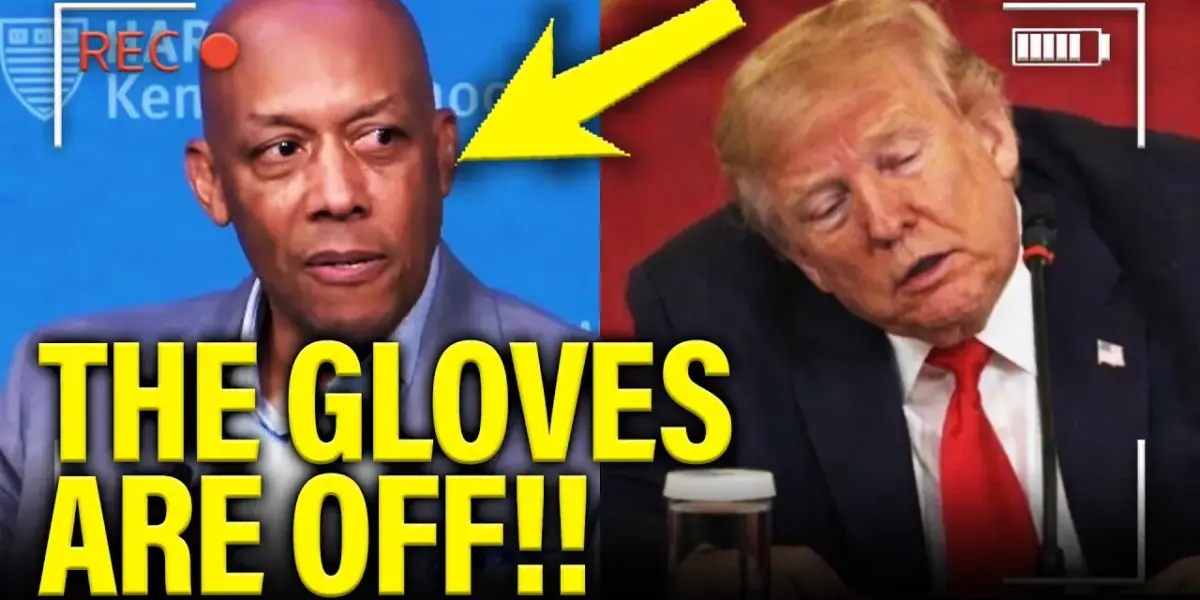
Top General Slams Trump’s War Strategy and Leadership
Former Chairman of the Joint Chiefs of Staff, General CQ Brown Jr., has broken his silence, offering sharp criticism of former President Donald Trump and Defense Secretary Pete Hegesith. His remarks, made at Harvard University, touch on issues of military planning, leadership, and the erosion of trust within the armed forces. These comments come at a time of significant upheaval, with reports of the Army Chief of Staff, Randy George, also being fired. General Brown, a highly respected figure who served under both Trump and President Biden, did not hold back his concerns about the current state of military affairs.
Concerns Over War Planning and Arrogance
General Brown expressed shock at the amount of military equipment lost in the recent conflict in Iran, suggesting a lack of proper planning and an excess of hubris. He highlighted the significant casualties, including 13 service members killed and hundreds injured, as well as the loss of valuable aircraft. “We can’t walk in with a bunch of hubris of this won’t happen to us,” Brown stated, emphasizing that war should never be taken lightly. He spoke of the personal toll these losses take, knowing families will be notified of their loved ones’ deaths.
He also criticized specific decisions by Defense Secretary Hegesith, calling out the unprofessional conduct of an Army helicopter pilot flying over Kid Rock’s property. Brown found it particularly troubling that no accountability was enforced for this action, especially when the military indicated they would hold individuals responsible. Furthermore, he raised concerns about promotions potentially being influenced by identity rather than merit, stating that such actions would have been unthinkable in the past. These incidents, he believes, erode confidence throughout the military ranks.
“The Secretary of Defense deciding there’s going to be no accountability for that when the uniform military says that they’ll be held accountable is crazy. The Secretary of Defense pulling members off a one-star promotion list for reasons that are almost certainly to do with their identity is crazy. That had never that’s not something that would have happened before.”
The Role of AI in Warfare and Accountability
A significant portion of Brown’s discussion focused on the increasing role of Artificial Intelligence (AI) in military operations. He cautioned against over-reliance on AI, particularly in targeting decisions. Brown stressed that while AI can provide options and help process information, human judgment remains crucial. “AI does not have judgment,” he asserted, explaining that AI can sometimes provide incorrect information or even “hallucinate,” much like humans can.
He drew parallels to past technological introductions, like cybersecurity, where initial excitement sometimes outpaced practical application. Brown believes that while AI offers potential benefits, it’s essential to define clear objectives and ensure AI truly enhances operations. He warned against the “garbage in, garbage out” principle, where a flawed prompt or question leads to a bad answer. Ultimately, he stated, humans remain responsible for the outcomes of AI-assisted operations, and kicking back and letting AI make all decisions is not an option.
Erosion of Trust and the Importance of Connection
General Brown spoke passionately about the importance of trust within the military and between the military and the American public. He recalled issuing a memo upon becoming Chairman of the Joint Chiefs emphasizing trust as the foundation of the profession. Building trust, he explained, involves taking care of service members and their families, working effectively with civilian leadership, and maintaining the confidence of the American people.
He acknowledged that in a divided nation, this trust is harder to build and maintain. Brown noted that as fewer Americans have direct connections to the military, public understanding and trust can diminish. He believes small events can significantly erode this trust, making it vital for the military to remain engaged in communities. This engagement allows civilians to meet service members, understand their roles, and see them as people who have taken an oath to defend the Constitution.
Brown also expressed concern over the decision to cut military affiliations with institutions like Harvard University. He argued that such interactions are valuable for both service members and students. For students, meeting military personnel might be their only chance to gain a perspective outside their usual experiences, challenging their assumptions and broadening their viewpoints. This interaction is crucial for future leaders who may go on to work in government, making it important to learn how to work with people who think differently.
“The value of of our service members coming to institutions like Harvard, not only for our service members, but also for the students at Harvard and faculty because this may be the only military person they have a chance to meet.”
Historical Context and Future Outlook
General Brown’s career spans significant periods of military history, including his appointment to lead the U.S. Air Force by Trump in 2020 and his subsequent elevation to Chairman of the Joint Chiefs by President Biden. His willingness to speak out reflects a growing concern among some military leaders about the direction of civilian leadership. The firing of General Randy George, the Army Chief of Staff, shortly after Brown’s remarks, further underscores the perceived instability and potential politicization within the military’s highest ranks.
The transcript implies that individuals like General George were removed for upholding principles of merit-based promotions, particularly concerning diversity and inclusion. This stands in contrast to what the narrator suggests is a lack of character in Trump and Hegesith. The situation highlights a broader debate about the balance between military readiness, political influence, and the core values of service. The future outlook suggests a continued struggle to maintain military professionalism and public trust amidst political polarization and rapid technological advancement.
Why This Matters
General CQ Brown Jr.’s statements are significant because they come from one of the highest-ranking military officials in the United States. His criticisms are not just personal opinions but reflect deep concerns about strategic decision-making, ethical leadership, and the integrity of military institutions. The erosion of trust between the military and the public, coupled with the potential for political interference in military appointments and operations, poses a serious threat to national security. Furthermore, the debate over AI in warfare and the importance of human judgment raises critical questions about the future of conflict and accountability. The willingness of senior military figures to publicly voice dissent, even indirectly, signals a critical moment for civil-military relations in the United States.
Source: CHAIRMAN of Joint Chiefs TORCHES Trump for WAR CRIMES!!! (YouTube)

Related Articles

Trump Threatens Iran, Shaking Global Stability
Former President Trump's aggressive Easter Sunday warning to Iran has ignited global concerns, highlighting a volatile intersection of politics, religion, and foreign policy. The analysis explores the motivations behind such rhetoric, the deep divisions within American society, and the potential for severe economic and geopolitical repercussions worldwide.
Trump’s Rhetoric Fuels Iran Tensions, Raises War Crime Alarms
Former President Donald Trump's aggressive Easter weekend social media posts directed at Iran have sparked international concern. His threats of military action and ultimatums, coupled with conflicting narratives about military engagements, have raised alarms about potential war crimes and a dangerous escalation of conflict. Critics accuse both Trump and segments of the media of downplaying the severity of his rhetoric.

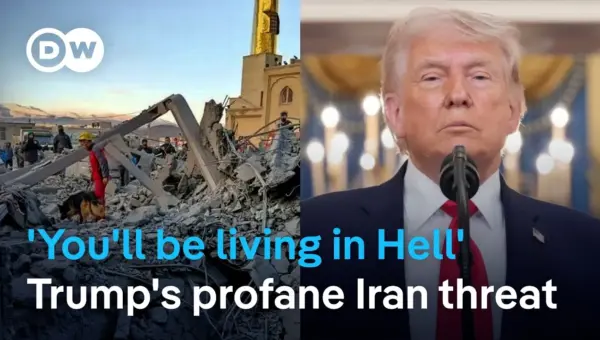
Trump’s Vulgar Iran Threat Sparks Global Outrage
President Donald Trump issued a highly profane threat against Iran via social media, warning of attacks on civilian infrastructure if the Strait of Hormuz was not opened. Experts suggest the outburst stems from frustration and desperation, while legal scholars warn of potential war crimes. The situation continues to escalate, with significant economic and political implications for the region.