Kaine Urges Trump to Tone Down War Rhetoric After Iran Jet Downing
Senator Tim Kaine has called on President Trump to "dial back the rhetoric" following the downing of a U.S. jet in Iran, warning that aggressive language puts pilots at risk. Kaine also expressed concerns over the rationale for the current conflict and questioned a proposed $1.5 trillion military budget increase. He emphasized the need for congressional approval for war and expressed confidence in Congress's ability to block any unilateral withdrawal from NATO.

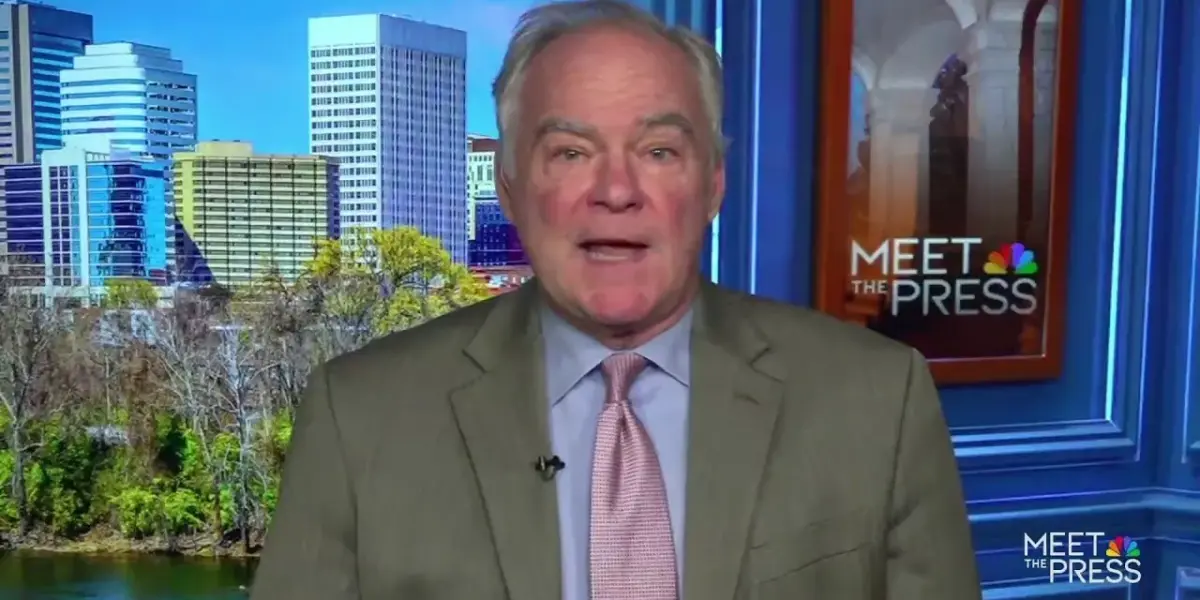
Senator Kaine Calls for Restraint in Presidential Language
Following the recent downing of a U.S. jet and the subsequent rescue of the pilot in Iran, Senator Tim Kaine of Virginia has urged President Trump to reduce his aggressive public statements. Speaking on “Meet the Press,” Kaine expressed immense relief over the pilot’s safe return, calling it a prayer on many minds during Easter services. However, he warned that the President’s fiery rhetoric, including phrases like “no mercy, no quarter” and “death from above,” is dangerous.
Kaine explained that such language can encourage adversaries to mistreat captured U.S. personnel. He specifically cited Trump’s Truth Social posts and Secretary Hegseth’s comments as examples of “juvenile” and “puffed up” talk that lacks a clear plan or rationale. This, he argued, puts American pilots at unnecessary risk and is not an effective negotiation tactic.
Concerns Over War Rationale and Military Spending
The Senator voiced strong concerns about the current conflict, stating that the public sees the President as having “blundered into a war with no clear rationale.” He believes that tough talk cannot hide the absence of a well-defined plan. Kaine also questioned the necessity of a proposed $1.5 trillion military budget increase, a $500 billion jump from the previous year.
As a member of the Armed Services Committee, Kaine stated he has a hard time seeing the justification for such a large increase. He emphasized that the issue isn’t just about the dollar amount but also about the Pentagon’s management of funds. The recent firing of respected Army leadership in the middle of the war, which Kaine suggested was due to disagreements with Secretary Hegseth, has made Congress hesitant to write a “blank check” to what he described as an “inept” civilian leadership team.
Strait of Hormuz and Ending Foreign Wars
Addressing the Strait of Hormuz as a major flashpoint, Kaine advocated for ending the current war as soon as possible. He believes American troops should not be put in harm’s way to enact a plan that is still being figured out. Kaine pointed out that the U.S. is less reliant on Middle Eastern oil due to its strong domestic energy industry. He criticized the President’s efforts to cripple the clean energy sector, arguing that focusing on growing American energy would help lower gas prices for consumers.
Kaine recalled the President’s promises to end foreign wars and lower prices, contrasting them with the current situation of initiating wars, raising prices, and then proposing cuts to essential programs like Medicare and Medicaid to fund these conflicts. He called this approach misguided.
Constitutional Concerns and NATO’s Future
Senator Kaine highlighted his support for requiring a formal declaration of war from Congress before engaging in significant military action. He commended Republican Senator John Curtis for suggesting that further funding should be contingent on such a declaration, seeing it as a sign of taking the Constitution seriously. Kaine believes that after 20 years of unproductive wars in the Middle East, further military engagement is not a good idea.
He argued that the current war is both illegal and unwise, and a formal congressional debate would at least make it constitutional if a majority supports it. Kaine also touched upon NATO, recalling his co-authored bill with the late Senator John McCain, later picked up by Senator Marco Rubio, which prevents a president from unilaterally withdrawing from the alliance without congressional approval. He stated that Trump cannot withdraw from NATO without Congress’s support and that the alliance is stronger with allies working together, not operating alone.
Immigration Reform and Government Funding
Regarding government funding and immigration, Kaine noted that the Senate passed a bill that the House is expected to support. He acknowledged that this bill does not include the ICE reforms Democrats were demanding, such as requiring identification, no-knock warrants, and judicial warrants for home entries. Kaine explained that the agreement was to fund agencies at previously agreed-upon levels, while continuing discussions on reforms for ICE and CBP, which have pre-existing funding.
He expressed confidence that reforms can be made because the American public strongly supports federal agencies adhering to the same standards as local law enforcement. Kaine also referenced a past negotiation during a government shutdown that protected federal employees from firings, emphasizing that shutdowns are generally not beneficial for the nation. He hopes the House will agree to the Senate’s unanimous decision, allowing reform discussions to continue.
Looking Ahead: Key Issues for Voters
Kaine concluded by pointing to several key issues that will likely be on voters’ minds in the upcoming November elections. These include the ongoing debate over ICE reforms, the Republican effort to cut healthcare programs, and President Trump’s suggestion that funding wars will necessitate cuts to Medicaid, Medicare, and childcare. He believes these matters will be significant factors for voters to consider.
When asked about voting for President Trump’s next Attorney General nominee, Kaine stated he doesn’t start with an automatic no. He emphasized that any nominee must have integrity and uphold the rule of law, citing the example of former Attorney General Pam Bondi, who he believes compromised her integrity and was still fired. Kaine stressed that the nominee should act as the nation’s chief law enforcement officer and not let the President dictate their actions.
Source: Tim Kaine calls on Trump to 'dial back the rhetoric' after US jet is downed in Iran: Full interview (YouTube)

Related Articles
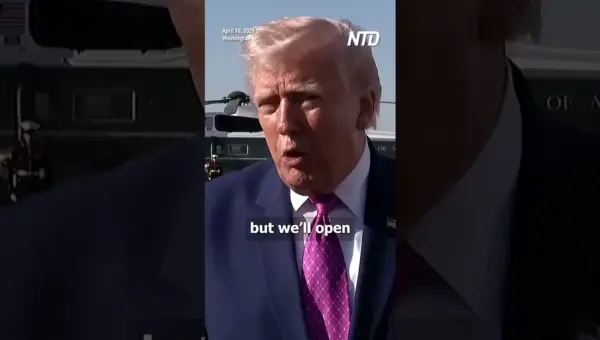
Trump Promises Strait of Hormuz Will Reopen Soon
Former President Donald Trump predicts the Strait of Hormuz will reopen soon, linking it to the absence of nuclear weapons. This crucial global oil transit point's stability impacts economies worldwide. Trump expressed confidence in U.S. military strength to ensure passage.
Trump Threatens Media Over Ceasefire Report
Donald Trump has escalated his conflict with CNN, threatening investigations after the network reported on Iran's claims regarding a ceasefire agreement. This action raises serious concerns about press freedom and potential government overreach.

Trump’s Iran War Fuels Inflation, Strains Alliances
Donald Trump's recent military actions in Iran are being blamed for a significant rise in U.S. inflation and increased gas prices, impacting consumer confidence. The conflict has also strained relationships with key international allies, leading to diplomatic friction and questions about the future of alliances like NATO.