Ukraine Soldiers Share Combat Secrets with British Army
Ukrainian soldiers are sharing vital combat experience and drone warfare expertise with British troops in England as part of Operation Interflex. The program allows veterans to teach allies about modern battlefield realities while also learning new skills, enhancing international military cooperation and preparedness.

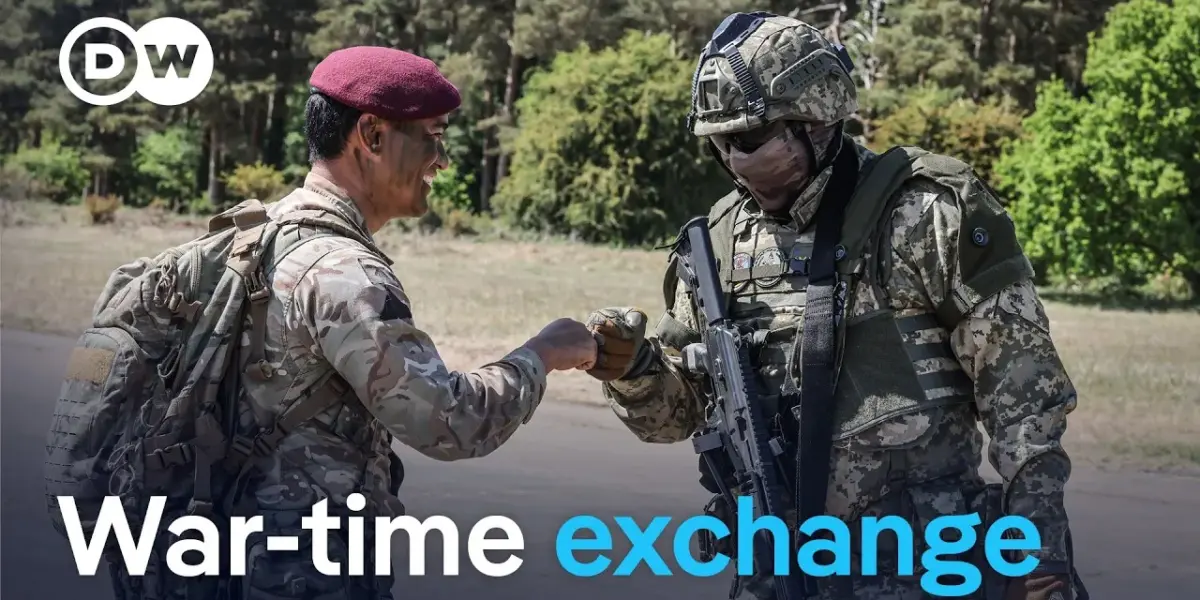
Ukraine Soldiers Share Combat Secrets with British Army
Ukrainian soldiers, hardened by years of conflict, are now sharing their battlefield expertise with British troops in England. The unique exchange program, part of Operation Interflex, allows Ukrainian veterans to teach their allies about the realities of modern warfare while also learning new skills themselves. This collaboration highlights the critical lessons Ukraine has learned on the front lines since Russia’s full-scale invasion.
Lessons from the Front Lines
Operation Interflex brings Ukrainian soldiers directly from the combat zone to the United Kingdom for specialized training and knowledge sharing. These soldiers, who have spent years defending their country, are considered invaluable experts due to their direct experience. “We’re telling them about our experience on the battlefield,” one Ukrainian soldier explained. “Both sides are learning from each other. A lot of them have had a lot of time at the front line and they know really well the realities in the modern battle. So, we learn from them as much as we teach them.”
The program recognizes the courage and resilience of the Ukrainian people. “Mainly it’s seeing the courage, resistance and unbroken resolve of the Ukrainian people, both soldiers and civilians that we have the privilege to work alongside,” said a representative involved in the program. The identities and locations of the Ukrainian soldiers remain secret to protect them and their families.
Training for Command and Trauma
Soldiers like Artm, who has direct frontline experience, are using the training to enhance their leadership abilities. He is spending five weeks in England to become a section commander. “We did not raise the white flag of surrender. We raised the blue and yellow flag of Ukraine. We went to get weapons and defend our people, our country,” Artm stated, reflecting his unwavering commitment.
For others, like Arur, a former history PhD, the focus is on mental well-being. He is receiving psychological training to help fellow soldiers cope with combat trauma. “I wasn’t thinking about what would happen the day after tomorrow. I was preparing for the worst,” Arur shared. “And when I made it out alive and my men were still standing, I was surprised. Thank God. Almost like a bonus.” This training aims to equip soldiers with the tools to process their experiences and support their comrades.
Adapting to Modern Warfare
The British Army has been training Ukrainian recruits since the war began, but the program has evolved to meet the needs of experienced veterans. Training scenarios are now designed to mirror the actual conditions on the Ukrainian front. “We developed these trenches with the Ukrainians to try and match the reality that they have at the front. They’re much more makeshift. They kind of hand dug and they they’re not really very very engineered,” explained a trainer. “The Ukrainians tell us is much more realistic and is how they want to be trained.”
To date, over 62,000 Ukrainian soldiers have trained in the UK, with 13 other partner nations also participating. The training involves simulating close-quarters combat and teaching soldiers how to lead small units effectively in critical situations.
Drone Warfare: A Key Focus
A significant area of expertise shared by Ukrainian soldiers is drone technology. Ukraine produced an estimated 4 million drones last year, making them pioneers in this field. Ukrainian soldiers are teaching British troops how they operate drones and their impact on the battlefield. “Our partners have a certain understanding of drones, but they have not encountered them physically. They don’t fully understand how exactly drones affect the battlefield or how intense it really is,” a Ukrainian soldier noted.
The Irish Guards, an elite British regiment, spent a year training with Ukrainian soldiers, incorporating lessons on drones, drone nets, and dropper drones. “We would teach them a certain way that maybe the NATO doctrine has said for the last 20 or 30 years. And then there would be a debate in a discussion where they would say, I don’t think that would work,” a British officer said. “They would then explain the particular threat that they’re used to being under or the particular set of circumstances that they’re in and we could then change things and and iterate and innovate from that.” This collaborative approach has led to the development of new drone technologies, such as FPV chassis, using 3D printers for rapid innovation.
Motivation and Resilience
The soldiers emphasize the intellectual and motivational drive behind their fight. “A Ukrainian warrior is an intellectual warrior. He knows why he’s going to the front. He knows what he has to do at the front. And this is in contrast to the Russian soldier who doesn’t know why he’s there who gets sent there by Putin,” one soldier asserted. The clear objective for the Ukrainian soldiers is to end the war quickly, return to their families, and rebuild their nation.
The training provides a chance for soldiers like Arur to reflect on their experiences. He has been wounded multiple times, including by grenades. This period offers an opportunity to process these traumatic events. “This time in England gives him the opportunity to reflect on his experiences in battle,” the reporter noted.
Returning to the Fight
After their five-week training, Artm and Arur, along with their colleagues, are preparing to return to the front lines. They leave England with enhanced skills, greater professionalism, and renewed motivation. “I used to run ultramarathons. I know how hard it can be towards the end when it feels like you have no strength left. You feel like you cannot overcome it. But that’s exactly the moment when you have to keep moving forward towards the finish line,” one soldier reflected, drawing parallels between endurance sports and the ongoing conflict.
The soldiers carry a profound sense of responsibility for their country and its future. “Before Russia’s attack, neither of the two familymen would have ever dreamed of training to become soldiers,” the article states. Though the environment in England was welcoming and respectful, they understand the urgent need to return to their duties. “There is a lot of work to do and that is not a comfort zone.” The hope is that their increased expertise and determination will contribute to peace for future generations.
Source: How European allies learn from Ukrainian soldiers | DW Reporter (YouTube)

Related Articles
Russia Faces Last-Ditch Offensive, Internal Cracks
Russia may be launching a final major offensive in Ukraine as it faces mounting internal pressures. Analysts suggest this push is a last resort before significant manpower and financial issues arise. Meanwhile, increasing domestic information control and official criticism highlight growing cracks within the Russian establishment.


US Eyes Belarus in Risky Geopolitical Shift
The U.S. is exploring renewed diplomatic ties with Belarus, a close ally of Russia and enabler of its war in Ukraine. This strategic gamble aims to create leverage but risks legitimizing an authoritarian regime and potentially strengthening Moscow.
Ukraine Gains Ground as Russia Relocates Missile Plants
Ukrainian forces are achieving tactical breakthroughs, bolstered by new drone technology, creating the most favorable conditions in ten months. Russia is responding by relocating vital missile production facilities eastward and facing internal disruptions. Meanwhile, Germany is introducing new military service travel restrictions, and geopolitical shifts could impact NATO's future.