Artemis II Crew Nears Moon Amidst Toilet Troubles
The Artemis II crew is nearing the Moon, but not without facing technical challenges. Issues with the spacecraft's toilet system, suspected to be caused by ice, are being actively managed. Despite this, the astronauts are preparing for a historic lunar flyby, capturing unprecedented views and conducting scientific observations.

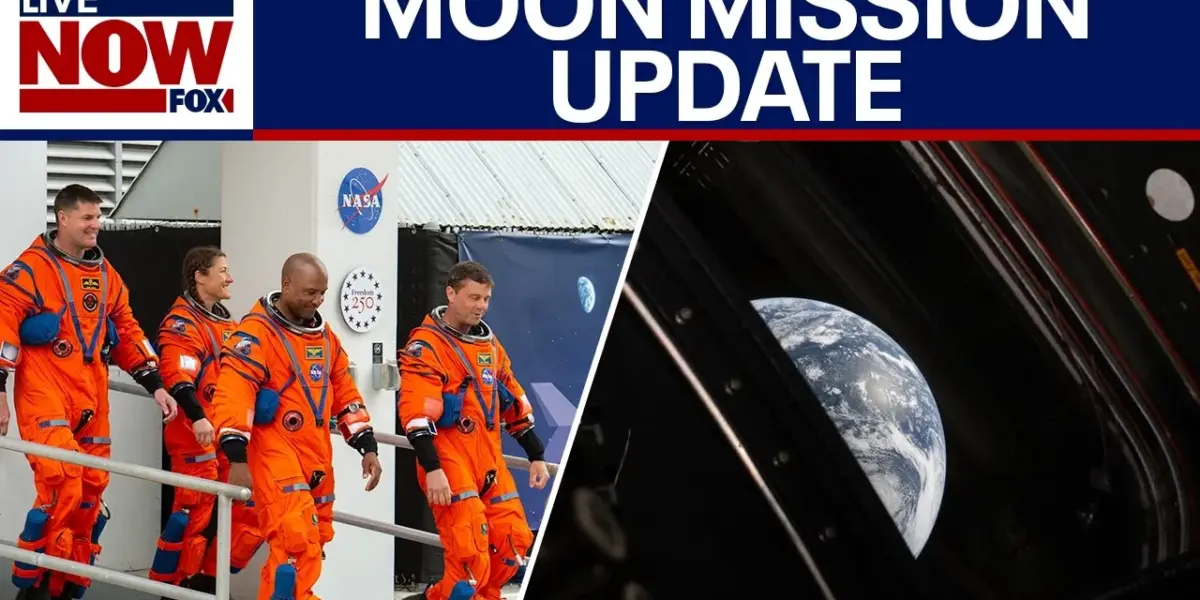
Artemis II Crew Nears Moon Amidst Toilet Troubles
The Artemis II mission, NASA’s historic first crewed flight test of the Orion spacecraft, is progressing towards its lunar flyby with the four astronauts now closer to the Moon than they are to Earth. Despite the incredible milestone, the crew is facing a significant, albeit manageable, technical challenge: issues with the spacecraft’s wastewater tank and toilet system.
A Journey to the Moon and Beyond
NASA’s Artemis program aims to return humans to the Moon and use it as a stepping stone for future missions to Mars. The Artemis II mission, launched on April 1st, is a critical test flight. It sends astronauts Reid Wiseman, Victor Glover, Christina Koch, and Jeremy Hansen on a journey around the Moon and back, testing the Orion spacecraft’s systems with a crew aboard for the first time.
During a press briefing at NASA’s Johnson Space Center in Houston, Texas, mission managers provided an update on the spacecraft’s status. John Honeycutt, manager for NASA’s Space Launch System (SLS) program, expressed excitement about the mission’s progress. “Integrity remains on a free return trajectory and is on the outbound transit towards the moon with lunar flyby day six which is Monday coming up,” he stated. The SLS rocket, which launched Orion, performed exceptionally well, exceeding expectations with 99.92% accuracy in delivering the spacecraft to its intended trajectory.
Toilet System Encounters Icing Issues
The primary concern highlighted during the briefing involved the spacecraft’s wastewater management system. Jud Freeling, Artemis II Flight Director, explained the situation. “During the night, we tried to vent the wastewater tank that’s attached to the toilet. We had problems with that due to a suspected blockage. We think probably due to ice,” Freeling said. This issue led the crew to use collapsible contingency urine devices, a procedure they had practiced on flight day one.
Debbie Crew, Orion Deputy Program Manager, elaborated on the problem and its potential solutions. “The vents are located near that umbilical… We think it’s probably been seeing more shadow than anticipated. And so by heating that up, we were able to get some of the urine out. Clearly, didn’t solve the whole problem,” Crew explained. She reassured the public that the issue is not uncommon, noting similar events occurred on the Space Shuttle program. “The toilet itself is operable. This is a test flight, we’re figuring out how these systems work together. But, it is operable and we have redundancy to get us through the mission,” Crew added.
The team attempted to resolve the issue by maneuvering the spacecraft to allow sunlight to warm the vent, achieving partial success. “We were partially successful. We got about half of the tanks… out of the half of the urine out of those tanks. So, we’ll continue to troubleshoot on that,” Freeling reported. While the problem is being actively addressed, it has not increased mission risk or impacted the overall mission objectives.
Spectacular Views and Scientific Objectives
Despite the technical hiccup, the Artemis II crew is experiencing breathtaking views of space and the Moon. Kelsey Young, lead for NASA’s Science Mission Directorate, shared details about the upcoming lunar flyby. “The moon is now closer to the crew than the Earth is. So, we’re really gearing up to support the flyby,” Young said. The crew will have the opportunity to see features on the Moon’s far side that have never been observed by human eyes before, with only robotic imagers having captured these regions previously.
A particularly unique event during the flyby will be a solar eclipse, viewed from the Orion spacecraft’s perspective. “From their vantage point, the sun will pass behind the moon from their perspective, creating a solar eclipse from a perspective that is very very unique to this mission. It will be a roughly 53-minute eclipse,” Young explained. The mission also includes numerous scientific objectives developed by NASA’s lunar science team, focusing on understanding lunar geology and the solar system.
Calm Under Pressure
When asked about the perceived calm demeanor of the mission management team despite the challenges, John Honeycutt emphasized the extensive training and teamwork involved. “We spent a great deal of time training, and the training team gave us some really hard things to work throughout training. So, I think it’s a tribute to the amount we trained and how good the teams are working together,” Honeycutt said. He expressed confidence that the teams are prepared to handle any further complexities that may arise.
Looking Ahead
The Artemis II crew is scheduled to perform their lunar flyby on Monday. Mission managers will continue to monitor the spacecraft’s systems, including the wastewater tank, while the astronauts focus on executing the remaining flight test objectives and capturing invaluable scientific data and imagery. The success of this mission is crucial for paving the way for future Artemis missions, including landings on the lunar surface.
Source: NASA: Artemis II crew now closer to the moon than Earth, experiencing toilet issues (YouTube)

Related Articles
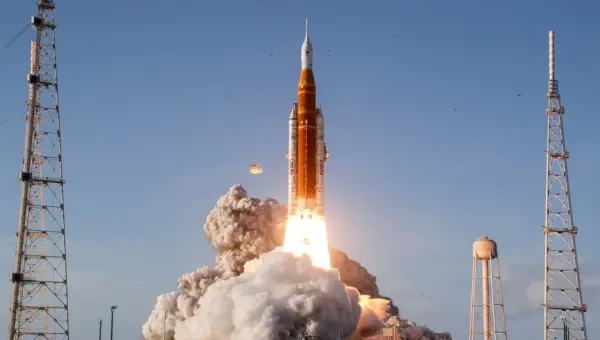
Artemis II: Moon Mission Continues, Honoring Apollo’s Legacy
The Artemis II mission is in its fifth day, marking a significant return to lunar exploration. Astronaut Charlie Duke honored the Apollo legacy, sending encouragement to the current crew as they entered the moon's sphere of influence. This mission is a vital step towards future lunar landings and beyond.
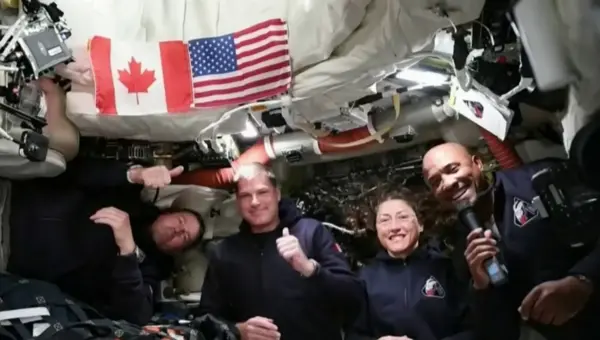
Artemis II Crew Shares Stunning Moon Views from Deep Space
The Artemis II crew is traveling towards the Moon, sharing stunning images and historic interviews from deep space. For the first time since 1972, humans are venturing this far, experiencing breathtaking views and preparing to photograph the Moon's far side.
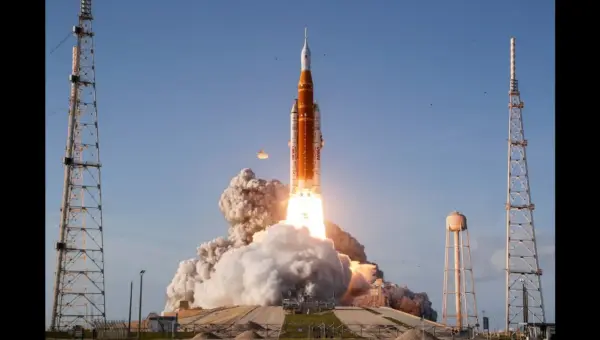
Trump’s Space Race Returns: Moon Mission Ignites Global Tensions
NASA's Artemis 2 mission marks a historic return to the Moon, while President Trump confronts Iran with increased military action and urges global partners to take a stronger stance. Domestic policy sees shifts in firearm regulations on bases and new initiatives for election integrity and public health.