Judge Halts Trump’s Race Data Grab from Colleges
A federal judge has temporarily blocked the Trump administration's order for public universities to disclose race-related admissions data. The judge cited the "rushed and chaotic" manner of the demand, despite acknowledging the government's likely authority to collect data.

Judge Halts Trump’s Race Data Grab from Colleges
A federal judge has put a temporary stop to the Trump administration’s effort to collect race-related data from public universities. This move comes after the administration ordered colleges in 17 states to share more information about student admissions. The goal was to see how race was being used in the college application process.
Why the Data Collection?
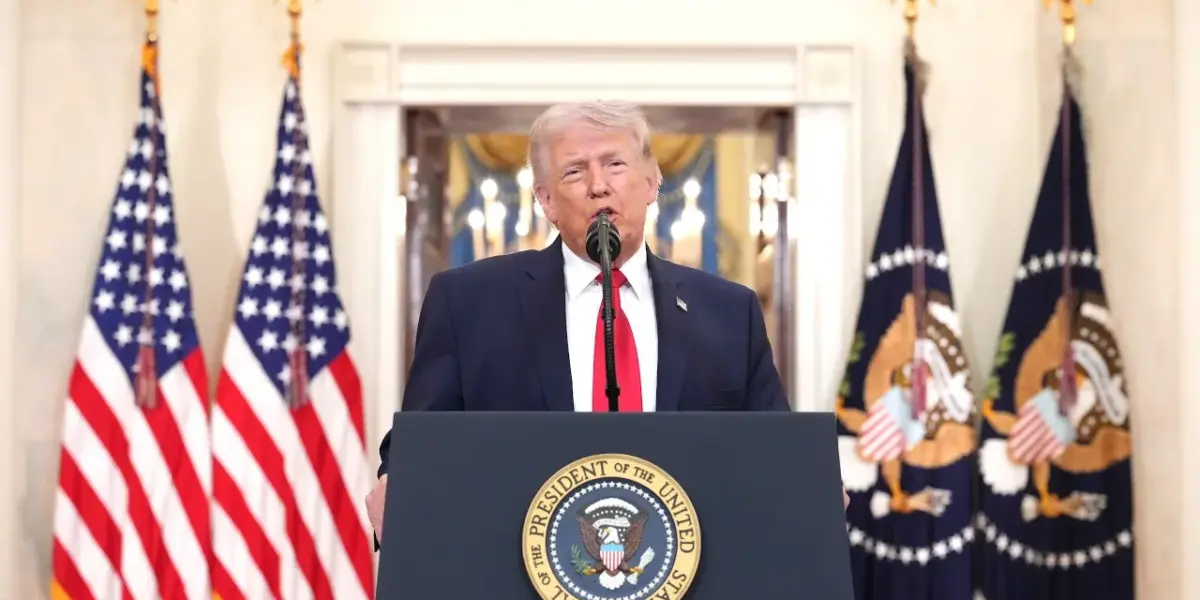
The push for this data collection started last August. President Trump had expressed concerns about the use of race in higher education. He pointed to a lack of clear data and the widespread use of diversity statements. These factors, he suggested, raised questions about whether colleges were still considering race in admissions decisions.
Supreme Court’s Role
This situation is closely linked to a major Supreme Court decision from 2023. The court ruled against the use of affirmative action in college admissions. Affirmative action policies have historically aimed to increase representation for underrepresented groups, often considering race as one factor. The court’s decision changed the legal landscape for how colleges could build their student bodies.
Judge Cites ‘Rushed and Chaotic’ Process
The federal judge in Boston, who issued the order, acknowledged that the government likely has the power to collect such data. However, the judge found fault with how the demand was presented to universities. The order was described as being carried out in a “rushed and chaotic manner.” This lack of proper procedure caused significant problems for the institutions.
Problems with the New Rules
The judge highlighted several issues arising from the administration’s demands. Universities were faced with complex and burdensome requirements. The rapid implementation meant many institutions struggled to understand and comply with the new rules. This created confusion and inefficiency across the affected schools.
Why This Matters
This ruling touches on important issues of government oversight, privacy, and the ongoing debate about race in education. The Trump administration’s attempt to gather this data reflects a broader concern about fairness and equal opportunity in college admissions. However, the judge’s decision emphasizes that even with a valid goal, the methods used by the government must be fair and orderly.
Balancing Data Needs and Practicality
Collecting data can be a valuable tool for understanding societal issues. It can help identify potential biases or inequalities. For example, if a city wants to improve public transport, collecting data on where people live and work helps plan new bus routes. Similarly, data on college admissions could shed light on trends. But the judge’s ruling shows that the government must balance its data needs with the practical realities faced by the organizations it collects from.
The Path Forward
The temporary halt means universities do not have to provide the requested race data for now. This gives them breathing room to understand the requirements and for the administration to potentially revise its approach. It also allows for further legal review of the administration’s authority and methods. The future of such data collection efforts will likely depend on how these legal and procedural issues are resolved.
Historical Context
The use of race in college admissions has been a contentious issue for decades. Affirmative action policies were developed to address historical discrimination and promote diversity. However, these policies have faced numerous legal challenges. The Supreme Court’s ruling in 2023 marked a significant turning point, largely ending race-conscious admissions. The current data collection effort can be seen as an attempt to monitor the effects of this new legal standard.
Looking Ahead
This case highlights the complex relationship between government regulation and educational institutions. It also underscores the continuing discussion about how to achieve diversity and equal opportunity in higher education. As legal challenges and policy debates continue, the way data is collected and used will remain a critical point of focus.
Source: Judge Stops Trump Administration From Tracking College Race Data (YouTube)

Related Articles

Trump’s Birthright Citizenship Plan Risks Undoing Progress
Kermit Roosevelt III, a constitutional law professor, argues that Donald Trump's challenge to birthright citizenship echoes post-Civil War efforts to undermine civil rights. The debate centers on the 14th Amendment's "subject to the jurisdiction" clause, with Roosevelt asserting the administration's interpretation is historically inaccurate and legally unsound. He believes the Supreme Court will likely reject the argument, but warns of broader implications for national identity and civil rights.

Vance Visits Hungary: A ‘Model’ for Trump’s America?
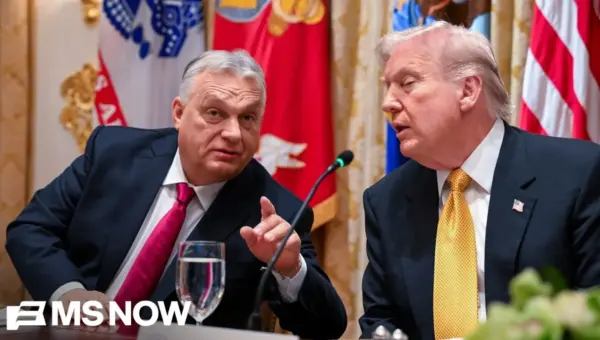
Vice President J.D. Vance's visit to Hungary signals support for Prime Minister Viktor Orban, raising questions about the U.S. embrace of Orban's governance model. Expert Anne Applebaum criticizes the move, linking it to a MAGA agenda for a European right-wing alliance and highlighting Orban's record of corruption and authoritarianism. The visit occurs amid concerns about Hungary's alignment with Russia and its impact on NATO cohesion.


Protests Explode Across Middle East Amid War Escalation
Millions are protesting across the Middle East against the Trump and Netanyahu administrations. Large demonstrations in Baghdad, Syria, Yemen, and even Tel Aviv show widespread opposition to the ongoing war. Analysts criticize the aggressive rhetoric and strategy, warning of further escalation and regional instability.