Supreme Court Tariff Ruling Triggers $200 Billion ‘Wealth Transfer,’ Critics Warn of Economic Fallout
A recent Supreme Court decision declaring 2025 tariffs illegal has triggered an estimated $200 billion refund, but this massive payout is set to benefit mega-corporations, not the average American consumer who initially bore the costs. Critics decry this as a significant 'wealth transfer,' highlighting systemic flaws where consumers are left without recourse due to sovereign immunity, while corporations 'double-dip' by profiting from raised prices and now receiving refunds for costs passed onto the public.

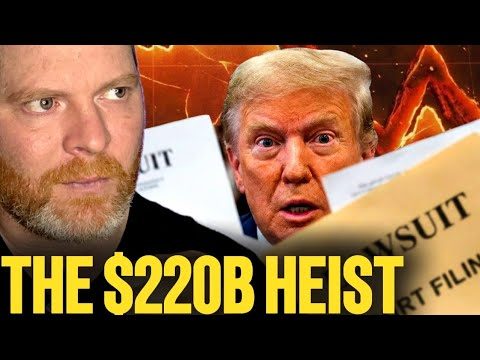
Supreme Court Tariff Ruling Triggers $200 Billion ‘Wealth Transfer,’ Critics Warn of Economic Fallout
A recent Supreme Court decision declaring massive tariffs from 2025 illegal has set in motion a monumental financial event: an estimated $200 billion refund. However, this vast sum, far from benefiting the average American consumer who bore the brunt of these tariffs, is largely slated to be returned to mega-corporations. Critics are sounding the alarm, characterizing this development as the largest asymmetric wealth transfer in modern history, exposing deep structural flaws in the nation’s economic and legal systems.
The ruling has ignited a fierce debate, with some condemning the court’s decision as a failure to protect national interests, while others point to it as a stark illustration of how economic policies can inadvertently redistribute wealth upwards, leaving ordinary citizens financially vulnerable and without recourse.
The Illegality of the 2025 Tariffs and Their Cost to Americans
Throughout 2025, the U.S. government imposed tariffs ranging from 10% to 25% on a wide array of imported goods. Tariffs, essentially taxes on imports, are typically intended to protect domestic industries or serve as leverage in international trade negotiations. However, the transcript suggests these particular tariffs were levied through executive authority that bypassed traditional legislative processes, leading to their eventual challenge and the Supreme Court’s declaration of illegality.
A crucial point often misunderstood about tariffs is who ultimately pays them. While initially paid by importers, these costs are almost invariably passed down to consumers. Economic data cited by commentators indicates that the average American household spent approximately $1,800 extra in 2025 due to these increased import costs. This burden was felt acutely at the grocery store and in everyday purchases, contributing to a reported stalling of real GDP.
The Supreme Court’s ruling, delivered recently, confirmed what many in the business and legal communities had anticipated: the executive branch’s methods for imposing these tariffs were unlawful. This decision opens the floodgates for lawsuits against the government to reclaim the illegally collected funds.
The $200 Billion Refund: A Windfall for Corporations, Not Consumers
The heart of the controversy lies in the distribution of this massive refund. The transcript highlights that while American consumers collectively financed this “tax” through higher prices, they are legally barred from seeking individual refunds. This is due to the principle of sovereign immunity, which protects the government from being sued by its citizens without its consent.
Consequently, the only entities legally positioned to recover these funds are the mega-corporations — the importers who initially paid the tariffs and subsequently passed those costs onto consumers. These large corporations, with significant financial resources, have been preparing for this outcome, filing lawsuits to reclaim what they paid. The projected refund could reach up to $175 billion, a figure that, when combined with the broader economic impact, underscores the scale of this financial reallocation.
Critics argue that this situation represents a “double dip” for corporations. Not only did they manage to “juice up their profits” by charging consumers more during the tariff period, but they are now poised to receive a full refund for costs that were, in effect, already covered by the public. This refund will flow directly into their profit margins, further enriching corporate coffers while the average American sees no direct financial relief.
Small Businesses Left Behind: A Growing Class Divide
The implications of this ruling extend beyond large corporations and individual consumers. Small businesses, particularly those reliant on imported goods for inventory or parts, faced immense pressure under the tariffs. Many were forced to shut down due to unsustainable operating costs. However, unlike their larger counterparts, these small business owners lack the financial wherewithal to engage in protracted legal battles against the government.
The transcript emphasizes this “class divide,” noting that while mega-corporations can afford “a slew of high-power lawyers” to pursue their claims, small businesses that suffered losses — including lost income and the cessation of operations — have no legal recourse. This disparity, critics contend, strikes a severe blow to the working class and those who pursued the “American dream” of entrepreneurship, only to be caught in the crossfire of an illegal government policy with no path to restitution.
A ‘Massive Structural Failure’: Economic Policy Under Scrutiny
Commentators describe the current economic policy framework as a “massive structural failure,” arguing that the system prioritizes corporate interests over the well-being of ordinary citizens. The phrase “privatized profit while socializing inflation” encapsulates the sentiment that corporations reap the benefits while the public bears the costs.
The economic impact of the tariffs, coupled with the refund mechanism, is presented as evidence that the system is “too busy reallocating your tax dollars on the way out” rather than serving the populace. This perspective suggests a deliberate or inherent mechanism within the system that funnels wealth upwards, particularly during times of economic instability.
The Paralysis of the American Populace
A striking observation from the transcript is the perceived paralysis of the American population in the face of these economic challenges. Despite widespread discontent, there’s a lack of organized political response or widespread protest. This is attributed to the intense financial pressure faced by many Americans.
The narrative paints a picture of an “exhausted” populace, working multiple jobs — “60 hours as a freelance dog walker, a mid-level manager at some kind of logistics company” — just to cover basic necessities like rent and car payments. The fear of unexpected expenses, even a “$400 medical expense,” is cited as a significant deterrent to political engagement, keeping people “just broke enough that they’re going to stay compliant.” This effectively stifles any meaningful collective action against perceived systemic injustices.
Questionable Government Actions and Fiscal Management
Adding to the critique of the economic system are recent government actions that have drawn public scrutiny. The transcript highlights two specific instances:
The Board of Peace: The announcement of a new “Board of Peace” to be funded with $10 billion of taxpayer money, reportedly without congressional oversight, is labeled a “slush fund.” Critics view this as a questionable allocation of public funds at a time when the economy faces significant challenges.
President Suing the Government: An even more unusual situation involves the President reportedly suing his own government for $10 billion over a privacy leak. This scenario, where the executive branch seeks a payout from its own agencies, raises serious concerns about conflicts of interest and the integrity of government processes, with critics calling it “negotiating a taxpayer payout with itself.”
These actions, coupled with the tariff refund situation, are portrayed as a “smash and grab reallocation of funds at the end of an economic cycle.” The overall impression conveyed is one of a system in disarray, with resources being diverted away from public benefit towards a select few, while the nation’s economic foundations continue to weaken.
A Bleak Outlook: ‘The System Is Doing What It Was Meant to Do’
The outlook presented by commentators is decidedly pessimistic. They argue that the current trajectory is not a mere accident but rather the system “doing exactly what it was meant to do, which is extract all the wealth from the people of the United States, allocating that to the wealthiest families in this nation.” The analogy of the federal government “hiring a fleet of U-Haul trucks to drive up to the US Treasury, rip the copper out of the building, take all the silverware… and they’re going to give us the bill for the gas” vividly illustrates this perceived systemic plunder.
The sentiment is that, short of radical societal upheaval, there is little the American people can do but “sit back, pour a glass of wine, maybe take a trip to the dispensary and kind of watch the fireworks happen as our nation kind of grabs to a halt and the builtup inherited wealth of this country is pulled away by a handful of the most corrupt, vile predators on this planet.” This stark assessment underscores a profound disillusionment with the current state of governance and economic justice in the United States.
Source: The Real Consequence Of The Tariff Rulling: The $200 Billion Wealth Transfer: (YouTube)

Related Articles
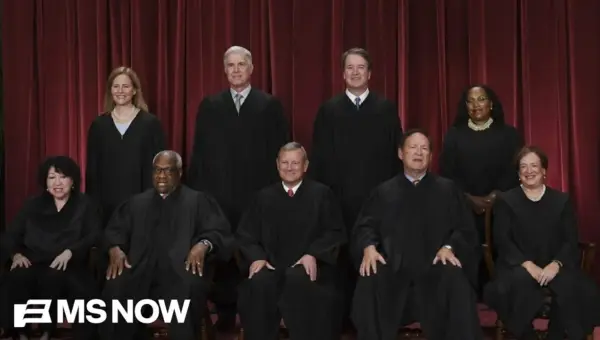
Supreme Court’s Legitimacy Tested: A Look Inside
The Supreme Court is increasingly seen as the "last branch standing" to resolve national disputes, a role that strains its legitimacy. Author Sarah Isker's new book, 'Last Branch Standing,' examines the court's internal dynamics and its complex relationship with public opinion and other branches of government.
Trump’s Tariffs Ignite Inflation Crisis, Fed Stands Helpless
Inflation has surged to 3.3%, driven by a combination of energy shocks and self-inflicted tariffs. The Federal Reserve's tools are largely ineffective against this supply-driven crisis, leading to a potential for prolonged economic pain and a political opportunity to rethink economic policy.
Critics Slam Trump’s Economic Policies, Citing Inflation and Tariffs
Critics argue that Donald Trump's economic policies, including permanent tax cuts for corporations and the wealthy, have worsened inflation and increased costs for average Americans. Tariffs and a jobless economy over the last 15 months are cited as key issues, with a proposal emerging to suspend the federal fuel tax to provide relief.