Democrats Slam Trump’s Iran War Strategy, Cite ‘Rubble’
Democrats are sharply criticizing President Trump's approach to the escalating conflict with Iran, warning of potential war crimes and widespread destruction. Concerns are raised over the lack of clarity in the President's strategy and proposed budget increases, while congressional leaders face challenges passing essential funding bills.

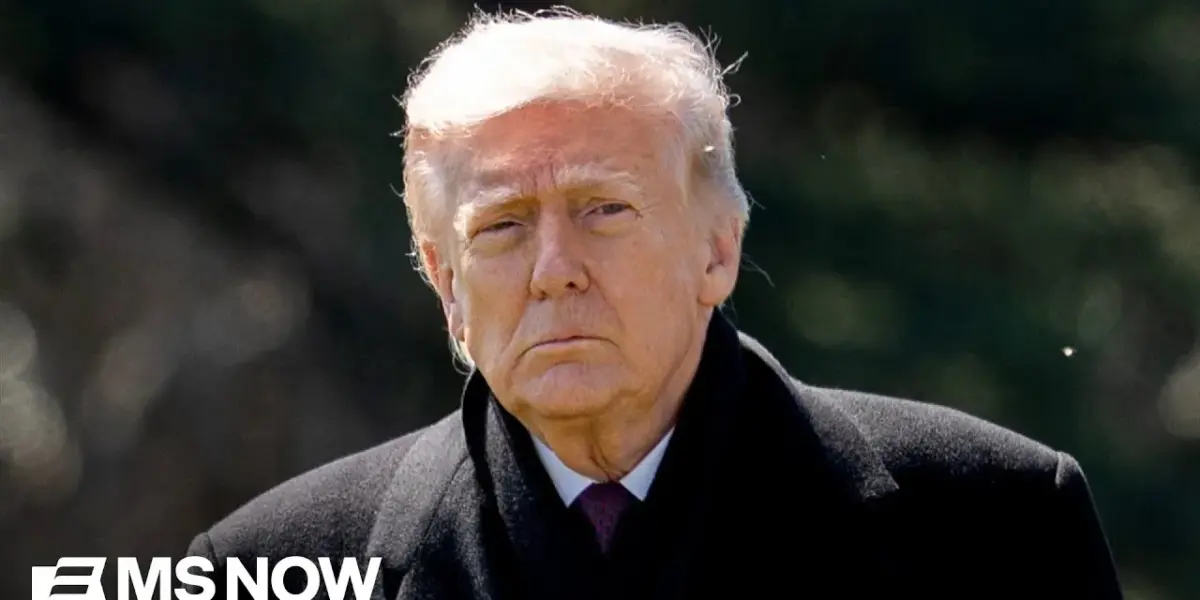
Democrats Criticize Trump’s Iran War Actions, Warn of ‘Rubble’
In the midst of escalating tensions with Iran, top Democrats are sharply criticizing President Trump’s handling of the conflict, warning that his approach could lead to widespread destruction and potentially war crimes. The concerns come as U.S. military rescue teams search for a missing F-15 crew member in southwestern Iran, while Iranian forces reportedly target other American aircraft. Democrats accuse the President of escalating the conflict and violating international law.
Concerns Over Civilian Targets and International Law
Representative Hakeem Jeffries’ former communications director, Michael Hardaway, stated that striking civilian targets like electricity plants is unacceptable for the United States. He emphasized that America should follow international law, contrasting this with the actions of leaders like Vladimir Putin. Hardaway expressed hope that President Trump will be remembered for a swift end to the war, which he called “a war of the President’s making.” He predicted that Trump’s legacy might be associated with “rubble from the East Wing to the Middle East” and people buried beneath it.
“This President is going to be known for rubble from the East Wing to the Middle East and people buried in the rubble.”
Michael Hardaway
Lack of Clarity in Presidential Address
Former Pennsylvania GOP representative Charlie Dent commented on President Trump’s recent speech addressing the war with Iran. Dent noted that while the President needed to speak, he should have done so before hostilities began. The former representative pointed out a lack of clarity regarding how the Strait of Hormuz would be reopened, with the President only stating it would happen “naturally.” Dent also highlighted contradictory messages about the conflict’s scope, such as promises of a quick withdrawal versus threats of “bombing them back to the stone age,” suggesting the latter would take longer than the stated two to three weeks.
“There’s, for me anyway, there’s been a lack of clarity,” Dent remarked. “And obviously the markets didn’t respond well because on one hand they say we’re going to get out in two, he said we’re going to get out in two to three weeks or we’re going to be finished with the campaign. On the other hand, he’s talking about bombing them back in the stone age.” Dent concluded that the speech, while necessary, did not significantly help the President’s cause.
Disagreement on Speech’s Impact and NATO’s Role
Michael Hardaway disagreed with any potential positive interpretation of the speech, calling it a “disaster” that made “absolutely no sense” and involved lies. He believes the speech likely harmed the President’s standing with moderate Republicans and independents. Regarding NATO, Hardaway stressed the importance of U.S. involvement and hoped that a Republican-led Congress would find the courage to support the alliance, calling it “incredibly helpful and important to keeping peace and stability across much of the world.”
Budget Proposal Faces Republican Scrutiny
The discussion turned to President Trump’s proposed fiscal year 2027 budget, which includes a significant 40% increase in defense spending, aiming for over $1.5 trillion. Charlie Dent expressed concerns about this budget, noting it raises defense spending while cutting non-defense discretionary spending. He pointed to comments made by the President about the federal government getting out of the daycare business and other remarks that he felt were politically unhelpful. Dent predicted that Congress would likely reject the budget, similar to last year’s proposal, especially given the proposed cuts to programs like the National Institutes of Health.
“I can’t imagine Congress is going to take this budget,” Dent stated. He also questioned the funding mechanism for the defense increase, particularly the talk of using a reconciliation process for a few hundred billion dollars, which he deemed an inappropriate method for funding the Department of Defense.
Public Opinion on Defense Spending and Budget Priorities
Michael Hardaway questioned how President Trump could sell increased defense spending to the public, especially when there is agreement on the need for a strong military but also recognition of waste within the Defense Department. He argued that instead of adding more funds, the focus should be on evaluating the effectiveness of current spending. Hardaway criticized the proposal to increase defense and border patrol funding while cutting programs that benefit working people, seniors, students, and even suggesting the privatization of the TSA.
“He’s saying that we should spend more on defense and more on border patrols, but also cut funding for seniors and for students and for the TSA,” Hardaway said. “He wants to privatize in TSA, which keeps us safe as we travel throughout this country in the middle of a war. Now explain to me how that makes sense politically. I just don’t see it.”
House on Recess Amid Partial DHS Shutdown
The conversation shifted to the ongoing partial Department of Homeland Security (DHS) shutdown, which is set to continue for at least another 10 days as the House is on Easter recess until April 14th. Speaker Mike Johnson recently agreed to bring a deal to end the shutdown to the House floor, a reversal of his previous rejection of the same deal a week prior.
Speaker Johnson’s Reversal on Shutdown Deal
Charlie Dent described the situation with Speaker Johnson’s change of heart as an example of the political adage, “never say what you will never do.” He noted that the Senate had passed the agreement with no opposition. Dent found it “ill-advised” for the Speaker to initially criticize the deal, knowing he would likely have to accept it later. Johnson now faces the challenge of explaining his changed position to his right-wing base, which opposes the deal.
“He’s put himself in a predicament, but it’s going to pass. It’s just a matter of when,” Dent concluded.
Agreement on Shutdown Bill’s Passage
Michael Hardaway agreed that the shutdown bill would pass, stating that Speaker Johnson “has no choice.” Hardaway added that the Speaker should have supported the deal the first time to avoid the embarrassment of his reversal.
Source: ‘The East Wing to the Middle East’: Democrats say Trump will be remembered for Iran War ‘rubble’ (YouTube)

Related Articles

Trump Threatens Iran, Shaking Global Stability
Former President Trump's aggressive Easter Sunday warning to Iran has ignited global concerns, highlighting a volatile intersection of politics, religion, and foreign policy. The analysis explores the motivations behind such rhetoric, the deep divisions within American society, and the potential for severe economic and geopolitical repercussions worldwide.

Trump’s Rhetoric Fuels Iran Tensions, Raises War Crime Alarms
Former President Donald Trump's aggressive Easter weekend social media posts directed at Iran have sparked international concern. His threats of military action and ultimatums, coupled with conflicting narratives about military engagements, have raised alarms about potential war crimes and a dangerous escalation of conflict. Critics accuse both Trump and segments of the media of downplaying the severity of his rhetoric.

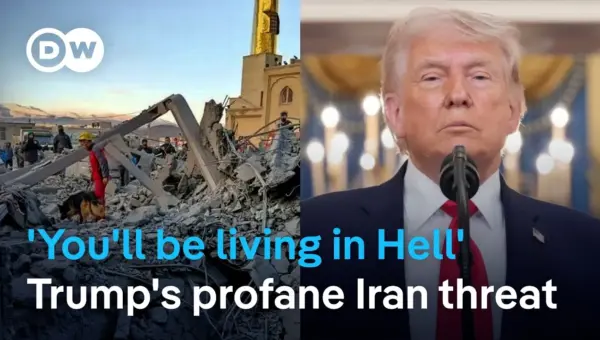
Trump’s Vulgar Iran Threat Sparks Global Outrage
President Donald Trump issued a highly profane threat against Iran via social media, warning of attacks on civilian infrastructure if the Strait of Hormuz was not opened. Experts suggest the outburst stems from frustration and desperation, while legal scholars warn of potential war crimes. The situation continues to escalate, with significant economic and political implications for the region.