Trump Prioritizes War Funding Over Child, Health Care
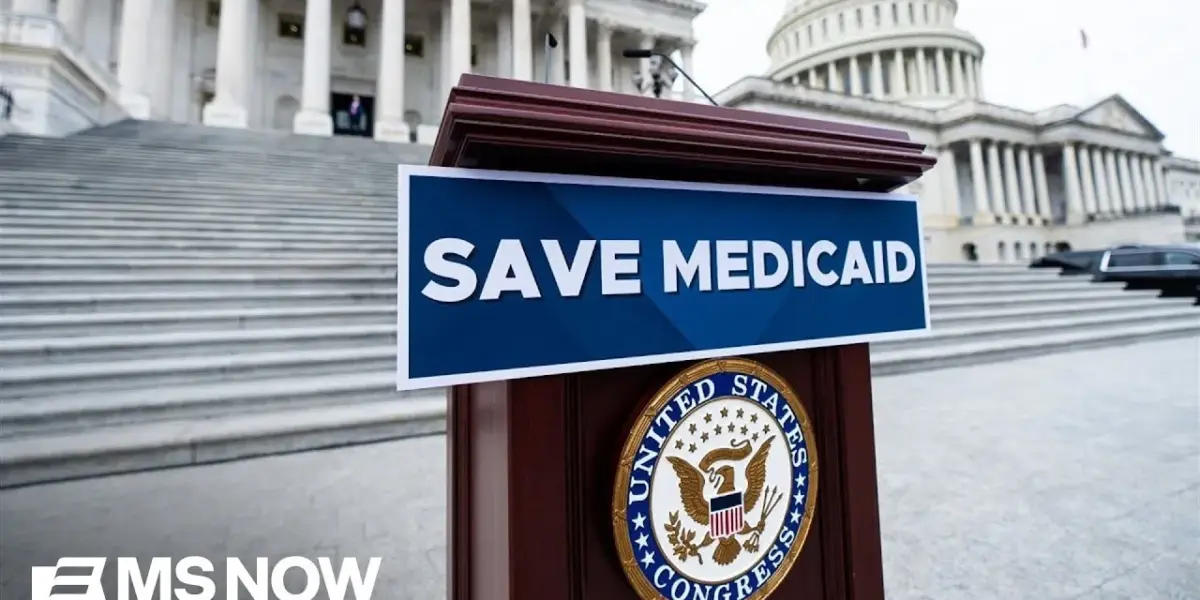
President Trump has stated that federal funding for child care and health care is not the government's job, prioritizing military spending instead. This decision comes as families face record-high costs for essential services, contrasting sharply with global norms of universal care and significant military expenditures.

Trump Shifts Focus from Affordability to Military Spending
President Trump has stated that federal funding for child care and health care programs is not the government’s responsibility, emphasizing instead the need to fund military protection. This stance, revealed in a conversation with his budget director, Russell Vought, marks a significant departure from his campaign promises of making life affordable for everyday Americans. Trump explicitly told Vought, “don’t send any money for daycare because the United States can’t take care of daycare. We’re fighting wars. We can’t take care of daycare.” He suggested that states should handle these costs, potentially by raising their own taxes, while the federal government focuses solely on national defense.
Rising Costs Strain American Families
The president’s comments come at a time when many essential costs are hitting record highs. Gas prices, grocery bills, child care expenses, and Medicare premiums are all placing a heavy burden on families. The standard Medicare premium now stands at $2,435 annually. Child care costs, in particular, are rising faster than inflation. According to Care.com, the average parent spends about 20% of their household income on child care. This financial pressure makes the president’s decision to de-prioritize these services even more stark.
Global Context: Universal Care as Standard
The United States stands apart from most developed nations in its approach to health care and child care. Dozens of countries, including all members of the OECD (Organisation for Economic Co-operation and Development), provide some form of universal health care. Many also offer universal or heavily subsidized child care programs. These nations recognize that such services are crucial for economic stability and societal well-being. In contrast, the U.S. is the only developed country without universal health care, and the current administration appears to be further reducing federal support for essential family services.
War Spending vs. Social Services: A Stark Contrast
The financial priorities of the administration are highlighted by the significant spending on military operations. The war against Iran, for example, is estimated to have cost taxpayers over $16.5 billion in its first 12 days. A more recent estimate suggests that over four weeks, the U.S. military spent more than $3 billion on Tomahawk cruise missiles alone. To put this into perspective, $3 billion could have funded cancer treatments for approximately 28,000 Americans, provided food stamps for over a million people, or covered a decade of salaries for 3,200 nurses. It could also have paid for the annual daycare costs of 173 children. This stark contrast raises questions about the nation’s priorities when billions are spent on military action while essential services for families are deemed unaffordable at the federal level.
Expert Analysis: Budgets Reflect Priorities
Former Secretary of Health and Human Services Kathleen Sebelius emphasized that budgets are a clear statement of priorities. She noted that President Trump’s comments reveal a fundamental misunderstanding of programs like Medicare, which is entirely federal. “Budgets are priorities, right? They’re a statement of where you spend taxpayer money,” Sebelius stated. She added that child care is a critical expense for working parents, and the president’s focus on war over these services is a choice, not a fact. “This is the president’s priority. He’s made it very clear. His priorities war and often he gets distracted by ballrooms. It is not about the services and supports that the American people rely on and need to go about their everyday lives.”
Economic Impact of Child Care and Health Care Support
Aaron Haynes, editor-at-large for The 19th News, pointed out that supporting child care and health care has significant economic benefits. Universal child care can lower costs for families, boost their spending power, stabilize businesses by reducing employee turnover, and increase labor force participation. These are not abstract concepts but established facts seen in countries that prioritize these services. “This is about Americans’ ability to participate fully in our democracy, in our workforce, in our society,” Haynes explained. “It is something that is a literal kitchen table issue that… could be motivating voters.” The affordability of these services directly impacts families’ ability to work, contribute to the economy, and maintain their well-being.
Voters Face a Clear Choice
The upcoming election presents voters with a clear choice regarding federal priorities. President Trump’s message is that the federal government should not be responsible for child care, health care, or parts of the social safety net. This approach places a greater burden on individuals and states. As Kathleen Sebelius noted, concerns about affordability—from housing and schools to health care and child care—have always been central to voters’ decisions. “People, not surprisingly, their concerns start at the kitchen table,” she said. The contrast between prioritizing military spending and supporting essential family services is a key issue that voters will consider.
Looking Ahead: The Impact on Families and the Economy
The administration’s stated priorities raise significant questions about the future of essential services for millions of Americans, particularly women, who are often disproportionately affected as long-term caregivers and Medicare recipients. The decision to shift responsibility for child care and health care to states or individuals could lead to greater disparities in access and affordability. As the election approaches, the debate over federal spending priorities will likely intensify, with voters ultimately deciding whether to support a vision that prioritizes military strength over social support systems. The long-term economic and social consequences of these choices will become increasingly apparent in the years to come.
Source: Trump’s decision to fund war over health care & child care ‘raises questions’ (YouTube)

Related Articles


Trump’s Birthright Citizenship Plan Risks Undoing Progress
Kermit Roosevelt III, a constitutional law professor, argues that Donald Trump's challenge to birthright citizenship echoes post-Civil War efforts to undermine civil rights. The debate centers on the 14th Amendment's "subject to the jurisdiction" clause, with Roosevelt asserting the administration's interpretation is historically inaccurate and legally unsound. He believes the Supreme Court will likely reject the argument, but warns of broader implications for national identity and civil rights.
Vance Visits Hungary: A ‘Model’ for Trump’s America?
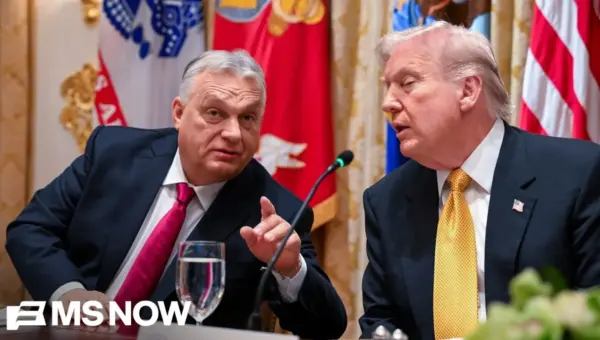
Vice President J.D. Vance's visit to Hungary signals support for Prime Minister Viktor Orban, raising questions about the U.S. embrace of Orban's governance model. Expert Anne Applebaum criticizes the move, linking it to a MAGA agenda for a European right-wing alliance and highlighting Orban's record of corruption and authoritarianism. The visit occurs amid concerns about Hungary's alignment with Russia and its impact on NATO cohesion.

Kaine Urges Trump to Tone Down War Rhetoric After Iran Jet Downing
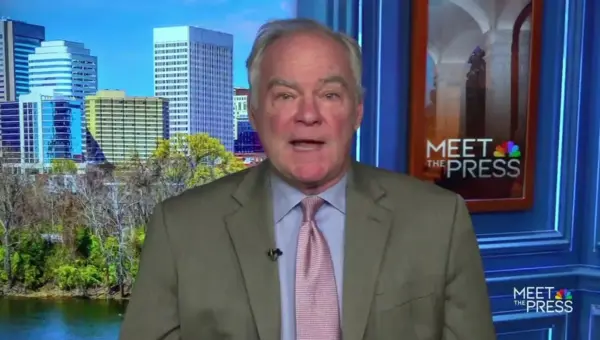
Senator Tim Kaine has called on President Trump to "dial back the rhetoric" following the downing of a U.S. jet in Iran, warning that aggressive language puts pilots at risk. Kaine also expressed concerns over the rationale for the current conflict and questioned a proposed $1.5 trillion military budget increase. He emphasized the need for congressional approval for war and expressed confidence in Congress's ability to block any unilateral withdrawal from NATO.