US Forces Train for Dangerous Rescue Missions in Hostile Territory
US forces undergo rigorous Survival, Evasion, Resistance, and Escape (SERE) training to prepare for dangerous rescue missions. Highly specialized teams, like Air Force Pararescue Jumpers, use advanced technology and decentralized command to extract crew members from hostile territory, facing high risks with extensive practice.

US Forces Train for Dangerous Rescue Missions in Hostile Territory
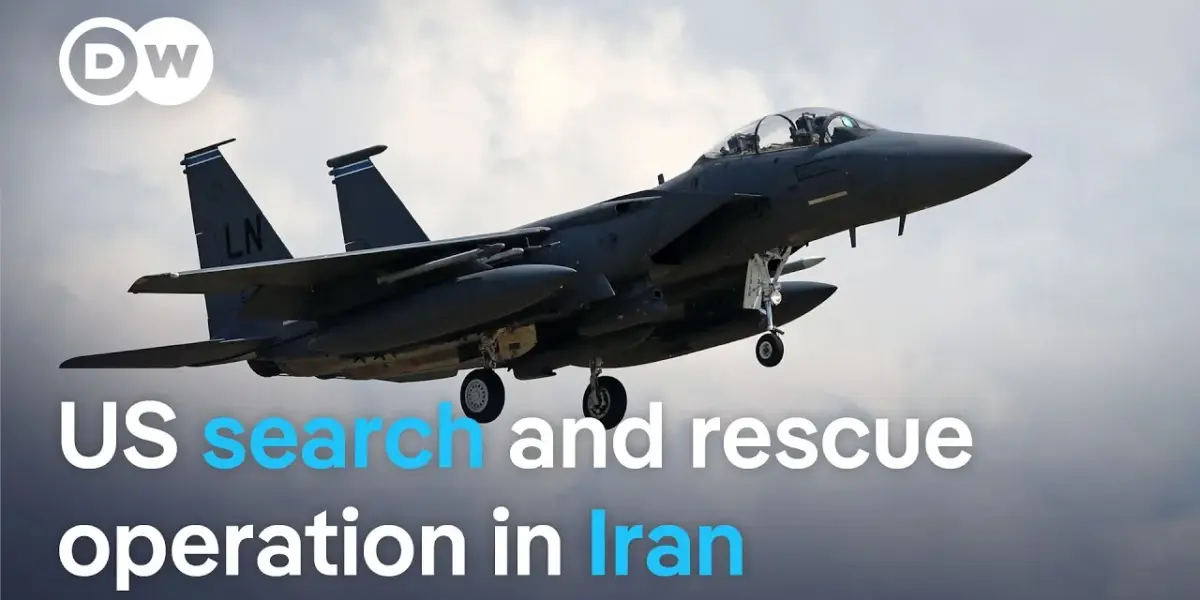
In the wake of a US F-15 fighter jet being shot down over southern Iran, a frantic search for the pilot, who was initially missing, highlighted the critical and complex nature of US military search and rescue (SAR) operations. While the pilot was ultimately rescued, the incident underscores the rigorous training and advanced technology US forces employ when crew members eject over hostile territory. This process is designed to maximize survival chances and facilitate swift extractions, even in the face of significant danger.
Survival, Evasion, Resistance, and Escape (SERE) Training
Every American airman receives extensive SERE training before entering combat. This comprehensive program teaches vital skills for survival, evasion, resistance, and escape. “Every American airman is given what’s called SER training,” explained John Feelely, a former American diplomat and Marine Corps helicopter pilot. “It is a full course of training that is given prior to ever going into combat. You can’t go into combat without it.” This training ensures that downed aircrew are prepared to survive and evade capture, increasing their chances of a successful rescue.
The Technology Behind Rescue Operations
When a rescue mission is initiated, technology plays a crucial role. A dedicated command center, often operated by the Joint Rescue Personnel Command, gathers vast amounts of intelligence. “There will be satellite imagery. There will be tomography. There will be all kinds of information brought together in a command center,” Feelely noted. This information is vital for determining the location of the downed crew member and planning the best approach for extraction. The command center, potentially located on a ship or at a naval station, directs the rescue efforts.
Deploying the Rescue Team
The composition of the rescue team depends heavily on the specific environment and intelligence. If the terrain is accessible by air, helicopters may be used for extraction. In other situations, a ground team might be deployed. “The team that will go in will be situationally dependent,” Feelely said. “If they find out that the terrain is accessible by air, they may seek to do a helicopter extraction.” The decision to send a team is based on the likelihood of locating the missing crew member and the assessed risks.
Who are the Rescuers?
Rescuers are highly specialized military personnel, often referred to as Pararescue Jumpers (PJs) in the Air Force. These individuals are trained for extreme conditions and complex extractions. In naval operations, divers and specialized helicopter crews with advanced equipment like sonar and radar are deployed. “These teams have literally 10,000 hours of practice,” Feelely stated, emphasizing their high level of capability. These teams are equipped to operate in various environments, including Arctic and desert conditions, and possess specialized communication gear.
The “Swiss Army Knives” of the Air Force: PJs
Pararescue Jumpers are known for their versatility, earning them the nickname “Swiss Army knives of the US Air Force.” Their training goes beyond parachute jumping. PJs are skilled in camouflage and survival in diverse geographical settings. They are also equipped with high-powered communication systems, allowing for near-constant contact with command authorities and support units. “They don’t just get dropped in there,” Feelely clarified. “There will always be a communications tether.” This ensures that PJs are not isolated and have immediate access to support and potential evacuation.
Decentralized Command and High Stakes
Rescue missions in hostile territory are among the most uncertain operations any military can undertake. There is always a risk of error, and command authority is often decentralized. This allows local commanders significant leeway to make critical decisions on the ground. “If for example, a pilot spies what they think might be the airmen trying to evade on the ground, there is a significant amount of leeway given to rescue that American fighting man or woman,” Feelely explained. This flexibility is crucial for reacting quickly to developing situations and maximizing the chances of a successful recovery.
The Future of Rescue Operations
The skills and training developed for these high-risk SAR missions are constantly being refined. As technology advances and geopolitical situations evolve, US forces will continue to adapt their strategies. The focus remains on ensuring that airmen who find themselves in distress over enemy territory have the best possible chance of survival and recovery. Future operations will likely see even greater integration of advanced technology and specialized personnel to meet these challenges.
Source: How do US forces train for search and rescue operations to find missing crew members? | DW News (YouTube)

Related Articles


Trump Threatens Iran: “Open Strait or Live in Hell”
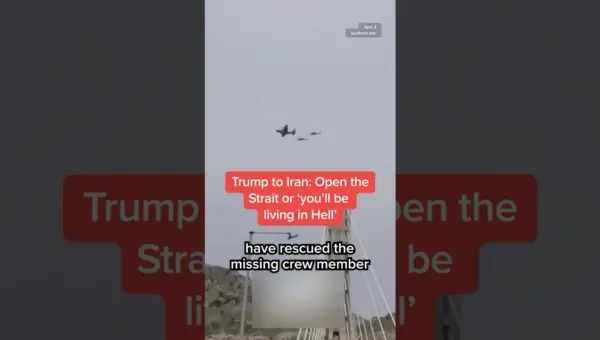
President Trump issued a severe warning to Iran, threatening "hell" if the Strait of Hormuz is not reopened, while U.S. forces successfully rescued a downed airman. Experts suggest potential escalation and regional realignments are unfolding.

Trump Threatens Iran Over Strait, Claims Airman Rescued
President Trump issued a stark warning to Iran on Tuesday, threatening severe consequences if the Strait of Hormuz is not kept open. He also announced the successful rescue of a U.S. airman whose fighter jet crashed in Iran. The dual announcements highlight ongoing tensions in the region and U.S. military operations.


US Rescues Airman, Uniting Congress in Rare Bipartisan Praise
Washington reacted with widespread relief and bipartisan praise following the successful rescue of a U.S. service member held in Iran. The operation united lawmakers, demonstrating American resolve and capability in a complex geopolitical landscape. This event highlights the enduring importance of military power and its impact on regional dynamics.