Trump’s Conflicting Iran War Messages Sow Confusion
President Trump's inconsistent messages on the Iran conflict are causing widespread confusion among the American public, allies, and global markets. A recent poll indicates that most Americans believe he lacks a clear strategy, a sentiment fueled by contradictory statements about the war's progress, goals, and the critical Strait of Hormuz.

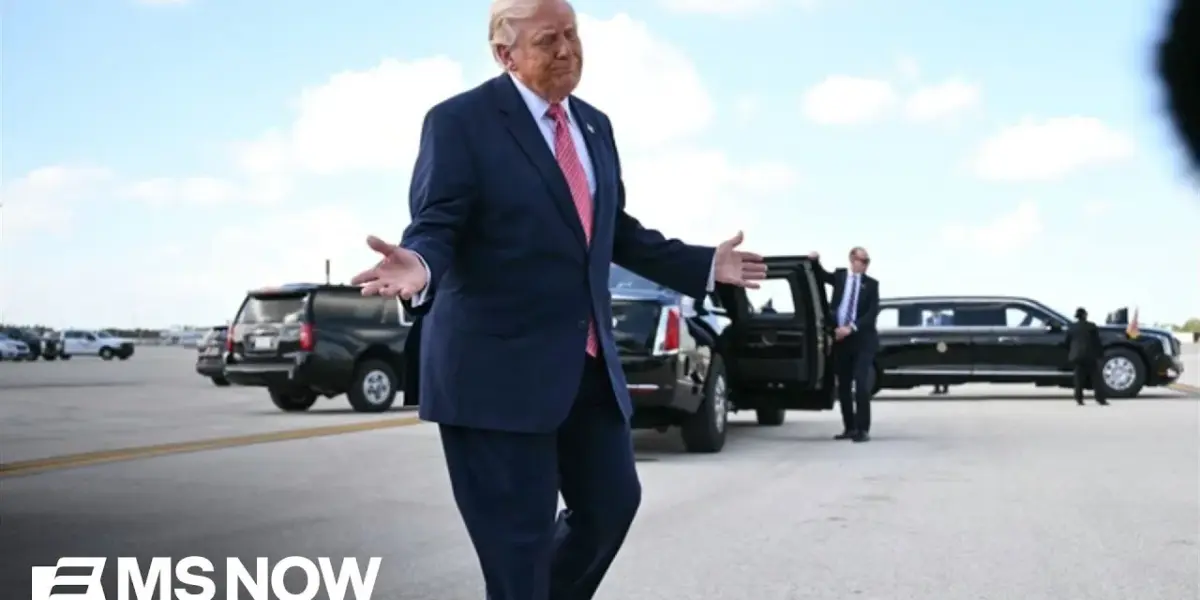
Trump’s Conflicting Iran War Messages Sow Confusion
President Donald Trump is sending mixed signals about the ongoing conflict with Iran, leaving Americans, allies, and financial markets confused about the goals and strategy. A recent poll shows a significant majority of Americans believe Trump lacks a clear plan for the war, a sentiment echoed by international leaders and even some within his own administration.
A History of War Messaging
Throughout history, presidents have faced the challenge of convincing the public about the necessity of military action. Decades ago, the Pentagon Papers revealed that the U.S. government misled citizens about the Vietnam War, which was not even officially called a war but a “police action.” Later, President Bill Clinton justified military intervention in Kosovo by weighing the dangers of acting against the dangers of not acting. In 2003, Secretary of State Colin Powell presented claims of weapons of mass destruction to justify the invasion of Iraq, a claim later found to be untrue. While these past justifications may have worked for some, President Trump’s current approach is being called the most convoluted in history.
Polls Show Public Doubt
A CNN-SSRS poll conducted before Trump’s recent national address revealed that 67% of Americans felt he did not have a clear plan for the Iran conflict. This number rose by seven points since the initial strikes on February 28th. This public perception is understandable, as Trump’s statements and actions appear contradictory.
Contradictory Statements Emerge
Trump has offered conflicting views on the war’s progress and future. He has assured the stock market that the conflict will end soon and shipping will resume through the Strait of Hormuz. However, he also seems unwilling to signal weakness to Iran, which remains defiant. This inconsistency makes it difficult for international bodies, economic markets, and the public to rely on his word.
His national address was filled with contradictions. He declared the war won but also stated the U.S. needs to “finish the job.” He initially called the strikes “major combat operations” but later described them as a “little excursion,” a term he has used multiple times. While signaling a winding down of the war, more troops are being sent to the Middle East.
Furthermore, Trump claimed Iran’s nuclear threat was immediate, yet also stated that Iran’s nuclear facilities were “obliterated” last June. He denied the goal was regime change, despite an early video encouraging Iranians to overthrow their government. His assertion of complete control over Iranian airspace was quickly followed by reports of two U.S. jets being shot down by Iranian forces, with one airman still missing.
“When you want to be serious, you don’t say every day the opposite of what you said the day before.” – French President Emmanuel Macron
The Strait of Hormuz Conundrum
The situation regarding the Strait of Hormuz, a crucial global shipping route, has been particularly confusing. Trump has issued deadlines for a deal or for the strait to reopen, threatening severe consequences. Yet, he has also suggested the strait will simply “open up naturally” once the conflict is over, and that other countries can manage their own shipping needs.
This improvisational approach extends to his communication about the strait. He has made statements like, “Today is a big day where we’re pounding a certain area that has very much to do with the strait. And I think we’ll get it going very soon. It won’t be, I don’t believe too long.” This contrasts with other remarks suggesting a more passive or inevitable opening of the strait.
Advisors and Markets React
Even Trump’s advisors are reportedly perplexed by his approach. Some told Axios that the president is improvising rather than following a set plan, preferring to keep options open and “spitball with different audiences.” A senior advisor noted, “Nobody knows in the end what he’s really thinking.” Others indicated that a clear plan has been absent since the first week of the conflict.
This unpredictability has destabilized financial markets. When Trump announced his address, markets hoped for de-escalation, causing oil prices to drop. However, his speech offered no clear exit strategy, leading to a stock sell-off and a surge in oil prices. Allies are also confused, with French President Emmanuel Macron criticizing the constant flip-flopping in statements.
Concerns Over NATO and Strategy
Adding to the confusion, Trump has renewed threats to leave NATO, a move that would alienate key military allies. The lack of a clear plan for such a drastic action raises further concerns. While some hawkish allies suggest unpredictability is a deliberate strategy, others argue Trump may not even know his next move.
Reports suggest that the president receives war briefings as a “wartime highlight reel,” focusing on major strikes rather than strategic planning. This communication style, while providing plenty of updates, lacks a coherent plan. Instead of presenting a clear case for the war, Trump’s approach appears to be a scattershot attempt to see what resonates, with little success so far.
Source: Trump delivers contradictory messages on the Iran war (YouTube)

Related Articles
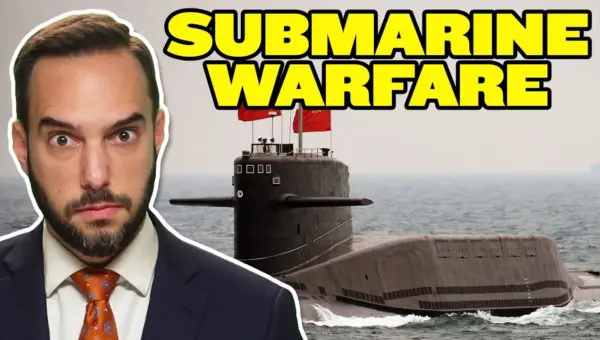
China Maps Seabed, Eyes Hawaii in Naval Power Play
China's extensive seabed mapping in the Pacific, particularly around strategic areas like Guam and Hawaii, is raising concerns about its preparation for submarine warfare. This effort, often disguised as scientific research, aims to enhance China's naval capabilities and challenge US dominance in the region.
Russia Faces Last-Ditch Offensive, Internal Cracks
Russia may be launching a final major offensive in Ukraine as it faces mounting internal pressures. Analysts suggest this push is a last resort before significant manpower and financial issues arise. Meanwhile, increasing domestic information control and official criticism highlight growing cracks within the Russian establishment.
Trump Threatens Iran, Shaking Global Stability
Former President Trump's aggressive Easter Sunday warning to Iran has ignited global concerns, highlighting a volatile intersection of politics, religion, and foreign policy. The analysis explores the motivations behind such rhetoric, the deep divisions within American society, and the potential for severe economic and geopolitical repercussions worldwide.