Space Race Reignites: Artemis II Fuels Global Ambition
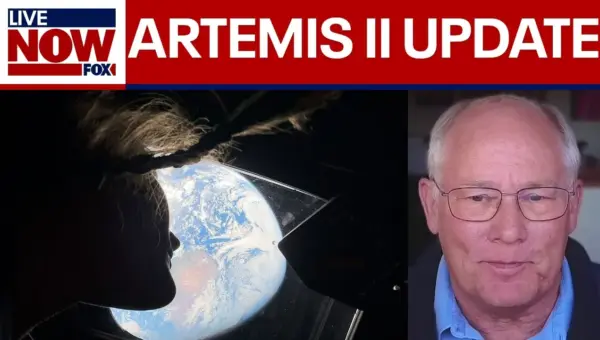
Astronaut Barry "Butch" Wilmore shares insights from his space missions as the Artemis II crew embarks on a historic lunar journey. The mission reignites global interest in space exploration, highlighting both the thrill and the challenges of venturing beyond Earth.


Space Race Reignites: Artemis II Fuels Global Ambition
The recent launch of the Artemis II mission marks a significant moment in humanity’s return to space, reigniting global interest and competition in lunar exploration. This mission, carrying four astronauts on a journey around the Moon, builds on decades of space endeavors and highlights the evolving international dynamics of space exploration. The excitement surrounding the launch is palpable, reminding many of the historical significance of such journeys.
Astronaut’s Perspective: A Thrilling, Nerve-Wracking Endeavor
Astronaut Barry “Butch” Wilmore, a veteran of space missions including a lengthy stay on the Boeing Starliner, shared his unique insights into the Artemis II launch. Wilmore, who recently released a book titled “Stuck in Space” detailing his experiences as a U.S. Navy Captain and his time in orbit, offered a firsthand account of the emotions involved. He described the launch itself as “thrilling,” especially the powerful roar of the solid rocket boosters, which create a palpable physical sensation even from a distance.
Wilmore noted that watching friends embark on such missions can be even more nerve-wracking than going oneself. He emphasized the profound perspective gained by astronauts, seeing the Earth shrink and the Moon grow larger, a view shared by only a select two dozen individuals in human history. This shared experience, he believes, underscores the universal nature of space exploration, often described as being “for all mankind.” The sheer power of the launch, with millions of pounds of thrust, is an awe-inspiring spectacle that draws thousands to witness it in person.
The Journey and the Silence: Navigating the Unknown
The Artemis II crew is currently halfway to the Moon, a journey of immense scale and complexity. A particularly unique challenge they will face is a period of approximately 50 minutes of lost communication with NASA as they orbit the far side of the Moon. Wilmore explained that this communication blackout occurs because there are no satellites positioned to relay signals from the Moon’s backside to Earth.
Despite the lack of communication, Wilmore expressed confidence in the astronauts’ extensive training and readiness. He suggested that, during this period of silence, every camera on board will likely be active, capturing the historic views of the lunar landscape. This moment highlights the inherent risks and the pioneering spirit that defines human spaceflight.
Historical Context: The Legacy of Lunar Exploration
The Artemis program is not just a modern endeavor; it is deeply rooted in the history of space exploration, particularly the Apollo missions of the 1960s and 1970s. Those missions first landed humans on the Moon, establishing a precedent for lunar exploration. The current Artemis missions aim to build upon that legacy, with the ultimate goal of establishing a sustainable human presence on the Moon and preparing for future missions to Mars.
The competition to reach the Moon has historical parallels. The original space race between the United States and the Soviet Union was driven by geopolitical rivalries and technological ambitions. Today, while the players and motivations may differ, a renewed sense of competition and collaboration is emerging among various nations and private entities seeking to advance their capabilities in space.
Global Impact: A New Era of Space Ambition
The Artemis II mission, and the broader Artemis program, has significant geopolitical and economic implications. It signals a renewed commitment by the United States to lead in space exploration, fostering international partnerships while also asserting its technological prowess. Countries like Canada and Japan are key partners in the Artemis Accords, a set of principles guiding space exploration.
However, the increasing involvement of private companies like SpaceX and Blue Origin, alongside national space agencies, is reshaping the landscape. This commercialization of space could accelerate innovation and reduce costs, but it also raises questions about resource allocation, regulation, and the potential for new rivalries. The pursuit of lunar resources, such as water ice, could become a major driver of future international cooperation or conflict.
Future Scenarios: Competition and Collaboration
Several future scenarios could unfold from the current momentum in space exploration. One possibility is increased international collaboration, with nations pooling resources and expertise to achieve common goals, similar to the International Space Station model. This approach could foster stability and shared scientific advancement.
Another scenario involves heightened competition, where nations and private entities race to establish dominance, claim resources, and achieve technological firsts. This could lead to rapid innovation but also increased geopolitical tensions and potential disputes over space governance. The choices made in the coming years regarding international treaties, resource management, and the peaceful use of space will be crucial in shaping the future of humanity’s presence beyond Earth.
Source: Starliner astronaut Butch Wilmore: Artemis II launch ‘thrilling’ | NewsNation Live (YouTube)

Related Articles

Artemis II Astronauts Reach Record Distance From Earth
The Artemis II crew has set a new distance record from Earth, surpassing Apollo 13 as they journey around the Moon. This mission is a critical step in NASA's plan to return humans to the lunar surface and develop resources. Experts see it as a pivotal moment, shifting focus from pure exploration to long-term development and paving the way for future Mars missions.


Artemis 2 Crew Sees Unseen Moon Side for First Time
Astronauts aboard the Artemis 2 spacecraft have captured the first human views of the Moon's far side, a region largely unseen by human eyes. This historic moment offers unparalleled detail and perspective, highlighting the unique capabilities of human observation in space exploration. The mission progresses towards its April 10th splashdown, marking a significant step in NASA's lunar ambitions.


China Maps Seabed, Eyes Hawaii in Naval Power Play
China's extensive seabed mapping in the Pacific, particularly around strategic areas like Guam and Hawaii, is raising concerns about its preparation for submarine warfare. This effort, often disguised as scientific research, aims to enhance China's naval capabilities and challenge US dominance in the region.