Americans Rally Behind Moon Mission, Seek Space Supremacy
Americans are expressing strong support for NASA's Artemis II moon mission, seeing it as a symbol of progress and national pride. The excitement echoes past space race achievements, with many looking forward to new discoveries and even future Mars missions.


Americans Rally Behind Moon Mission, Seek Space Supremacy
NASA’s Artemis II mission, which will send astronauts around the moon, has sparked excitement among everyday Americans. People interviewed on the National Mall in Washington D.C. expressed strong support for the mission and a desire for continued space exploration. This renewed interest echoes the national pride and wonder that defined the original space race.
A New Era of Exploration Dawns
When asked about Artemis II, the response was overwhelmingly positive. “I think it’s great,” said one person, highlighting the excitement for children who see space as a “whole new world.” This sentiment was common, with many believing the mission is a crucial next step. “I think the next next step they ought to take is landing on the moon,” one individual stated, looking forward to future missions to Mars, possibly with help from private companies like SpaceX.
The drive for discovery is a key motivator for many. “I like how we are exploring the moon and just doing what we need to do to just find out new stuff,” shared another participant. The anticipation for what NASA will discover is palpable. “I’m really excited to hear about everything they’re doing,” they added, reflecting a broad public interest in the mission’s outcomes.
Nostalgia and National Pride Fuel Enthusiasm
For some, Artemis II brings back fond memories of a different era. “I hope it’s the start of a new space race,” one person remarked, recalling the televised space shuttle launches of the 1980s and 1990s. These events were national spectacles, capturing the attention of millions. “It was exciting to see that we’re kind of back to that,” they noted, suggesting a desire for a similar unifying national focus.
The historical significance of moon landings was also a recurring theme. “My grandparents and millions and millions of Americans, I think something like 80% of Americans watched the original moon landing on TV,” one person observed. The idea of a new generation experiencing such a monumental event is seen as deeply meaningful. It marks “how much we’ve advanced since the first initial moon landing,” they concluded, emphasizing progress and a sense of generational continuity.
The Question of Extraterrestrial Life
Beyond the mission itself, the vastness of space naturally leads to questions about life beyond Earth. Opinions varied, but a sense of possibility permeated the discussions. “I feel like there’s at least something out there,” one person ventured, though they cautioned against expecting life to resemble human forms. They suggested that “microscopic little aliens” might be more likely, acknowledging the vast unknowns.
However, not everyone shared this view. One individual dismissed the fascination with aliens as a “red herring.” They argued that “you only have one planet” and that focus should remain on terrestrial issues. This perspective highlights a pragmatic concern about resource allocation and priorities, suggesting that solving Earth’s problems should come before searching for extraterrestrial life.
Others remained open-minded. “I don’t think there’s a reason to think that there’s not,” one person stated, pointing to the discovery of water in space as evidence for potential habitability. The sheer size of the universe makes ruling out life elsewhere seem unlikely to many.
Space as a Strategic Frontier
The conversation also turned to the geopolitical implications of space exploration. When asked about space as a vantage point over adversaries like China, the responses revealed concerns about national security and economic competition. “We have to have everything over China and definitely space,” one person asserted, adding a strong opinion about foreign land ownership in America.
This sentiment was echoed by others who see space as a critical domain for military and economic advantage. The establishment of the Space Force was seen by some as a valid response to these challenges. “I think we should put a lot of our military resources towards satellite defense,” one individual suggested. They believed that outspending rivals in space infrastructure, even through developing new technologies, is key to maintaining superiority.
The idea that whoever establishes a presence in space, whether temporary or permanent, gains a strategic advantage is a significant takeaway. This advantage extends beyond science to “probably also unfortunately in defense,” indicating a recognition of space as a new frontier for global power dynamics.
Why This Matters
The public’s engagement with the Artemis II mission reveals more than just excitement for space travel. It shows a deep-seated desire for national achievement, a connection to historical triumphs, and a forward-looking optimism about human potential. The varying opinions on extraterrestrial life and geopolitical competition in space highlight the complex ways humanity views its place in the universe and its role on the global stage.
Implications and Future Outlook
The enthusiasm for Artemis II could signal a renewed public appetite for ambitious space programs. This could translate into increased support for NASA funding and private space ventures. The potential for a “new space race” suggests a desire for competition that drives innovation and inspires future generations, much like the original race to the moon.
However, the discussion also points to ongoing debates about national priorities. The tension between investing in space exploration and addressing Earth-bound problems will likely continue. Furthermore, the growing importance of space in geopolitical strategy suggests that future space endeavors will be viewed through a security lens, potentially leading to increased international cooperation or competition.
Historical Context
The Artemis program builds upon decades of space exploration, from the Mercury and Gemini missions to the Apollo moon landings and the Space Shuttle era. The original space race between the United States and the Soviet Union was driven by Cold War competition but resulted in incredible scientific and technological advancements. Artemis aims to return humans to the moon sustainably, paving the way for eventual missions to Mars, continuing this legacy of human exploration and discovery.
Source: Citizens Weigh In: Artemis II Kicks Off Trip To The Moon (YouTube)

Related Articles
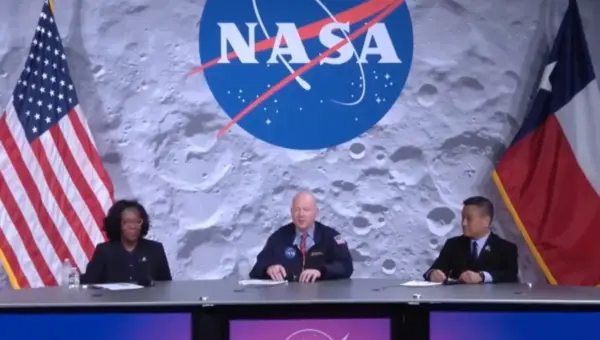
Artemis II Blasts Off: Humanity’s Lunar Leap Renewed
Humanity is returning to the Moon with the Artemis II mission, marking the first crewed journey beyond Earth orbit in over 50 years. The mission aims to set a new distance record and is the first step in NASA's plan for a sustained lunar presence.


Youthful Space Expert Captures Nation’s Attention
A young space enthusiast has captured national attention with his clear explanations of lunar travel. His insights, praised by astronauts, highlight a growing public interest in space exploration. This viral moment could inspire the next generation of scientists.

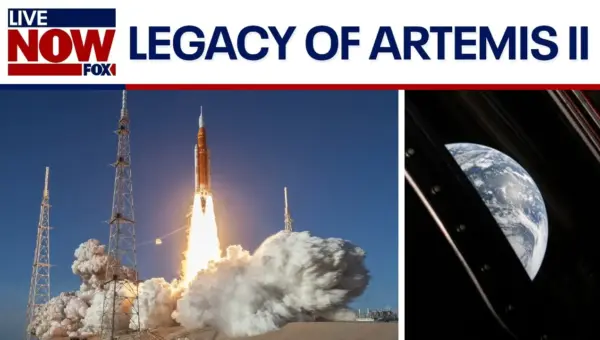
Artemis II Astronauts Study Radiation’s Effects on Human Body
NASA's Artemis II mission is not only sending astronauts on a lunar flyby but also conducting vital research into the effects of deep space radiation on the human body. Using biological "avatars" derived from astronaut stem cells, scientists aim to gather crucial data for long-duration missions, like those planned for Mars. Stunning images from the mission also offer a new perspective on Earth and inspire future generations in STEM.