US, Israel Accused of War Crimes in Iran Conflict
International law experts are raising alarms over U.S. and Israeli actions in Iran, accusing them of violating international law and potentially committing war crimes. The conflict has seen strikes on civilian infrastructure, drawing condemnation and warnings of wider regional war.

US Strikes Iran, Sparks International Law Debate
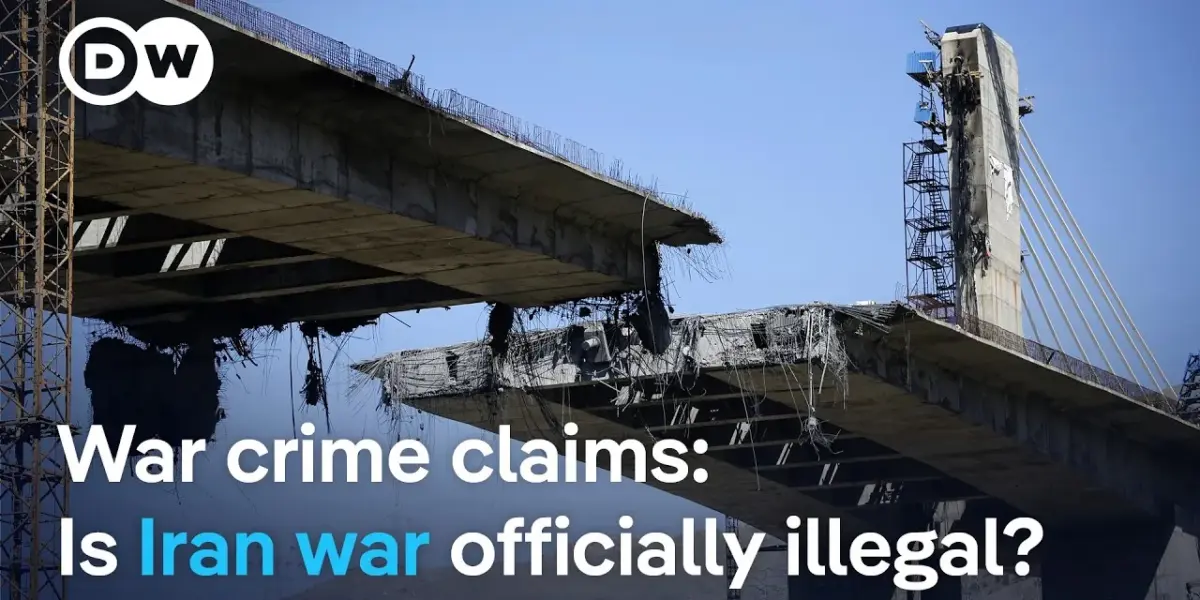
The United States has escalated its military actions in Iran, drawing sharp criticism and accusations of violating international law. President Donald Trump has threatened further strikes, specifically targeting Iran’s civilian infrastructure, including bridges and power plants. These actions follow recent U.S. strikes that damaged a major bridge and two large steel plants in Iran.
Iran has vowed retaliation, threatening to target energy and water facilities in the Gulf region. The conflict has raised alarms at the United Nations, which warns of a potential wider regional war.
Experts Condemn Attacks on Civilian Infrastructure
Dozens of international law scholars have voiced serious concerns, publishing an open letter stating that the U.S. and Israeli attacks breach international law. They argue these actions violate the United Nations Charter, which prohibits the use of force except in self-defense or when authorized by the UN Security Council.
The scholars highlighted a devastating strike on a primary school in Minab, which reportedly killed nearly 170 children and staff. Evidence suggests this explosion was caused by a U.S. airstrike. While the Trump administration claims an investigation is ongoing, legal experts are alarmed by the rhetoric and actions.
“The initiation of the campaign was a clear violation of the United Nations Charter and the conduct of United States forces since, as well as statements made by senior government officials raised serious concerns about violations of international human rights law and international humanitarian law, including potential war crimes.”
Defining Imminent Threat in Wartime
Una Hatheraway, a professor of international law at Yale Law School and a signatory to the letter, explained the legal complexities. She noted that the UN Charter typically requires an armed attack or a clear, imminent threat before military force can be used for self-defense.
“The UN Charter actually doesn’t use the word imminent threat. It only says that a state has right of self-defense if it’s subject to an armed attack,” Hatheraway stated. “But over time that has come to be understood. Okay, even if you haven’t been attacked yet, if attack is about to happen, the tanks are on the border, they’re about to come in, it would be absurd to say that you couldn’t respond.”
However, she cautioned that this does not justify preemptive or preventive uses of force. Neither the U.S. nor Israel has provided sufficient justification for launching the war at this specific moment, according to Hatheraway. She dismissed President Trump’s justification of “47 years of imminence” as not meeting the legal standard.
Proving War Crimes: Intent and Evidence
Proving an act as a war crime is challenging, requiring not only evidence of an attack on civilians or civilian objects but also proof of intent. Scholars must show that the attackers knew the target was civilian or acted recklessly, having reason to know. Hatheraway pointed to the school bombing as particularly troubling.
“Public evidence was widely available that that building was being used as a school for more than a decade,” she explained. “There was pattern of life… it seems that the very least they didn’t take the time and trouble to update the maps to ensure that the targets that they’re selecting were in fact lawful military targets.”
Hatheraway stressed the need for thorough investigations into strikes causing significant civilian casualties. She emphasized that the U.S. traditionally has a rigorous legal review process for target selection and investigates allegations of civilian casualties.
Disregard for International Law
The scholars expressed deep concern over President Trump’s apparent disregard for international law. His past statements, suggesting he doesn’t need international law when it becomes inconvenient, and similar comments from officials like Secretary of Defense Pete Hegsath, signal a potential shift away from established global norms.
“It’s not just that they’re interpreting the law in ways that we find implausible or that we disagree with. It’s that they seem to be prepared to throw the law out altogether,” Hatheraway said. “For a state like the United States that’s traditionally been a champion of the international system… for that very same country to be acting as if these rules don’t matter really opens the door to a downward slide globally in the abidance by international law.”
Escalation and Diplomatic Stalemate
Fawas Gurgis, a professor at the London School of Economics, described the situation as a strategic gamble by President Trump and Israeli Prime Minister Benjamin Netanyahu. They reportedly believe that destroying Iran’s state capabilities could force its leaders to surrender, a notion Gurgis calls “delusional.”
“What we are seeing now really is more basically the war has shifted from its initial military objectives into military and economic targets particularly against Iran and Iran is targeting its neighbors in the Gulf as well infrastructure,” Gurgis explained. He noted that there are currently no direct or indirect talks between Iran and the United States, as Iran refuses diplomatic engagement under current conditions.
Gurgis warned that the conflict is on an “escalation ladder,” with worse to come. He criticized the international community, particularly Europe, for not intervening effectively. “Where are the firefighters? Who’s going to really provide Iran with guarantees?” he asked, highlighting the lack of mediation in the crisis. The targeting of civilian infrastructure, he added, could create a significant economic shock to the global economy if the war continues.
What’s Next?
With escalating rhetoric and actions on both sides, and a clear diplomatic deadlock, the region remains on edge. The international community’s response and the potential for further de-escalation or escalation will be critical in the coming weeks. The adherence to, or disregard for, international law in this conflict will set a significant precedent for future global relations.
Source: Iran war: Did the US and Israel break international law? | DW News (YouTube)

Related Articles
US Warplanes Downed Over Iran; Rescue Underway
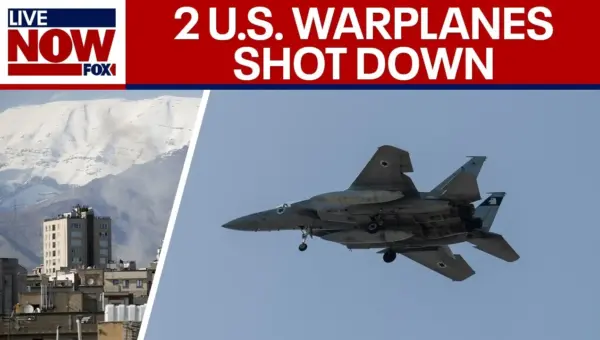
Two U.S. warplanes, an F-15 Eagle and an A-10 Warthog, have been shot down over Iran, triggering a high-stakes rescue mission. Military experts detailed the complex operation to save the downed aircrews amidst enemy threats. While one crew member has been recovered, hope remains high for the swift return of the second pilot.
Trump’s War Costs Soar as F-15 Downed Over Iran
An F-15 fighter jet was shot down over Iran, prompting a search for a missing crew member, while a second U.S. plane crashed and its pilot was rescued. The incidents contradict earlier U.S. intelligence claims about Iran's weak air defenses, as war costs are projected to exceed $1.5 trillion. Experts question the strategic planning and execution of the conflict initiated by President Trump.

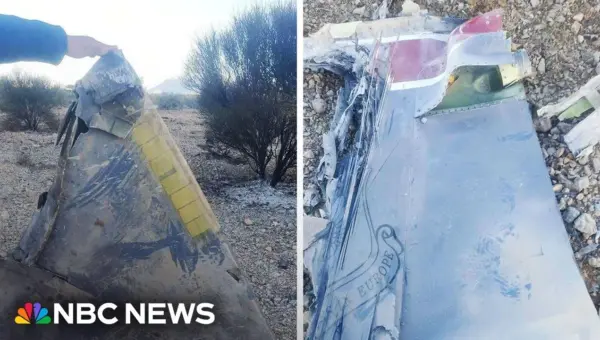
US Scrambles to Rescue Airman Shot Down Over Iran
The U.S. military is engaged in a critical search and rescue mission in Iran to find an airman whose F-15 jet was reportedly shot down. The operation faces significant challenges, including Iranian fire on U.S. aircraft and a bounty placed on the missing service member. The conflict is also contributing to rising oil prices and economic strain at home.