Trump’s Iran Claims Crumbled as Jets Fall from Sky
President Trump's claims about Iran's weakened air defenses were sharply contradicted when U.S. jets were shot down over Iranian territory and the Strait of Hormuz. This forced an emergency meeting, highlighting a dangerous gap between rhetoric and reality in a volatile region.


Trump’s Iran Claims Crumbled as Jets Fall from Sky
Tensions in the Middle East reached a critical point, forcing President Donald Trump to hold an emergency meeting with his top national security advisors. This urgent gathering followed a day of alarming events where U.S. military aircraft were shot down over Iranian territory and near the Strait of Hormuz. The situation quickly escalated, highlighting a stark contrast between the President’s public statements and the reality on the ground.
A Day of Crisis Unfolds
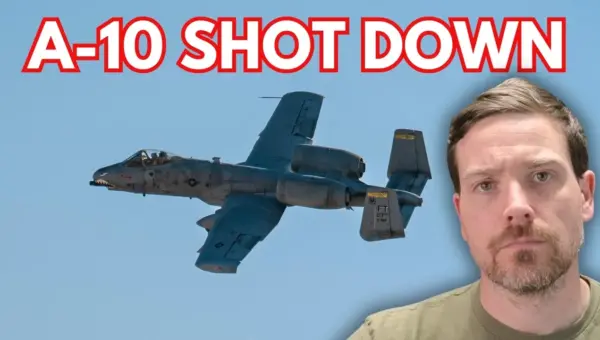
The morning began with the downing of an F-15E fighter jet over Iran, requiring a military rescue operation for two service members. This incident alone would have been cause for concern. However, the situation worsened within hours. Reports confirmed that another U.S. military plane, an A-10 Thunderbolt, crashed into the Persian Gulf. This happened while the aircraft was flying over the crucial Strait of Hormuz.
Iran’s Air Defenses Prove Potent
The A-10’s crash was attributed to Iran’s air defense systems actively targeting the aircraft. This development directly contradicted President Trump’s recent assertion that Iran’s defense capabilities had been completely destroyed. He had stated that Iran’s air defenses were “obliterated” and that the country had “no defense systems left.” The events of the day clearly showed this claim to be false.
Challenging the Narrative
If Iran’s air defense systems were indeed as ineffective as claimed, the Strait of Hormuz would likely be open for unimpeded passage. However, the fact that a U.S. aircraft was targeted and brought down over this vital waterway indicates that Iran’s defenses remain operational and capable of posing a significant threat. This discrepancy between the President’s words and the military realities raises serious questions about the information being presented and the effectiveness of U.S. policy in the region.
Why This Matters
The downing of military aircraft and the need for emergency meetings signal a dangerous escalation of conflict. When a nation’s leader publicly downplays the capabilities of an adversary, only for those capabilities to be demonstrated forcefully, it can create serious diplomatic and military challenges. It suggests a potential misreading of the situation, which could lead to flawed decision-making. Accurate intelligence and a clear understanding of an opponent’s strength are vital for de-escalation and avoiding further conflict.
Historical Context and Future Outlook
Tensions between the United States and Iran have a long and complex history. Since the 1979 Iranian Revolution, the two countries have often been at odds. Periods of heightened tension have frequently involved military posturing and proxy conflicts. The current situation echoes past moments where rhetoric has outpaced reality, potentially leading to miscalculation. For instance, during the Iran-Iraq War, the U.S. sometimes intervened in ways that heightened regional instability. Today, the strategic importance of the Strait of Hormuz, a chokepoint for global oil supplies, makes any conflict there particularly consequential. The future outlook depends heavily on how both sides respond to this latest incident. A de-escalation requires accurate assessments and careful diplomatic engagement, rather than relying on claims that are quickly disproven by events.
Implications and Trends
This incident underscores a dangerous trend: the potential disconnect between political rhetoric and military reality. In an era of instant information, leaders’ statements are constantly scrutinized. When those statements are contradicted by events, it can erode credibility both domestically and internationally. For the U.S. military, it means operating in an environment where air defenses are a real and present danger, despite assurances to the contrary. This could impact future operational planning and the perceived strength of U.S. military dominance in the region. The ability of Iran to target and bring down advanced U.S. aircraft suggests that Iran’s military modernization, particularly in air defense, should not be underestimated.
The events also highlight the ongoing strategic importance of the Strait of Hormuz. Any disruption here has immediate global economic consequences. This makes the area a constant flashpoint. The administration’s approach will be closely watched. Will it lead to a more cautious, fact-based strategy, or will it result in further aggressive actions based on potentially flawed assumptions? The coming days and weeks will reveal the true direction of U.S. policy towards Iran.
Source: BREAKING: Trump Calls Emergency Meeting After Iran Strikes Back #politics #fyp #new (YouTube)

Related Articles


Trump’s Base Shrinks: A Deep Dive Into Shifting Support
While Donald Trump boasts 100% approval within his MAGA base, polls indicate this group is actually shrinking. This decline in self-identified MAGA supporters suggests a potential fracturing of his core base, raising questions about his broader electoral appeal.

Iran Escalates: Jets Downed, Peace Talks Collapse
Two US jets were shot down by Iran as peace talks collapsed, pushing the conflict into a dangerous new phase. The loss of aircraft and failure of diplomacy signal a potential shift in military strategy, with harsher actions possibly on the horizon.


Iran’s Leaders Seek Leverage, Ignore U.S. for Decades
For 47 years, Iran's leadership has harbored a deep-seated animosity towards the United States, seeking to obliterate it and capture American personnel for leverage. This long-standing hostility, often ignored, is now being revealed through their actions and persistent agenda.