Earth’s Planetary Status Questioned, Figure-8 Orbits Debunked
Exploring Earth's planetary status, the impossibility of figure-8 orbits, the ongoing debate about dark matter's composition, and the future of human spaceflight.

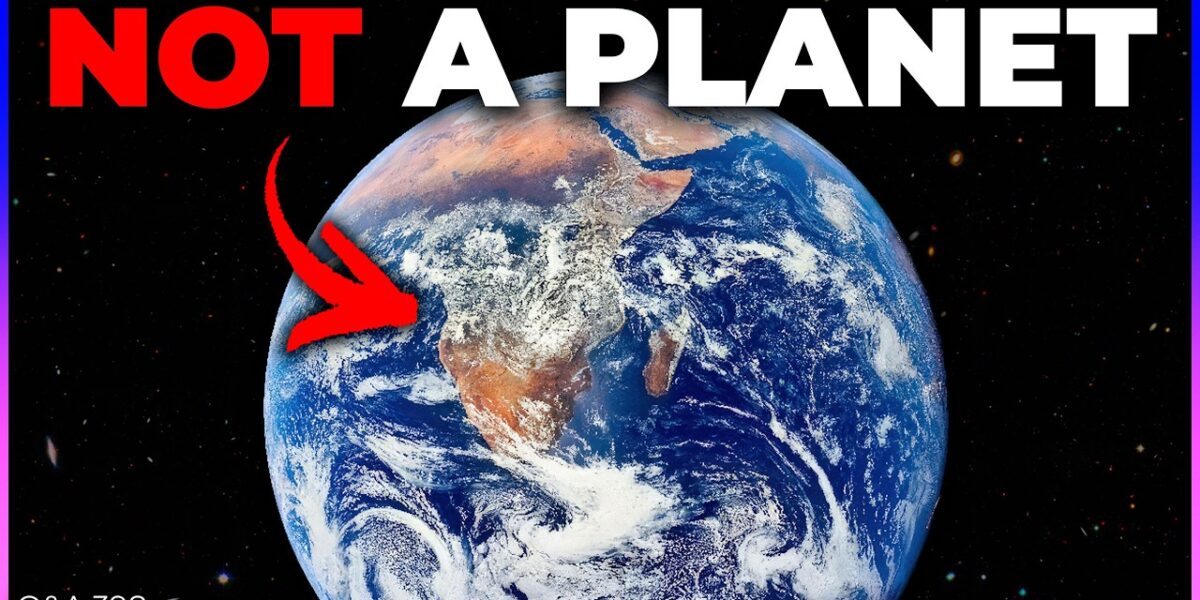
Earth’s Planetary Status: A Matter of Definition
The familiar definition of a planet, as established by the International Astronomical Union (IAU) in 2006, aims to classify celestial bodies within our solar system. This definition has three key criteria: it must orbit the Sun, possess sufficient mass for its self-gravity to overcome rigid body forces so that it assumes a hydrostatic equilibrium (nearly round) shape, and have cleared the neighborhood around its orbit.
This last criterion famously led to Pluto’s reclassification as a dwarf planet, sparking considerable debate. However, the question arises: could Earth itself be considered not a planet under this definition, given the vast number of near-Earth asteroids?
The argument posits that with over 37,000 known near-Earth asteroids, many of which cross Earth’s orbital path, Earth has not entirely ‘cleared its orbit.’ While this is a thought-provoking point, it overlooks the sheer dominance of Earth’s mass within its orbital zone. To put it into perspective, the total mass of all asteroids with the potential to cross Earth’s orbit is a mere fraction of the Moon’s mass. Even if one were to coalesce these asteroids into a single object, it would at best form a mountain-sized body, not something comparable to Earth’s colossal mass of approximately 6 x 10^24 kilograms.
In contrast, Pluto resides in the Kuiper Belt, a region teeming with other celestial bodies of comparable size, such as Eris, Haumea, and Makemake. Pluto is just one component among many, lacking the gravitational dominance that Earth exhibits. While the IAU definition has its critics, particularly regarding Pluto’s demotion, the distinction between Earth and objects like Pluto lies in their orbital dominance, a factor that firmly places Earth within the planetary category.
The Elusive Figure-8 Orbit in Binary Star Systems
The allure of exotic orbits, particularly in science fiction, often sparks curiosity about what is physically possible in the cosmos. One such intriguing question concerns the possibility of a planet executing a figure-8 orbit around two stars in a binary system. While the image of such a celestial dance is captivating, the reality of orbital mechanics presents significant challenges.
Binary star systems can indeed host planets, but not typically in the elaborate figure-8 configuration around both stars. There are two primary stable scenarios for planetary orbits in binary systems. The first occurs when the two stars are relatively close to each other.
In this case, a planet can orbit their common center of mass, provided it is sufficiently distant – roughly two to four times the separation between the stars. From the planet’s perspective, the two stars appear as a single, albeit massive, gravitational source. This allows for stable orbits, much like planets orbiting a single star.
The second scenario involves binary stars that are very far apart. Here, planets can orbit one of the stars stably, without being significantly perturbed by the other star. For instance, the stars in Alpha Centauri are about 11 astronomical units (AU) apart.
Beyond approximately 5 AU, planets can maintain stable orbits around one of the stars. The figure-8 orbit, however, is inherently unstable.
The gravitational tugs from the stars, as they orbit each other and the planet attempts its complex path, would lead to minute directional changes. Over time, these perturbations would inevitably result in the planet either being ejected from the system or crashing into one of the stars, making the figure-8 trajectory an astronomical impossibility for stable planetary motion.
Dark Matter: The Enigma of Primordial Black Holes
The nature of dark matter, the invisible substance that constitutes about 27% of the universe’s mass-energy, remains one of the most profound mysteries in astrophysics. While its existence is inferred from its gravitational effects on visible matter, its composition is unknown. Several hypotheses attempt to explain this cosmic enigma.
One possibility is that dark matter consists of undiscovered massive particles that do not interact with light. Another theory suggests that our understanding of gravity may be incomplete, with gravity behaving differently at galactic scales. A third, persistent idea is that dark matter could be composed of black holes.
The notion that black holes could be dark matter is compelling because black holes are, by definition, invisible and possess mass. However, for black holes to account for all dark matter, their population would need to be immense, far exceeding the number of black holes formed from the death of stars. This would necessitate a different formation mechanism, possibly occurring in the early universe.
The concept of ‘primordial black holes’ suggests that these objects could have formed from extreme density fluctuations shortly after the Big Bang. These primordial black holes could exist in a wide range of sizes. Scientists have been able to rule out certain mass ranges for these hypothetical black holes.
For example, if there were numerous stellar-mass black holes or those with masses around a thousand times that of the Sun, we would observe gravitational microlensing events – the flickering of distant stars as these black holes pass in front of them. The absence of such widespread microlensing suggests that black holes, if they are indeed dark matter, are likely not within these mass ranges.
They could be much smaller, perhaps asteroid-mass, or much larger, but the intermediate masses appear to be largely excluded by current observations. The primordial black hole hypothesis for dark matter continues to be an active area of research, as it has yet to be definitively disproven.
Observing Planetary Formation in Real-Time
The process of planet formation, once a theoretical construct, is now being observed directly thanks to advancements in telescope technology. While a planet’s core isn’t a direct remnant of a star’s explosion, it is indeed composed of heavy elements forged within stars through nucleosynthesis and later incorporated into protoplanetary disks. These disks, rich in gas and dust, are the birthplaces of planets.
Historically, the dense gas and dust shrouding young star systems obscured our view of planet formation. However, infrared telescopes, capable of penetrating dust clouds, and radio telescopes like the Atacama Large Millimeter/submillimeter Array (ALMA), which observe at microwave wavelengths, have revolutionized our ability to witness these cosmic nurseries. We can now observe protoplanetary systems that are mere hundreds of thousands to a few million years old.
These observations reveal the intricate rings of gas and dust left over from stellar formation, and crucially, the nascent planets forming within them. From the initial clumping of dust particles to the formation of fully-fledged planets and the clearing of residual material by stellar winds, astronomers have captured nearly every stage of this process across dozens, if not hundreds, of protoplanetary systems. This ongoing observational revolution allows us to study the diverse mechanisms and timelines of planetary system evolution.
The Observable Universe and Our Place Within It
The concept of the observable universe, the sphere of cosmic information accessible to us from Earth, is uniform in all directions. This uniformity often leads to the question of whether we are at the center of the universe. To understand this, consider an analogy: being in a dense fog.
You can see a certain distance around you – your hands, the ground, nearby objects – until the fog obscures further vision. You are at the center of your own ‘observable fog-verse.’ However, this does not mean you are at the absolute center of all fog. Other individuals in the fog have their own observable fog-verses, which may overlap with yours if you are close enough.
Similarly, the observable universe is unique to each observer. An observer in Canada has a different observable universe than someone thousands of kilometers away. While we might see certain cosmic events slightly earlier or later than another observer due to the finite speed of light, the fundamental structure of what we observe remains consistent.
No matter where you are in the universe, if you could instantly teleport to a distant location, you would observe a similar cosmic landscape: stars, galaxies, and eventually, the cosmic microwave background radiation marking the edge of your observable universe. This principle, known as the cosmological principle, suggests that the universe is homogeneous and isotropic on large scales, meaning it looks the same everywhere and in every direction, thus refuting the idea of a special central location.
The Evolving Landscape of Independent Science Journalism
The media landscape is in constant flux, with traditional publishing models being disrupted by the digital age. In space journalism, while large outlets like Space.com and Ars Technica (owned by Future and Condé Nast, respectively) provide extensive coverage, the rise of independent voices is a significant trend. Many journalists are now leveraging platforms like Substack to publish newsletters, directly connecting with audiences and building communities around their work.
This shift reflects a broader transition in journalism. The era of stable newspaper revenues and established editorial gatekeepers is giving way to a model where individual journalists, by building trust and delivering consistent, high-quality reporting, can sustain themselves through direct audience support.
This offers a degree of freedom from traditional editorial constraints but also places the burden of business management and financial stability squarely on the shoulders of the individual. While entry-level positions in traditional journalism have become scarce, this new ecosystem allows passionate individuals to carve out careers by sharing their expertise and insights, fostering a more direct and potentially more resilient form of science communication.
The Future of Human Spaceflight: A Space Station Conundrum
The current state of human spaceflight hinges significantly on the availability of orbital platforms. The International Space Station (ISS), proof of international collaboration, is slated for de-orbiting around 2030. The potential withdrawal of Russia from the ISS further complicates its future.
Simultaneously, plans for private space stations, such as Axiom Space and Vast, are underway, but the high costs and risks associated with such ventures mean their successful realization is not guaranteed. This scenario raises a critical question: what happens if, by 2030, the ISS is gone and no viable private space stations are operational?
This leaves a potential void in human orbital presence, particularly for nations like the United States. While China’s Tiangong space station is operational and expanding its international partnerships, U.S. Law currently prohibits NASA from direct collaboration with Chinese space entities. This regulatory hurdle means that American astronauts may have no orbital destination.
The emergence of potential new players, such as India, with their own space station ambitions, could offer alternative avenues for international cooperation, potentially circumventing existing restrictions. However, without concrete plans and guaranteed funding for successor stations, humanity risks a future where access to low-Earth orbit for human exploration and scientific research becomes significantly limited, potentially leaving only one nation – China – as the primary provider of orbital spaceflight capabilities for international crews. This potential ‘spaceless’ future for some nations highlights the urgent need for strategic planning and investment in the next generation of space stations to ensure continued human presence and scientific advancement in orbit.
This article is based on a Q&A session covering various space and astronomy topics.
Source: Earth's Status, Black Hole Dark Matter, Figure-8 Orbits | Q&A 398 (YouTube)

Related Articles


Alien Life Could Travel Between Stars, Scientists Say
Scientists are exploring the scientific concept of panspermia, where life could travel between star systems on asteroids or comets. Evidence shows life's resilience and the movement of material between planets, making this a credible hypothesis. The search for extraterrestrial life is now focusing on when and where we might find it.

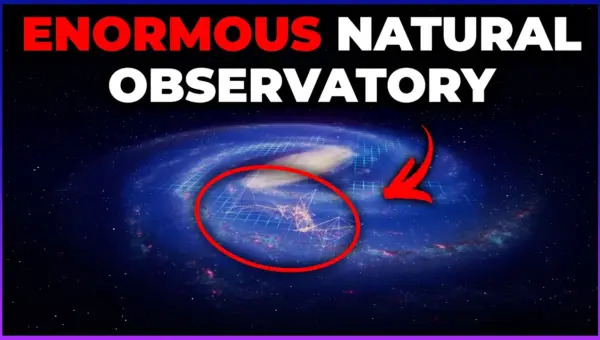
Cosmic Hum Hints at Gigantic Black Hole Mergers
Astronomers are using networks of rapidly spinning pulsars, nature's precise cosmic clocks, to detect the faint hum of merging supermassive black holes. New research is now focusing on pinpointing individual merger events, moving beyond the general background noise to understand these colossal cosmic collisions.

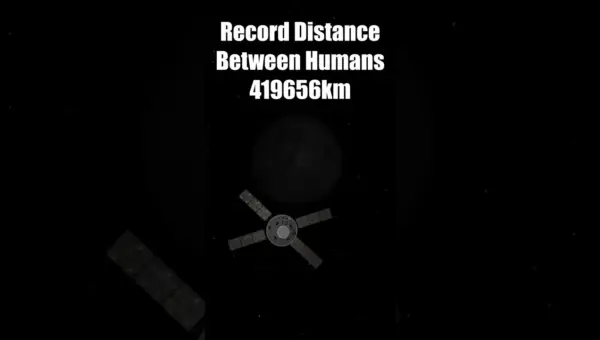
Artemis II Astronauts Set New Human Distance Record
The Artemis II mission set a new human distance record, reaching 413,145 km from Earth. The mission also established a record for the greatest distance between two groups of humans, with astronauts on China's Tiangong space station being 419,656 km away from the Artemis II crew.