Iran Rejects US Talks After Fighter Jet Downed
Iran has rejected proposed talks with the U.S. in Pakistan following the downing of an American F-15 fighter jet inside Iranian territory. The incident complicates diplomatic efforts and raises questions about regional security and air defense capabilities.


Iran Rejects US Talks Following F-15 Jet Incident
Tensions between Iran and the United States have escalated following the downing of a U.S. F-15 Eagle fighter jet inside Iran. The incident has led Iran to reject proposed talks with U.S. negotiators in Pakistan, complicating ongoing efforts to de-escalate regional conflicts.
F-15 Jet Crashes, One Crew Member Rescued
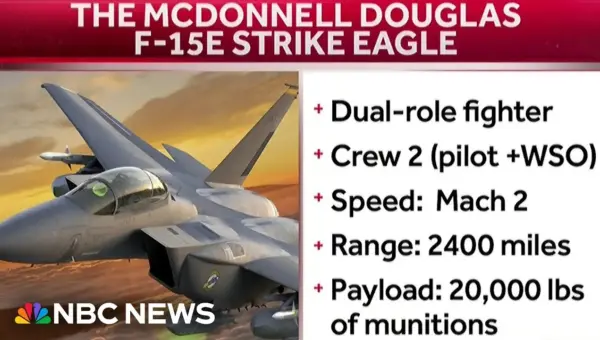
The U.S. F-15 Eagle fighter jet went down late Thursday night in the early morning hours inside Iran. The jet is a twin-engine, all-weather tactical fighter designed for air-to-air combat, but also capable of air-to-ground strikes. It can carry conventional warheads and has the capability to carry nuclear weapons if needed.
U.S. Special Forces conducted a rescue operation for the crew members. Helicopters were observed flying over the area. One crew member was successfully rescued and is currently receiving medical treatment. The extent of their injuries is not yet clear.
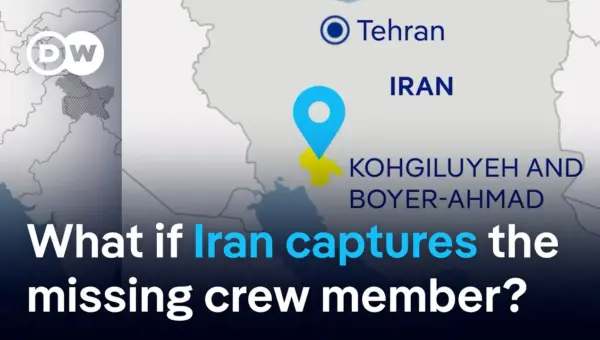
Searches are actively ongoing for a second crew member. Visuals from the scene show an opened parachute and a pilot’s seat on the ground, suggesting at least one crew member ejected from the aircraft. It remains unclear if this was the pilot or the weapons crew member, and which of the two is currently missing.
Diplomatic Setback Amidst Defense Spending Push
The downing of the F-15 jet comes at a critical time for international diplomacy. Iran has rejected proposed talks in Pakistan with U.S. representatives, refusing their demands. This diplomatic setback occurs as the U.S. President recently unveiled a defense budget request exceeding one trillion dollars. The Pentagon is seeking to boost its programs, with an additional $200 billion requested to cover the costs of recent Middle East conflicts.
Questions About Aging Aircraft and Air Superiority
The F-15 Eagle has been a workhorse in the U.S. Air Force for many years. While a capable aircraft, reports suggest that some of these planes are older models. The fact that an F-15 was shot down raises questions about U.S. air superiority claims over Iran. It indicates the presence of artillery or surface-to-air missiles capable of targeting aircraft flying at night.
This incident will likely be factored into White House calculations as they determine future strategies. The U.S. has been working with a coalition of 40 nations to negotiate the opening of the Strait of Hormuz. However, recent negotiations in which the U.S. was excluded highlight the complex geopolitical landscape. A United Nations Security Council resolution on the matter is not expected until next week.
Iran Sees Downed Jet as a Major Victory
For Iran, the downing of an American fighter jet represents a significant propaganda and strategic win. This comes after a past incident early in a conflict where three F-15s were lost due to friendly fire, resulting in the death of 18 pilots. Such events underscore the dangers and complexities of modern aerial warfare.
Market Impact
The geopolitical tensions highlighted by this incident can influence global markets. Increased military spending, as seen in the U.S. defense budget, can boost defense contractors. However, instability in key regions, particularly the Middle East and around vital shipping lanes like the Strait of Hormuz, can lead to oil price volatility and impact global trade. Investors often react to heightened geopolitical risks by seeking safer assets.
What Investors Should Know
Investors should monitor the ongoing situation in the Middle East closely. The downing of the F-15 jet and Iran’s rejection of talks signal a potential increase in regional conflict. This could lead to disruptions in energy supply and affect global economic stability. Companies involved in defense, energy, and international shipping may see their stock prices react to these developments. It is important to understand that geopolitical events can create short-term market fluctuations, while long-term impacts depend on the duration and scale of any conflict.
Source: Iran REJECTS talks in Pakistan with US interlocutors (YouTube)

Related Articles
US Pilot Rescued After F-15 Jet Shot Down Over Iran
One U.S. pilot has been rescued alive after their F-15 fighter jet was shot down over Iran, U.S. officials confirmed. Search and rescue efforts are ongoing for a second pilot who remains unaccounted for. The incident challenges previous U.S. claims of full control over Iranian airspace.
US Fighter Jet Downed in Iran; One Crew Member Rescued
A U.S. fighter jet was shot down over Iran, triggering a high-risk rescue mission. One crew member has been reportedly rescued, but the status of the second remains unknown. The incident raises questions about Iran's air defense capabilities and could impact U.S. public support for the ongoing conflict.
Iran Downs US Jet, Pilot Missing Amid Propaganda Victory
An American F-15 fighter jet was shot down by Iranian forces, marking a significant propaganda victory for Iran and challenging U.S. claims of diminished Iranian air power. One pilot has been rescued, but the second remains missing amid a tense search and rescue operation.