Iran Claims F-15E Downing Amid Deep Strike Campaign
Iran claims to have shot down a U.S. F-15E Strike Eagle using a new air defense missile, amidst a broader U.S. campaign targeting Iranian infrastructure. While one crew member was rescued, the search for the second continues. This incident highlights the risks of deep strike missions and Iran's evolving air defense capabilities.

Iran Claims F-15E Downing Amid Deep Strike Campaign
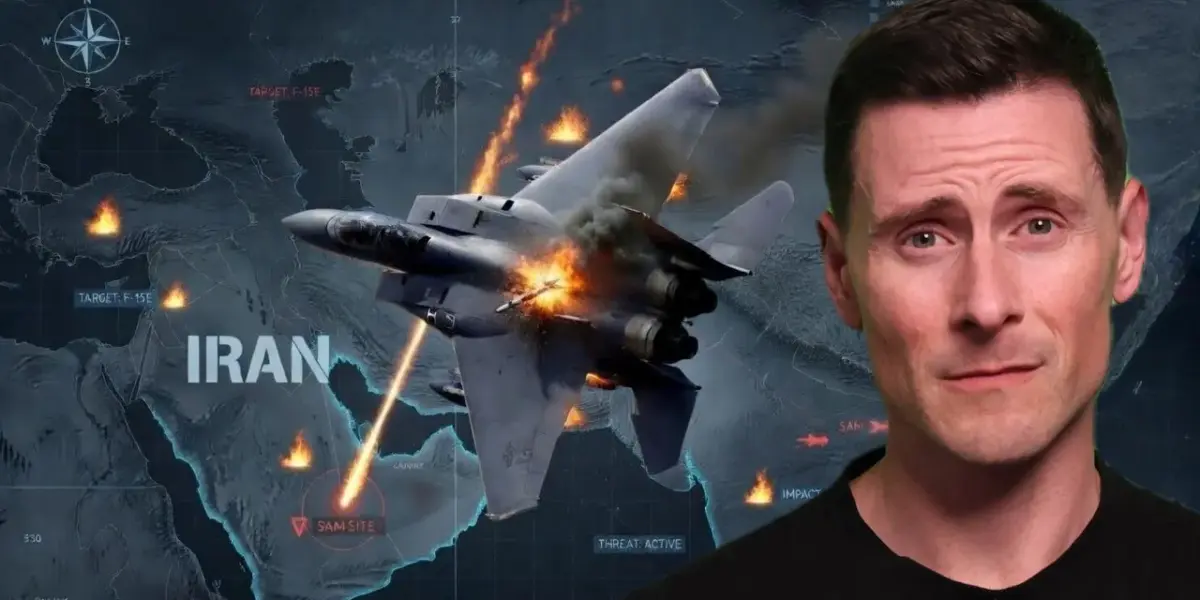
On April 3rd, 2026, during the 35th day of Operation Epic Fury, Iran announced it had shot down a U.S. F-15E Strike Eagle. Iranian state media and the Islamic Revolutionary Guard Corps (IRGC) hailed the event as a victory, initially claiming it was an F-35 but later showing wreckage consistent with an F-15E. The aircraft appears to be from the 494th Fighter Squadron, based at RAF Lakenheath in the UK, identified by markings on recovered tail wreckage.
Iran claims the F-15E was downed by one of its new air defense missiles, identified as the Sayyad 4B fired from the Bavar 373 system. This system is described as a two-stage, solid-fuel missile with a claimed range of up to 400 kilometers (about 250 miles) and capable of speeds up to Mach 5. It reportedly uses an active radar seeker for precision targeting of high-speed jets and is designed to counter fourth-generation aircraft. The Bavar 373 system is considered Iran’s answer to Russia’s S-400 air defense system, with reports suggesting Russian and Chinese assistance in upgrading Iran’s air defenses.
However, amidst this claim, U.S. forces successfully rescued one of the two crew members from the downed F-15E. The rescue operation involved multiple aircraft, including HH-60G Pave Hawk helicopters supported by HC-130J Combat King II aircraft for refueling. U.S. special forces and pararescuemen, known as PJs, are highly trained for combat search and rescue missions in hostile environments. The search for the second crew member is ongoing, with significant air cover and intelligence support, including from Israel, which reportedly postponed planned strikes in Iran to avoid interfering with the rescue efforts.
Strategic Context and Counter-Strikes
The F-15E Strike Eagle is a twin-engine, all-weather tactical fighter-bomber known for its deep strike capabilities and ability to operate in heavily defended airspace. It carries a significant payload of both air-to-air and air-to-ground munitions. While a capable aircraft, it is a fourth-generation fighter and not stealthy, making it potentially vulnerable to advanced air defense systems, especially in contested environments. The transcript suggests that despite Iran’s claims of resilient defenses and strikes against its air defense sites, some systems remain operational, allowing for what is being termed a ‘lucky shot’.
Simultaneously, U.S. forces have continued a campaign of precision strikes against Iranian infrastructure. Notably, Iran’s B1 bridge, a 136-meter-high suspension bridge near Karaj, was reportedly cut in half by American airstrikes. This bridge served as a military supply route, and its destruction is intended to disrupt the IRGC’s logistical capabilities and financial flow, impacting their ability to supply drones and ballistic missiles. Over 12,300 targets have reportedly been struck as part of this broader operation.
The downing of the F-15E, while a propaganda victory for Iran, occurs within the context of significant military pressure. The U.S. strategy appears focused on degrading Iran’s military infrastructure and supply lines while prioritizing the recovery of its aircrew. The deployment of additional naval assets, including the USS Ford carrier strike group, is intended to increase combat capability and potentially secure maritime routes like the Strait of Hormuz.
Strategic Implications
The incident highlights the ongoing risks faced by U.S. aircrews operating deep within Iranian airspace. While the F-15E is a formidable aircraft, the capabilities of advanced Russian-derived air defense systems, even if employed opportunistically, pose a persistent threat. The successful rescue of one crew member is a critical success, underscoring the importance of dedicated combat search and rescue assets. The continued search for the second crew member remains the immediate priority for U.S. forces.
Iran’s claim of downing the F-15E is being used to bolster domestic support and project an image of strength. However, the U.S. appears focused on maintaining momentum by continuing strikes on critical infrastructure, aiming to inflict sustained damage despite the headline generated by the aircraft loss. The broader geopolitical context involves Iran’s alliances with Russia and China, and its strategic importance in controlling key waterways like the Strait of Hormuz. Disrupting Iran’s influence in this region is seen as vital for global energy security and regional stability, impacting broader geopolitical calculations, including potential conflicts in the Indo-Pacific.
The resilience of Iran’s air defense network, despite extensive strikes, suggests a complex and challenging operational environment. The incident underscores the dual nature of modern warfare, where battlefield actions are intertwined with information operations and propaganda. The U.S. military’s focus remains on achieving strategic objectives while managing the immediate crisis of crew recovery and mitigating the psychological impact of the loss.
Source: Iran Shooting Down U.S. F-15E Is Worse Than We All Think (YouTube)

Related Articles
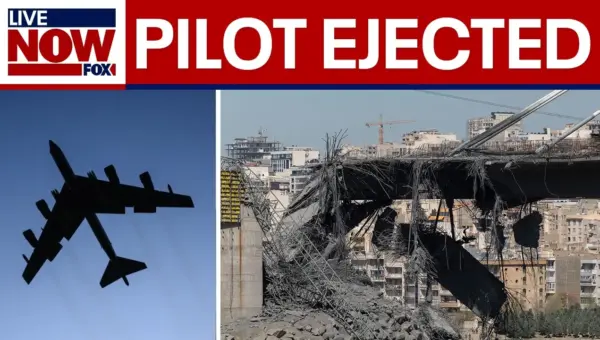
Iran Claims US Pilot Ejected; US Silent Amid Escalating Tensions
Iran claims a U.S. pilot ejected from a fighter jet over its territory, offering a reward for capture. The U.S. has not confirmed the report amid escalating regional tensions. Military experts discuss the strategic implications of U.S. strikes and the potential for internal change in Iran.
US Forces Strike Iran, Bolster Strait of Hormuz
U.S. Special Operations forces and A-10 Thunderbolt II aircraft are conducting 'Operation Epic Fury' with strikes over Iran and the Strait of Hormuz. The operation highlights the strategic importance of the waterway for global oil trade.

Iran’s Military Power Crumbling: Objectives Nearing Completion
President Trump announced that the U.S. military operation against Iran, 'Operation Epic Fury,' is nearing its objectives, claiming Iran's military capabilities are being decimated. The operation aims to prevent Iran from acquiring nuclear weapons and reduce its regional influence. The White House suggests this will lead to stabilized energy prices and economic growth.