Former Ukrainian PM Labels Russian Peace Talks a ‘Sham’ as Putin Escalates War Effort
Former Ukrainian Prime Minister Arseniy Yatsenyuk has vehemently dismissed ongoing Russian peace talks as a 'sham,' asserting that President Putin has no intention of a genuine peace deal and aims to 'annihilate' Ukraine. He highlighted Russia's escalating military spending and attacks, calling for stronger, proactive international support, a sentiment echoed by Ukraine's Deputy Head of Mission in the UK, Edward Fesco.

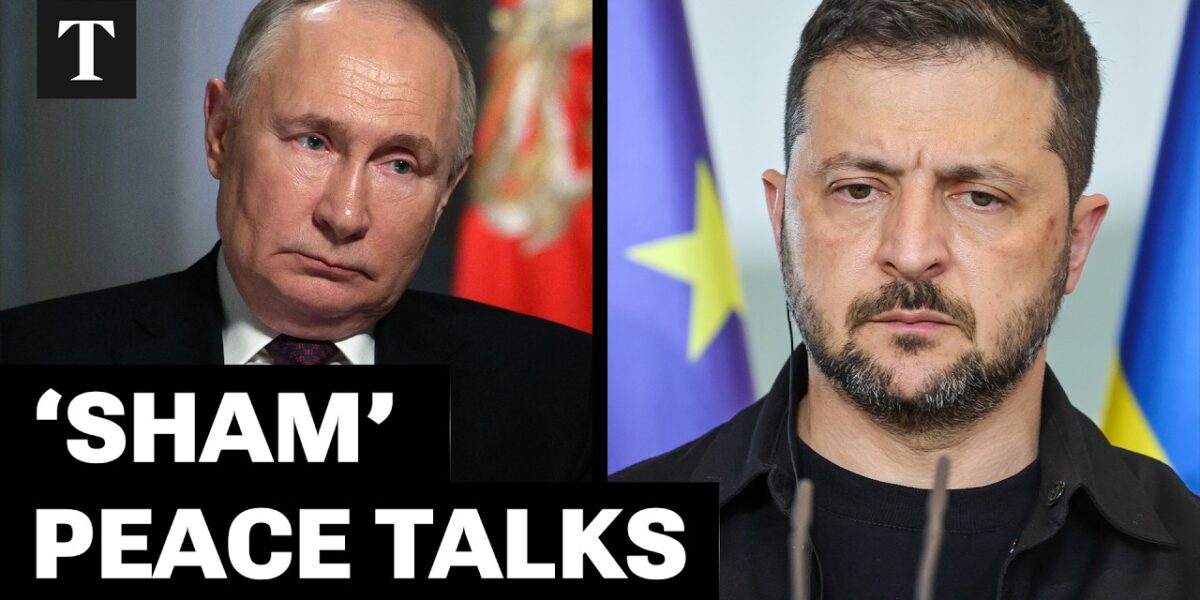
Former Ukrainian PM Labels Russian Peace Talks a ‘Sham’ as Putin Escalates War Effort
As the full-scale invasion of Ukraine by Russia approaches its fourth year, a prominent former Ukrainian leader has delivered a stark assessment, dismissing ongoing peace negotiations as a deceptive tactic by Moscow. Arseniy Yatsenyuk, who served as Ukraine’s Prime Minister from 2014 to 2016, asserts that Russian President Vladimir Putin harbors no genuine intention of achieving a peace deal, instead leveraging diplomatic overtures to ‘drag its feet and outlast us.’
Yatsenyuk’s sobering remarks, made during a recent interview, underscore a profound distrust of the Kremlin’s motives, warning that Putin’s ultimate objective remains the complete subjugation and ‘annihilation’ of Ukraine as a sovereign nation. His views are echoed by current Ukrainian diplomatic representatives, who emphasize the critical need for proactive international support to counter Russia’s sustained aggression.
A War of Attrition: Putin’s Unwavering Military Ambition
The former Prime Minister did not mince words when detailing the scale of Russia’s ongoing military campaign. He highlighted a brutal escalation in recent weeks, citing a barrage of attacks including 50 cruise and ballistic missiles and 300 drones in a single night. Over the past week alone, Ukrainian skies have witnessed approximately 100 ballistic and cruise missiles, 1,400 drones, and 1,300 loitering munitions, painting a grim picture of relentless assault on civilian populations and infrastructure.
Yatsenyuk was quick to correct the common perception that the war began in February 2022, reminding listeners that the conflict’s roots stretch back 12 years to February 2014, when Russia first invaded and occupied Crimea and parts of eastern Ukraine. This historical context is crucial, he argued, in understanding the protracted nature of the conflict and Russia’s long-term strategic goals.
Compounding the grim reality on the ground are staggering figures regarding military expenditures. Yatsenyuk revealed that his foundation’s research indicates Russia has spent approximately $800 billion over the past 12 years prosecuting the war against Ukraine. In stark contrast, Ukraine and its allies have collectively spent around $450 billion, leaving a substantial gap of $350 billion. This financial disparity is further highlighted by Russia’s current state budget, where a staggering 40% is allocated to military spending, signaling Putin’s unwavering commitment to warfare rather than peace.
“There is no any sign that suspected war criminal Putin is ready to cut any kind of deal with Ukraine,” Yatsenyuk stated emphatically. He characterized Putin as a “professional KGB liar” and a “perfect deceptioner,” cautioning against any misjudgment of his true intentions. This assessment, he noted, aligns with the consensus among intelligence and military communities of Ukraine’s allies, a ‘miracle’ he observed after returning from the Munich Security Conference.
The Critical Role of International Support: A Call for Steadfastness
Despite the overwhelming odds and sustained attacks, Ukraine’s resolve remains unbroken. Yatsenyuk stressed that there is “no plan B” other than to fight and prevail. “The ultimate goal of Putin is to take over an entire Ukraine and actually to annihilate Ukraine as a sovereign and independent nation,” he explained, emphasizing that Putin is very vocal about this ambition.
The former Prime Minister underscored the indispensable nature of international assistance, particularly from countries like the United Kingdom, whose people he commended for standing by Ukraine. However, he voiced significant concern over the declining support from the United States, revealing that US assistance had plummeted by 99% last year. This drastic reduction poses a severe challenge to Ukraine’s ability to sustain its defense efforts, with Yatsenyuk urging the US administration to recognize that “there is only one way to talk to Putin: the language of strength.”
To illustrate the enduring nature of the Russian threat, Yatsenyuk drew a parallel to the historic ‘Long Telegram’ sent 80 years ago by US diplomat George Kennan from Moscow. This seminal dispatch, which outlined the Soviet Union’s expansionist policies and the need for containment, remains remarkably relevant, according to Yatsenyuk. “Nothing has changed except the names and dates,” he remarked, replacing Stalin with Putin as the central figure, but maintaining that “the essence of Russia is completely the same.” He urged the US administration to revisit Kennan’s insights to better understand the current geopolitical landscape.
Beyond Combat: Proactive Measures and Diplomatic Realities
The discussion extended to innovative approaches to international support, with Edward Fesco, Ukraine’s Deputy Head of Mission in the UK, weighing in on former Prime Minister Boris Johnson’s suggestion of deploying non-combat troops to Ukraine. Fesco viewed Johnson’s proposal as having “a lot of merit,” advocating for more proactive measures from allies rather than merely reacting to Russian aggression.
Non-combat forces, Fesco explained, could undertake vital tasks such as logistics or the protection of sensitive installations, freeing up Ukrainian personnel for frontline duties. “People in uniform do not only do fighting on the front line. There are many other tasks that they can be doing and why not start doing them right now,” he posited, highlighting the potential for such deployments to shape the situation on the ground rather than waiting for an elusive ceasefire.
Regarding support from the UK, Fesco expressed gratitude, stating that Ukraine has received “all the support that the UK is able to provide.” He lauded the UK as the “most consistent amongst our allies,” working closely with Ukraine from the very beginning of the conflict.
Navigating Domestic Challenges and Displaced Populations
The conversation also touched upon Ukraine’s internal dynamics, specifically President Zelenskyy’s suggestion of holding elections in May. Yatsenyuk clarified that such a move is currently infeasible, as free and fair elections cannot be conducted amidst ongoing warfare. He revealed that Zelenskyy’s mention of elections was primarily a strategic maneuver to pressure the US administration into exerting maximum pressure on Russia to announce a durable ceasefire.
“If we get a ceasefire, a durable ceasefire, that’s not an issue for the Ukrainian people to go and to cast the ballots,” Yatsenyuk affirmed, underscoring Ukraine’s commitment to democratic processes once conditions allow. He warned against Russian attempts to exploit election discussions to sow domestic discord within Ukraine.
Addressing the significant Ukrainian diaspora, Fesco provided an update on the status of Ukrainians who have sought refuge in the UK. He emphasized that these individuals are referred to as “temporarily displaced Ukrainian citizens” rather than exiles, with an estimated 250,000 having found shelter in the UK. Fesco expressed confidence that an announced government extension would prevent these individuals from being forced to leave, allowing them to remain until it is safe to return home.
Finally, Fesco robustly pushed back against the notion of “pro-Ukrainian propaganda,” arguing that what Ukraine presents is simply the truth. “Propaganda is something manipulative and what something what you are telling is the truth. It’s not propaganda. It just educating and telling how things are,” he asserted, distinguishing factual reporting from manipulative communication.
Conclusion
The insights from former Prime Minister Arseniy Yatsenyuk and Deputy Head of Mission Edward Fesco paint a clear picture of a nation locked in an existential struggle against an aggressor determined to erase its sovereignty. Their statements underscore the futility of current ‘peace talks’ as long as Russia maintains its overwhelming military investment and aggressive posture. For Ukraine, the path forward is one of resolute defense, sustained by the unwavering strength of its people and the consistent, proactive support of its international allies. The call for strength, historical awareness, and innovative assistance resonates as Ukraine prepares to enter the fifth year of a conflict that began not four, but twelve years ago.
Source: Russian Peace Talks With Ukraine a ‘Sham’ As Putin Maintains Military Spending | Former Ukrainian PM (YouTube)

Related Articles
Germany, Ukraine Deepen Defense Ties, Boost Air Power
Ukraine and Germany have signed a major defense pact, boosting air defense systems and joint drone production. This strategic partnership aims to enhance European security amidst ongoing Russian strikes on Ukrainian cities. Diplomatic talks continue between Russia and China, while the U.S. reports progress in Iran negotiations.


Middle East Peace Talks Loom Amid Blockade, Vets Weigh In
New peace talks between the U.S. and Iran are anticipated this week amid a tightening naval blockade. Meanwhile, Israel and Lebanon held historic direct talks, while veterans shared insights on the Iran conflict. Separately, former Congressman Eric Swalwell faces a new criminal investigation, and a heroic Oklahoma principal is praised for stopping a school shooting.
Ukraine Vet Details 8 Years of Covert Resistance
A Ukrainian soldier details eight years of covert resistance against Russian occupation in his hometown. He describes the pervasive fear, the shift to underground communication, and the brutal realities of life under foreign control. The soldier now serves in the Ukrainian military, reflecting on his mission into Russia and the future of occupied territories.