Tariffs Poised to Surge as Trump Eyes Trade Policy Shift
US tariffs are poised to climb significantly within five months, with experts predicting a surge in rates. This follows a year of little improvement in manufacturing jobs and foreign investment, despite initial policy goals. The administration is now leaning on Section 301 investigations after a Supreme Court ruling impacted previous tariff measures.

Tariffs Poised to Surge as Trump Eyes Trade Policy Shift
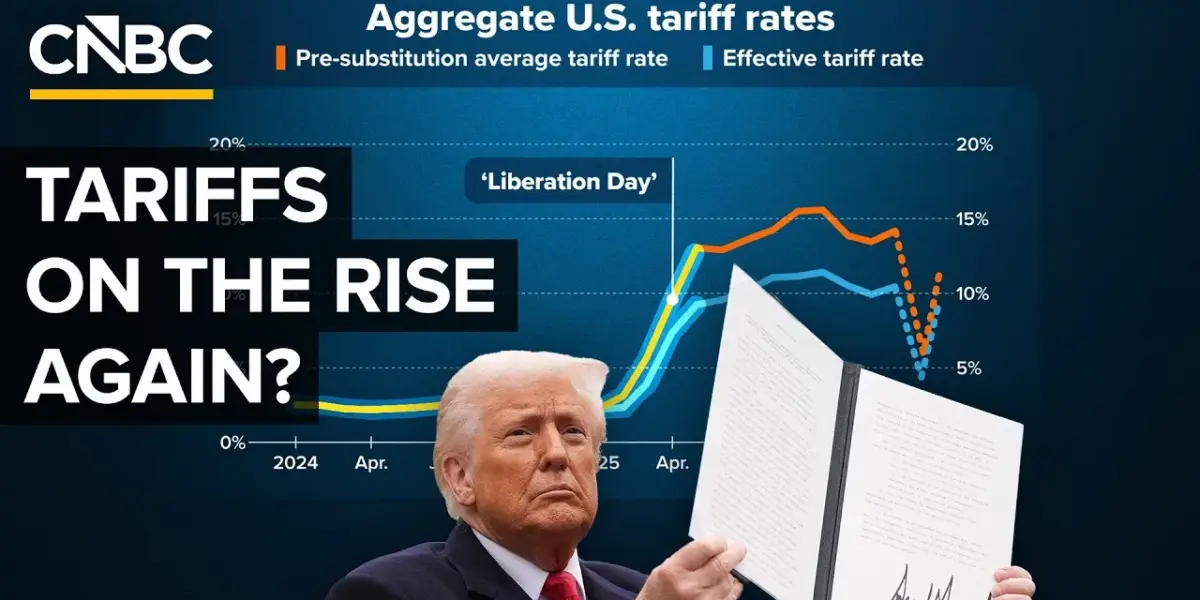
The United States may be on the verge of another significant shift in trade policy, with experts predicting a sharp rise in tariff rates within the next five months. This potential increase follows a year where initial goals of boosting manufacturing jobs and foreign investment have shown little improvement. In fact, manufacturing job losses actually accelerated in 2025, and foreign direct investment declined.
Despite the fireworks over the past year, most tariff rates have remained largely unchanged. However, the direction ahead suggests a climb. The average effective tariff rate, a key indicator of trade policy’s impact, has already seen substantial increases. Starting from historically low levels, tariffs began to climb with the introduction of new measures, reaching some of the highest points seen in decades by the summer of 2025. These levels are comparable to those seen in the 1970s, a period previously considered inefficient for trade.
Understanding Tariffs and Their Impact
Tariffs are essentially taxes on imported goods. While often discussed in terms of higher prices for consumers, their true economic impact can be more complex. Experts suggest that the most significant harm from tariffs comes not from increased consumer costs, but from their effect on investment and productivity. When tariffs make imported materials more expensive, U.S. companies may be forced to produce components themselves rather than focusing on their core, high-value activities. For example, a company like Caterpillar, which makes heavy machinery, profits most from designing and assembling complex equipment, not from producing its own steel or sheet metal. High tariffs can hinder this by making it costly to import necessary parts.
Legal Battles and Shifting Strategies
A major development impacting trade policy was a Supreme Court ruling that struck down tariffs imposed under the International Emergency Economic Powers Act (IEEPA). This statute had been used to implement many of the tariffs seen over the past year. In response to this legal setback, the administration has quickly pivoted to alternative tools.
One such tool is known as Section 122 tariffs. These allow the administration to impose tariffs up to 15% for a period of up to 150 days. Currently, a global baseline of 10% is in effect under this provision. While these tariffs are designed to be temporary, there is speculation that the administration might seek ways to extend or reapply them, given the statute’s broad wording.
Section 301 Investigations: The New Frontier
The administration is now heavily relying on Section 301 investigations as its primary mechanism for imposing new tariffs. These investigations, led by the U.S. Trade Representative’s office, are targeting more than 60 countries. The probes focus on several alleged trade practices, including the use of forced labor and what is termed ‘excess capacity’ or ‘overproduction’. This latter concern means countries are accused of producing more goods than they can use domestically, which can then flood international markets and disadvantage U.S. producers.
Major trading partners such as China, the European Union, Canada, and Mexico are among the 60 countries being investigated. The strategy appears to be a methodical rebuilding of the trade policies enacted previously, but this time using a more legally sound and durable statute.
Market Impact and Investor Considerations
The prospect of rising tariffs presents a mixed outlook for investors. On one hand, tariffs can be intended to protect domestic industries and encourage job growth, potentially benefiting certain sectors. However, increased trade barriers often lead to higher costs for businesses that rely on imported goods, potentially squeezing profit margins. This can also translate to higher prices for consumers.
For companies operating globally or relying on international supply chains, the uncertainty surrounding future tariff levels and the potential for new trade disputes could pose significant risks. Investors may need to closely monitor trade policy developments and assess how specific companies and industries are positioned to navigate these changes. Sectors heavily reliant on imports or exports, such as manufacturing, automotive, and technology, could be particularly sensitive to these shifts.
The long-term implications could involve a restructuring of global supply chains as companies seek to mitigate tariff risks. This could lead to shifts in manufacturing locations and investment patterns. While the immediate focus is on the potential for higher tariffs, the underlying goals remain to reshape U.S. trade policy, boost domestic production, and attract foreign investment. Whether these renewed efforts will achieve those aims more effectively than previous policies remains to be seen.
Source: Where Trump’s Tariff Rates Are Headed (YouTube)

Related Articles

Jobs Report Stuns Market: 178,000 New Roles Added
The U.S. economy surprised analysts with the creation of 178,000 nonfarm payroll jobs in March, significantly exceeding expectations. The unemployment rate fell to 4.3%, signaling robust labor market strength. Experts view the report as a sign of strong business confidence, though concerns about inflation persist.

Tariffs Cost Trillions: How Markets Recovered
Sweeping tariffs initially wiped out $2.4 trillion in market value, but a swift rebound followed. Companies now grapple with rising costs, with consumers ultimately bearing the brunt through higher prices.


Trump’s ‘Golden Age’ Claims Face Economic Reality Check
Donald Trump's claims of an $18 trillion economic boom fueled by tariffs are met with skepticism. While supporters cite job creation, many business owners report negative impacts like job cuts and slowed growth. The actual economic gains and the effectiveness of tariffs remain a subject of intense debate.